


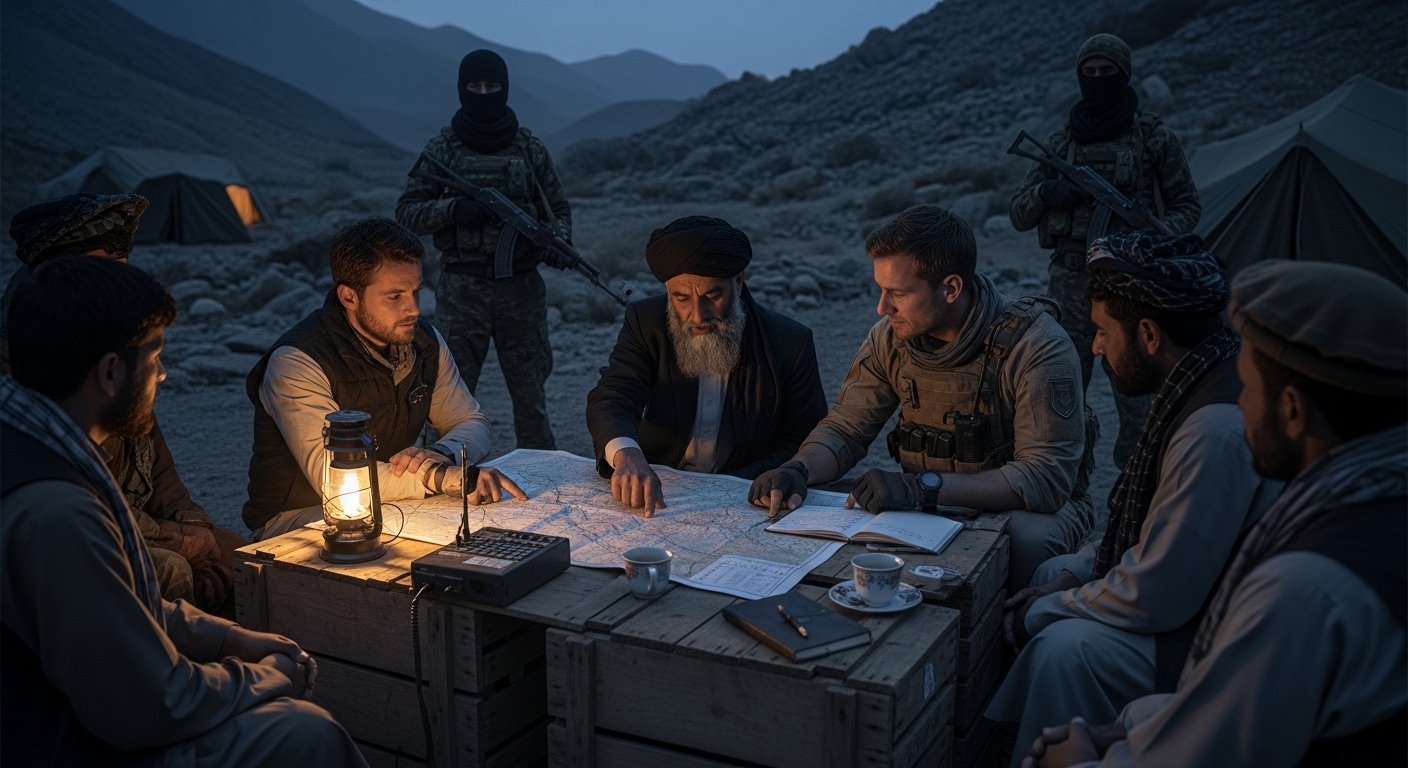
For decades, South Asia’s security map has been shaped not by statesmen or policymakers but by armed networks that exploit chaos, ideology and foreign patronage. At the center of this dangerous web stands the deep, destructive relationship between the Afghan Taliban and Fitna al Khawarij (FAK), formerly known as Tehrik-e-Taliban Pakistan. Their bond is not incidental. It is the result of years of shared militancy, shared sanctuaries, shared financial interests and shared external benefactors who see destabilization as a strategic tool against Pakistan. The nature of this relationship today reveals why the Taliban regime refuses to act against FAK and why Afghanistan continues to serve as a staging ground for cross-border terrorism targeting Pakistan.
The Origins of the Taliban-FAK Bond
The roots of the bond between the Taliban and FAK go back to the insurgency years when both groups operated in overlapping spaces across eastern Afghanistan. As foreign forces pressed deeper into Afghanistan after 2003, Pakistani militants fleeing security operations drifted toward the Taliban’s ideological orbit. What emerged was not simply a sanctuary system but a militant ecosystem. By the time FAK’s earlier leadership structure solidified in 2007, its commanders had already adopted the Taliban’s mode of warfare, organizational model and spiritual allegiance. Their fighters trained in the same rugged corridors of Kunar, Nuristan and Paktika.
This was not an alliance constructed from tolerance. It was a commodified cooperation shaped by mutual benefit. The Afghan Taliban, fighting coalition forces across Afghanistan, benefited from the manpower and local networks that FAK offered. In return, FAK gained lands, weapons, logistical depth and an ideological cover. Joint training camps, shared facilitators and cross-border shelters created an intertwined militant architecture that functioned with impunity for years.
Resurgence Post-2021
When Kabul fell in August 2021, that architecture resurfaced in full force. Hundreds of FAK militants were freed from Afghan prisons. Within weeks they regrouped, re-activated command hierarchies and merged with the old networks of the insurgency. According to the most recent UN assessments, the group now operates in Afghanistan with an estimated 4,000 to 6,500 fighters. This figure confirms that FAK is no marginal force; it is a core militant army managed from Afghan territory under Taliban rule.
The Contemporary Dynamics of the Nexus
Today the relationship has evolved into a mutually reinforcing structure. FAK depends on Afghanistan under Taliban control for survival, recruitment and training. Each safe-house, each logistical route and each permissive corridor gives the group operational confidence. Meanwhile the Taliban leverage FAK as a coercive tool: a means to apply pressure on Pakistan’s border areas, to preserve tribal loyalty through violence, and to ensure the regime remains militarily relevant rather than purely administrative.
Financially the link is equally malign. Afghanistan’s opium economy has exploded into a primary source of funding for extremist groups. FAK units now control many of the poppy cultivation and trafficking corridors, turning fields of opium into cash machines and militant arsenals. These criminal revenues underwrite the Taliban’s power and sustain its capacity to protect and empower FAK. This is no symbiotic ideology. It is a shared criminal enterprise.
External Influences and Regional Threats
The most alarming facet of this arrangement is the convergence of interests between FAK, the Taliban and external power brokers. Intelligence assessments indicate that hostile foreign actors, including Indian networks, have exploited Afghanistan’s turbulence and connected funding and training to FAK and Taliban-aligned actors. The insurgent infrastructure is now a region-wide tool of destabilization, primarily aimed at Pakistan. Every refusal by Kabul to act against FAK, every denial of sanctuary, is part of a greater strategic pattern.
📄 POLICY WIRE WHITEPAPER PUBLISHED: PAKISTAN'S NATIONAL SECURITY POLICY PRIORITIES
👉 READ BY CLICKING HEREPakistan, by contrast, has acted responsibly. Islamabad’s diplomatic engagement with the Taliban has been sustained and consistent. Pakistan has hosted millions of Afghan migrants, extended education and health facility access, maintained humanitarian support even under economic strain and pressed repeatedly for its border to be protected. Its demand is simple, lawful and legitimate: Afghan territory must not be used as a base for attacks against Pakistan.
Understanding the Alliance
The historical bond between the Taliban and FAK is neither myth nor misinterpretation. It is a lethal alliance formed through violence, cemented through opportunism and sustained through narcotics and terror. It is not motivated by Afghan nationalism or purely ideological war. It is an unholy combination of militant enterprise, criminal finance and foreign strategizing.
Until Kabul breaks the FAK-Taliban nexus, dismantles its training camps, severs its financial lifeline and rejects external actors who exploit its territory, Afghanistan will remain the largest exporter of terrorism in the region. Pakistan is seeking peace and security. The danger lies in a regime that chooses violent survival over lawful governance and a militant force that funds itself through opium and terror. The facts are not in dispute. The choices remain.
Author