

Pakistan–UAE: Strengthening Strategic Partnership in 2026
The bilateral relations between the United Arab Emirates and Pakistan are one of the oldest and elongated in the South Asia-Gulf region and this has been founded on the long-term political...
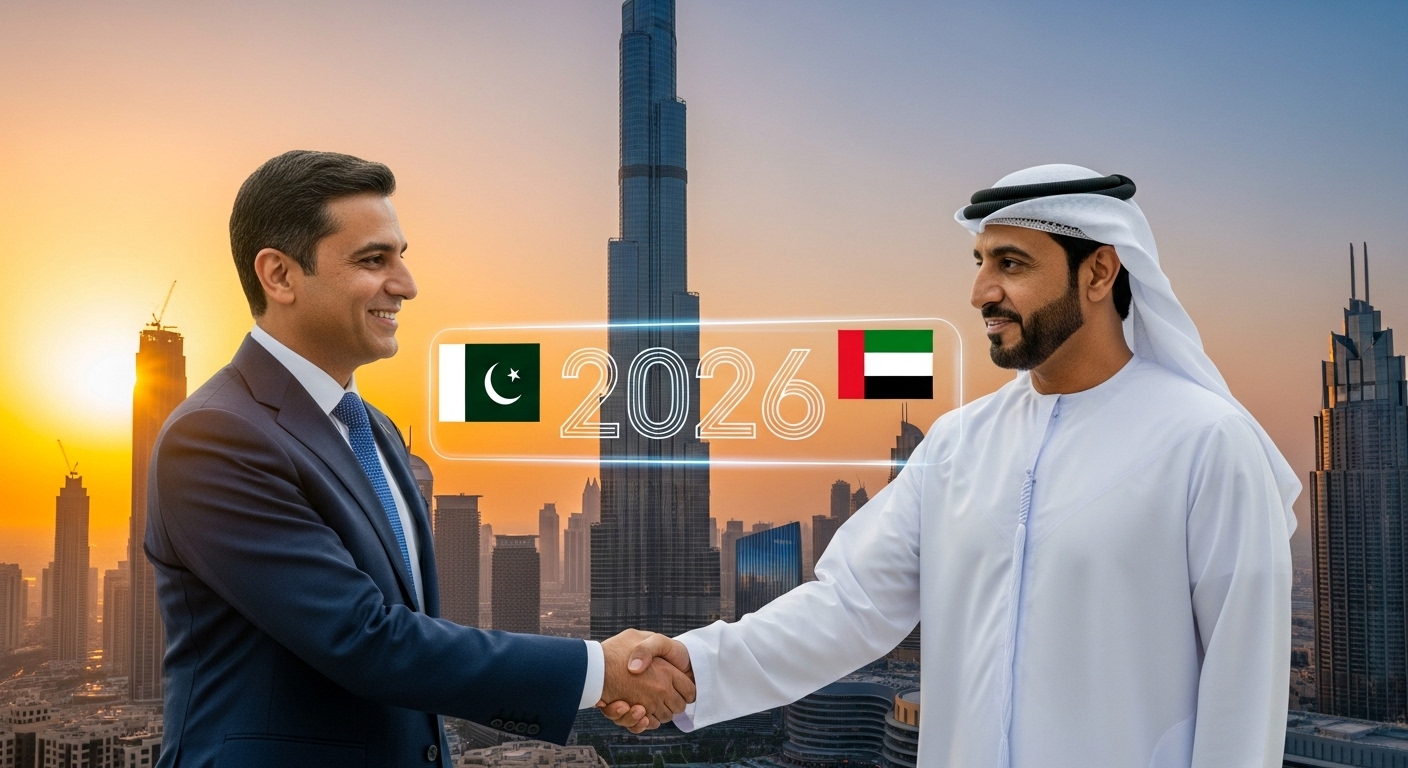
The bilateral relations between the United Arab Emirates and Pakistan are one of the oldest and elongated in the South Asia-Gulf region and this has been founded on the long-term political engagement, labour mobility and the increased interdependence of the economies of the two nations. An official visit of the President of Pakistan, Asif Ali Zardari, to the UAE that began on 26 January 2026 is a follow-up to high-level diplomatic contacts following the visit of the UAE President Sheikh Mohamed bin Zayed Al Nahyan to Pakistan in December 2025. The frequency of the relations on the level of leadership accentuates the wish of both parties to coordinate the collaboration in the evolving circumstances of the regional and global economies.
Focus Areas of President Zardari’s Visit
The visit is also dedicated to the discussion of trade facilitation, investment flows, energy cooperation, labour mobility and institutional mechanisms to make people-to-people connectivity easier. The interactions are based on the bilateral initiatives of the recent past, including the pre-immigration clearance of Pakistani travelers and more coordination of workforce regulation, which is an attempt to improve security, efficiency and transparency in cross-border movement.
Expanding Trade and Commercial Ties
The UAE and Pakistan have increased their economic relations over the past few years. Bilateral trade surpassed US10.01 billion in FY2024-25 and recorded a growth of more than 20.24 percent per annum, which was mainly due to energy imports, agricultural commodities, textiles and construction-related materials. UAE is still one of the best trading partners of Pakistan and a key re-export center especially to Pakistani products exported to African and Middle Eastern markets.
Remittances and Financial Linkages
Remittances are one of the key pillars of bilateral relationship. The workers remittances to be received by Pakistan in FY2024-2025 according to the State Bank of Pakistan data is US 38.3 billion which is an increment of 26.6 percent per annum. UAE has ranked second after Saudi Arabia with about US 6.7 billion in 2024 with averages of 20-22 percent of the total remittances sent every month. UAE remittances into Pakistan recorded US 726 million in December 2025 alone and this underscores the economic importance of the foreign labor force in Pakistan.
Pakistani Diaspora and Labour Contributions
The Pakistani diaspora is one of the biggest communities of expatriates in the UAE and is estimated to contain over 1.7 million people. The Pakistani nationals provide a substantial share of the construction, services, transport and logistics sector in the UAE and the remittance inflows provide household consumption, foreign exchange reserves and macroeconomic stability in Pakistan.
Investment Cooperation and Emerging Opportunities
Another major dimension is investment cooperation. The cumulative UAE investment in Pakistan has over the last 20 years been over US 10 billion in telecommunications, banking, ports, energy and real estate. The recent events, such as the signing of a US 1 billion investment deal in December 2025, suggest that Emirati is interested in the infrastructure, renewable energy, and logistics sectors in Pakistan again. International conferences such as the World Economic Forum in Davos in January 2026 have also highlighted an investment-led growth model.
Institutionalizing Bilateral Cooperation
Further diplomatic push has been created by energy partnership negotiations, infrastructure building, and visa facilitation proposals to the diplomatic passport holders. These programs are part of a larger program to institutionalize collaboration beyond ad-hoc interactions.
Strategic Outlook for Pakistan–UAE Relations
The UAE visit by President Zardari is an indicator of continuity and underscores the sustained goodwill underpinning bilateral engagement. With the world economy uncertain and the region in a state of instability, the two countries seem to be on the same track in terms of converting political goodwill into organized economic performance. The connection, which is based on the labour connectivity and financial flows, is becoming more oriented to the long-term strategic and investment-based cooperation.
Pakistan-UAE relations are no longer symbolic fraternity, but quantifiable economic and institutional cooperation, one that can be sustained and reinforced in a complicated international context.
Author