

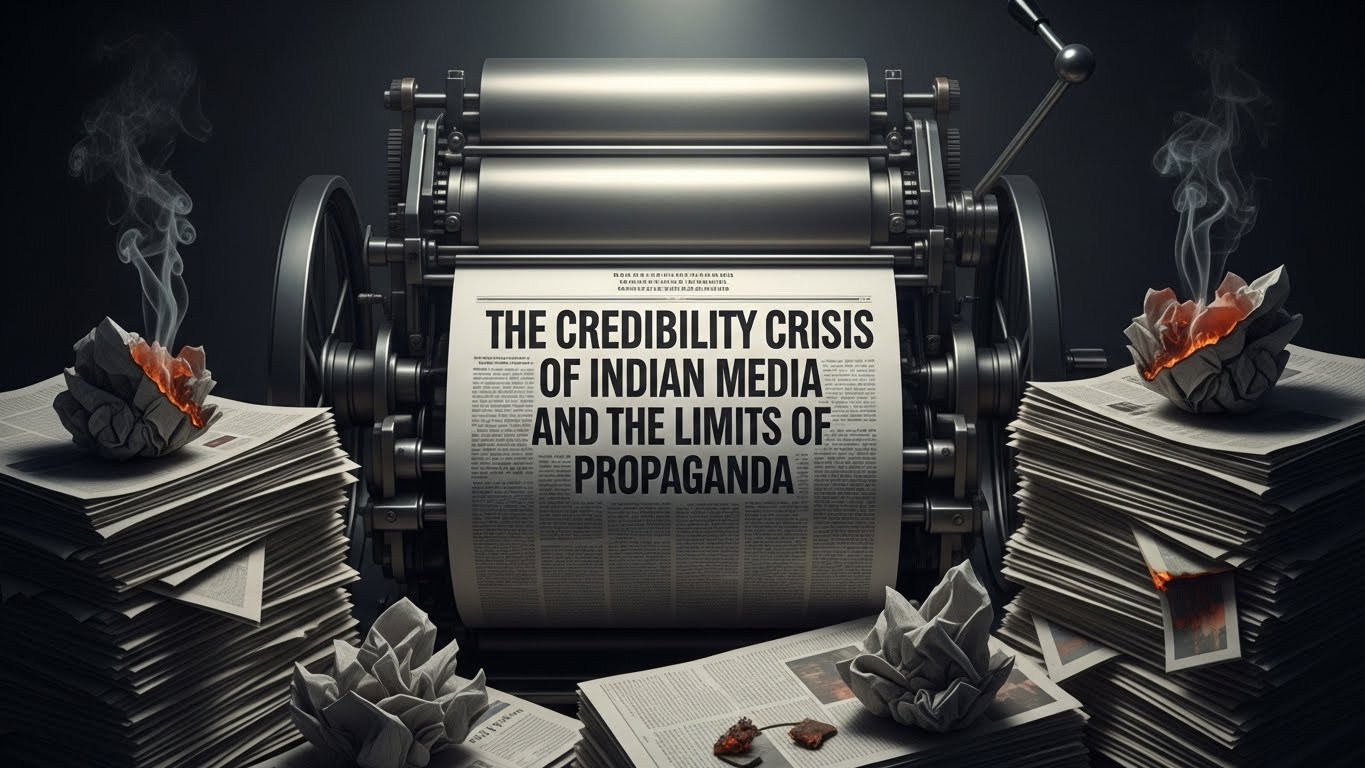
The Credibility Crisis of Indian Media and the Limits of Propaganda
Journalism carries responsibility. At its core, it is meant to inform, not mislead; to verify, not speculate; and to serve the truth rather than political impulses. When journalism abandons these...

Journalism carries responsibility. At its core, it is meant to inform, not mislead; to verify, not speculate; and to serve the truth rather than political impulses. When journalism abandons these principles, it stops being a public service and becomes propaganda. A recent episode involving RT India and its misrepresentation of events related to Pakistan’s Prime Minister Shehbaz Sharif at the Peace and Trust Forum offers a clear and instructive example of how disinformation collapses when confronted with facts.
The RT India Misrepresentation
The controversy began with a post by RT India that distorted the reality of events at the Peace and Trust Forum, particularly in relation to Pakistan’s Prime Minister. The post attempted to frame the situation in a misleading way, creating an impression that was not supported by what actually occurred. This was not a minor editorial slip but a serious breach of journalistic ethics, especially given the sensitivity of international diplomacy and the stature of the individuals involved.
The post generated immediate scrutiny because the facts did not align with the narrative being pushed. Under pressure, RT India deleted the tweet and issued a clarification. However, while the deletion acknowledged that something was wrong, it did not go far enough. What was required was a clear and formal apology for yellow journalism. A clarification corrects a mistake; an apology accepts responsibility for ethical failure. The absence of such an apology speaks volumes.
Moscow Steps In: An Unusual but Telling Intervention
What made this episode particularly significant was the intervention by RT’s headquarters in Moscow. The fact that RT in Moscow had to act against its Indian arm underlined the seriousness of the violation. It is rare for an international media organisation to publicly distance itself from the actions of a regional branch unless the error is substantial and damaging.
This intervention exposed how reckless the reporting had been. In an attempt to push a hurried and politically convenient narrative, RT India dragged Moscow into a controversy that should never have existed. This did not bode well for those responsible, as it suggested a lack of internal editorial discipline and a willingness to sacrifice credibility for momentary narrative gains.
Hawkish Media and the Habit of Disinformation
The RT India incident did not occur in isolation. It fits into a broader pattern seen among hawkish elements of Indian media, where disinformation and sensationalism are often used as tools of narrative warfare. Speed is prioritised over accuracy, and ideological alignment is allowed to override verification. In such an environment, facts become secondary, and journalism turns into performance.
This approach may generate short-term attention, but it carries long-term costs. Each retraction, deletion, or forced clarification weakens public trust. Each exposed falsehood reinforces the perception that certain outlets are driven not by truth but by agenda. In this case, the outcome was humiliating: the narrative collapsed, the post was deleted, and an official clarification had to be issued.
Pakistan’s Response: Diplomacy Over Noise
In sharp contrast, Pakistan’s handling of the situation demonstrated diplomatic maturity. The state did not react with hysteria or retaliatory misinformation. Instead, it relied on facts, official communication, and calm engagement. Pakistan allowed the truth to speak for itself, confident that verification would dismantle the false narrative.
This measured response proved effective. As facts emerged, the misleading claims lost credibility, and the burden shifted back onto those who had published them. Pakistan’s approach showed that strong diplomacy does not require loud rhetoric. It requires confidence, patience, and adherence to reality.
Why Clarification Is Not Enough?
The deletion of the post and the issuance of a clarification by RT India closed the immediate controversy, but it did not resolve the ethical issue. Yellow journalism causes damage at the moment of publication. It shapes perceptions, fuels misunderstanding, and can strain diplomatic relations. Simply deleting a post does not undo that harm.
An apology would have acknowledged the seriousness of the lapse and reaffirmed a commitment to ethical reporting. Without it, the correction feels procedural rather than principled. For journalism to retain credibility, accountability must be as visible as the mistake itself.
The Bigger Lesson: Facts Always Prevail
This episode reinforces an old but essential truth: facts matter, and they endure. Disinformation may travel fast, but it rarely survives scrutiny. Tweets are deleted, narratives are abandoned, and apologies are quietly issued, but the factual record remains. In this case, the facts dismantled the falsehood and exposed the weakness of propaganda-driven reporting.
For Pakistan, the outcome was instructive. It showed that the country’s diplomatic standing is strengthened, not weakened, by restraint and accuracy. For media organisations, it served as a reminder that credibility is fragile and once lost, difficult to regain.
Journalism at a Crossroads
Journalism in South Asia, and beyond, stands at a crossroads. It can choose the path of verification, balance, and responsibility, or it can continue down the road of sensationalism and agenda-driven reporting. The RT India incident is a warning sign of what happens when that second path is taken.
Responsible journalism does not fear facts, corrections, or accountability. It welcomes them. When media outlets abandon these principles, they do not merely harm their subjects; they harm themselves.
Conclusion
The misrepresentation of events at the Peace and Trust Forum and its aftermath demonstrated the limits of disinformation warfare. Despite the noise, Pakistan emerged with its credibility intact, while those pushing misleading narratives were forced into retreat. The episode highlighted the strength of Pakistan’s diplomacy and the weakness of propaganda built on distortion.
At the end of the day, narratives collapse, posts are deleted, and clarifications are issued. What remains is the truth. And as this case clearly showed, truth is the strongest narrative of all.
Author