

The Brutal Calculus of Cricket: As IPL Playoff Fortunes Shift, Deeper Plays Emerge
POLICY WIRE — Delhi, India — They call it sport, but what’s unfolding in the twilight weeks of the Indian Premier League isn’t just about sixes and wickets. No, it’s a brutal, high-stakes ballet of...

POLICY WIRE — Delhi, India — They call it sport, but what’s unfolding in the twilight weeks of the Indian Premier League isn’t just about sixes and wickets. No, it’s a brutal, high-stakes ballet of probabilities, prestige, and profoundly pecuniary interests—all of it underpinned by an increasingly complex matrix of digital projections.
It’s not just a game, you see. It’s an ecosystem, a gladiatorial arena for capital and influence, often masked by the straightforward drama of bat-on-ball. And now, with a mere twelve matches left on the schedule, the league’s backend statistical apparatus—its unblinking oracle—has carved out a narrative of certainty for some, and creeping despair for others. The glamour, the roar of the crowds—it all disguises an almost chilling, brutal arithmetic of success and failure.
Gujarat Titans (GT) and Royal Challengers Bangalore (RCB), we’re told by these same digital alchemists, aren’t just well-positioned; they’re mathematical near-certainties. GT, for instance, holds an astounding 99.9% chance of making the top four, and a staggering 79.1% probability of snatching one of the coveted top two spots. RCB isn’t far behind, with a 99.3% shot at the playoffs — and an 81.9% likelihood of a prime seeding. Those aren’t mere hopes; they’re statistical declarations, almost. But even with numbers so stark, few truly relax in this circuit.
Sunrisers Hyderabad (SRH) too finds itself in a remarkably robust position. At 79.7% for a playoff berth and a solid 36% for a top-two finish, their season, barring some kind of collective, catastrophic implosion, seems set. But, as we often see in these hyper-competitive environments, catastrophic implosions aren’t always a long shot. They happen.
Then there are the middling powers, teetering on the cusp. Chennai Super Kings (CSK), a perpetual fan favorite, still holds a 56.3% chance of playoff glory. Rajasthan Royals (RR) boasts a marginally better 57%. Their path to the final four is tangible, albeit riddled with peril. For top-two finishes, though? The odds plummet to a sobering 22.2% for CSK — and an even starker 17.9% for RR. They’ll scrap, but the margin for error is razor-thin.
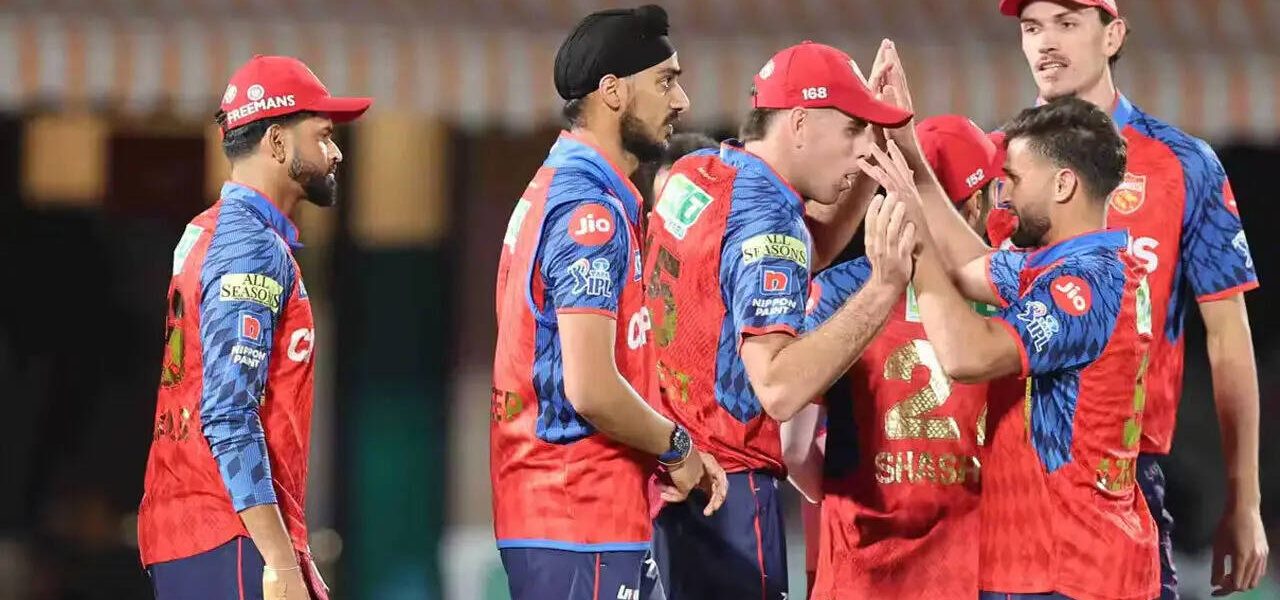
But because every season needs its cautionary tale, we look to Punjab Kings (PBKS). Following a particularly bruising loss on Thursday, their prospects cratered, diving to a grim 43.8% for a playoff spot. Their chances of finishing in the top two? A paltry 8.3%. That’s a brutal reality check, a stark lesson in the fleeting nature of dominance, or even mere competence, in a league built on relentless pressure. Delhi Capitals (DC) and Kolkata Knight Riders (KKR), for their part, have become statistical longshots—grasping at phantoms with 4.2% and 3.7% chances respectively. Don’t hold your breath for those miracle runs.
It’s an illusion, of course, that anything is truly settled. League data analysts, the quiet puppet masters behind these projections, remind us there are still 4,096 possible permutations of results from those final dozen matches. “Every single outcome changes the chessboard,” observed Sanjeev Gupta, a seasoned cricket economist often consulted by Policy Wire on such matters. “And this season, with so much money tied to team performance, those combinatorial possibilities represent millions in lost or gained revenue for owners and sponsors alike.”
📄 POLICY WIRE WHITEPAPER PUBLISHED: PAKISTAN'S NATIONAL SECURITY POLICY PRIORITIES
👉 READ BY CLICKING HEREAnd these numbers reverberate far beyond India’s borders. Across the subcontinental divide, from Karachi to Dhaka, from Gulf state capital to diaspora living rooms in London, eyes are glued. The IPL isn’t merely India’s domestic league; it’s a critical barometer of regional cricketing prestige and a massive soft power tool. When an IPL team falters, it’s not just a commercial hit; it’s a dent in the perception of excellence, a moment of schadenfreude for rivals and a point of anxiety for those invested in India’s sporting ascendance. Pakistani cricket fans, keenly aware of their exclusion from direct participation, nonetheless dissect every turn, hoping to glean insights or simply enjoy the spectacle. It’s an economic behemoth, influencing everything from sponsorship deals for individual players to betting markets that span continents.
“We run simulations day — and night,” explained Dr. Anya Sharma, lead data scientist for a prominent sports analytics firm advising multiple IPL franchises. “Our models are constantly recalibrating, not just for who wins, but by what margin, how it affects net run rate. There’s an inherent cruelty to the math; it doesn’t care for sentiment or legacy. Just probabilities.” It’s a game of inches, then. Or rather, of decimal points.
What This Means
This intensifying playoff race in the IPL is much more than just a sports story. For starters, it’s a masterclass in the commercialization of sport, transforming an athletic contest into a predictive analytics goldmine. Every percentage point shift impacts sponsorship valuations, broadcasting rights, and the perceived stability of franchise investments. Teams with strong odds attract premium endorsements, cementing their market dominance not just on the field, but in the boardroom. The stakes, consequently, are enormous, turning every contested boundary and tight single into a tangible policy outcome for corporate partners.
Economically, this is about brand equity — and capital flow. A successful IPL franchise can command astronomical valuations, influencing investment in auxiliary sectors like sports technology and hospitality. We’re watching a live-action case study in how global brands leverage national passions. From a geopolitical perspective, the IPL’s massive viewership—spanning South Asia, the Middle East, and beyond—makes it a powerful instrument of soft power for India. Its success underpins narratives of Indian technological prowess (in sports analytics) and organizational capability, often subtly influencing regional perceptions in ways traditional diplomacy can’t. But it’s also a fickle beast. One bad season, like PBKS is experiencing, can send ripples through stakeholder confidence, showing how even robust systems are subject to the caprices of performance.
The league, then, serves as a high-visibility, rapid-turnaround testbed for various economic and political theories, illustrating the dynamism of a rising India. It’s proof that sometimes, the most profound insights into a nation’s trajectory come not from parliamentary debates, but from the thud of leather on willow.