

The Billion-Dollar Con: How Healthcare Became a Cash Cow for Criminals, Not Patients
POLICY WIRE — Washington D.C. — For almost half a thousand folks, wearing a white coat meant something entirely different. It wasn’t about the Hippocratic Oath; it was about the payout. These...

POLICY WIRE — Washington D.C. — For almost half a thousand folks, wearing a white coat meant something entirely different. It wasn’t about the Hippocratic Oath; it was about the payout. These weren’t street-level thugs with sticky fingers—these were doctors, nurses, clinic owners, pharmacists—professionals. And they didn’t just nick a few bucks; they bilked the system out of an eye-watering $6.5 billion. It’s a sum so big it makes your teeth ache, money earmarked for the sick and the struggling, siphoned off for personal gain. That’s a staggering figure, isn’t it?
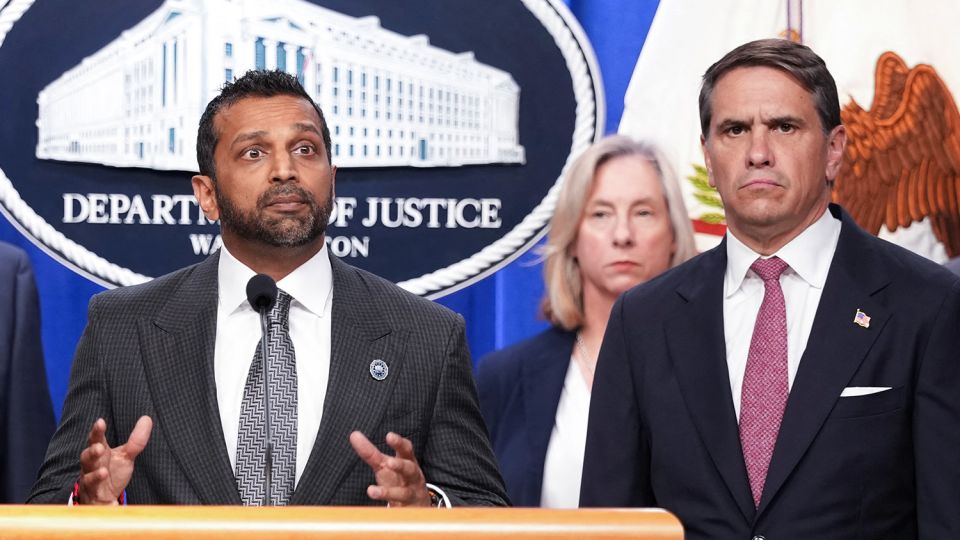
During the former Trump administration, a federal crackdown rounded up 455 people across 41 districts nationwide, accusing them of what can only be described as a cynical plunder of America’s public health programs. They weren’t just playing fast — and loose with billing codes. Oh no. This was about drug diversion schemes—opioids pushed out like candy—and fraudulent medical procedures, some entirely bogus, others simply unnecessary. Imagine getting chemotherapy you don’t need, or having a back surgery that only ever existed on paper. Patients, often vulnerable, were treated as mere conduits for cash.
It sounds like something out of a pulp fiction novel, but it’s cold, hard reality. U.S. Attorney General Jeff Sessions didn’t mince words, painting a grim picture. “We’re cleaning out the rot from our healthcare system, folks,” Sessions declared at the time, his voice reportedly iron-clad. “This isn’t just theft; it’s a profound betrayal of the American people — and the sick. We won’t stand for it.” A statement you’d expect, certainly, but one that hardly captures the sheer scale of this racket.
But the numbers themselves are almost too large to truly grasp. Picture $6.5 billion. To put it in some perspective, that’s enough to run Pakistan’s entire Ministry of National Health Services, Regulations & Coordination for almost five years, based on their annual budgeted expenditures. And that money—that enormous stack of stolen dough—it disappeared from programs like Medicare and Medicaid, precisely the lifelines for millions of low-income families and seniors. These aren’t just ledger entries; they’re someone’s life-saving treatment, someone’s pension, someone’s chance at dignity.
Seema Verma, then administrator for the Centers for Medicare & Medicaid Services (CMS), weighed in on the human cost. “These aren’t just numbers on a spreadsheet; they represent shattered trust and compromised care,” she was quoted saying, hitting hard on the ethical breaches involved. “Our job at CMS is to ensure every dollar serves patients, not swindlers. We’re tightening the screws, believe me.” One has to wonder how many more screws needed tightening, considering how brazen some of these schemes turned out to be.
The alleged fraudsters employed every trick in the book, — and then some. Telemedicine companies prescribing medically unnecessary durable medical equipment — and genetic testing? Check. Illicit drug distribution networks—the kind flooding our streets with highly addictive opioids—masquerading as pain clinics? You bet. Even some hospice owners got in on the act, claiming end-of-life care for patients who weren’t actually terminally ill, pocketing funds meant for the dying. It’s grotesque. The brazenness of it all—that’s what truly sets this haul apart.
According to a 2017 Government Accountability Office report, billions are lost each year to healthcare fraud, with an estimated range from 3% to 10% of total healthcare spending – a staggering sum when the U.S. spent over $3.5 trillion on healthcare that year alone. This crackdown wasn’t just a flash in the pan; it was a snapshot, albeit a big one, of an ongoing plague. And it illustrates a simple, ugly truth: where there’s public money and a labyrinthine system, there will be those eager to exploit it. This isn’t unique to America, of course. Corruption and fraud are stubborn weeds that pop up in every garden, whether you’re talking about the murky backchannels of US healthcare or the complex procurement systems in many South Asian states facing their own battles against illicit financial flows. Human greed, turns out, travels pretty well.
But what truly sticks in your craw is how deeply embedded some of these schemes were within the legitimate medical community. They relied on complicity—sometimes direct, sometimes willful ignorance—from those who swore an oath to heal. It’s not just a breach of law; it’s a fundamental breakdown of societal trust. How do you rebuild that when the healers themselves turn out to be the predators? It makes you pause. And that’s exactly the sort of difficult question a functioning society should be asking itself, over and over again, until it gets answers.
What This Means
This massive roundup means a couple of things, — and none of them are simple. Economically, it’s a small dent—a very public one—in a much bigger problem. The U.S. healthcare system, bless its expensive heart, remains a prime target for fraudsters. While $6.5 billion recovered or charged sounds immense, it’s just a fraction of the total estimated fraud occurring annually. The sheer bureaucracy and layered payment structures—private insurers, Medicare, Medicaid—create cracks that clever criminals just slip through. Policymakers will keep hammering on new regulations and enforcement powers, but it’s a whack-a-mole game, and the moles are incredibly resourceful. They’ve always got new tricks up their sleeves.
Politically, these announcements are public relations wins for whichever administration is in power. They project an image of toughness, of looking out for the taxpayer — and the vulnerable. For the Trump administration, it fit neatly into a broader narrative of cleaning up government and cracking down on perceived abuses. But beneath the headlines, the underlying systemic issues persist. It raises uncomfortable questions about oversight, technology, and why so many health professionals decide to take such a dark turn. It forces us to ask how our national priorities might get misaligned when so much is being stolen right from under our noses. This type of large-scale fraud impacts public confidence not only in government programs but also in the very institutions of medicine. It’s a confidence trick played on an epic scale, — and its effects linger long after the perp walks are over.