

The Ashes of a Sandwich Shop: Albuquerque Fire Echoes Global Franchise Fragility
POLICY WIRE — Albuquerque, United States — It didn’t make headlines across the globe, not really. But on a quiet Friday morning in Albuquerque, New Mexico, just before 5 a.m., the mundane sizzle of...

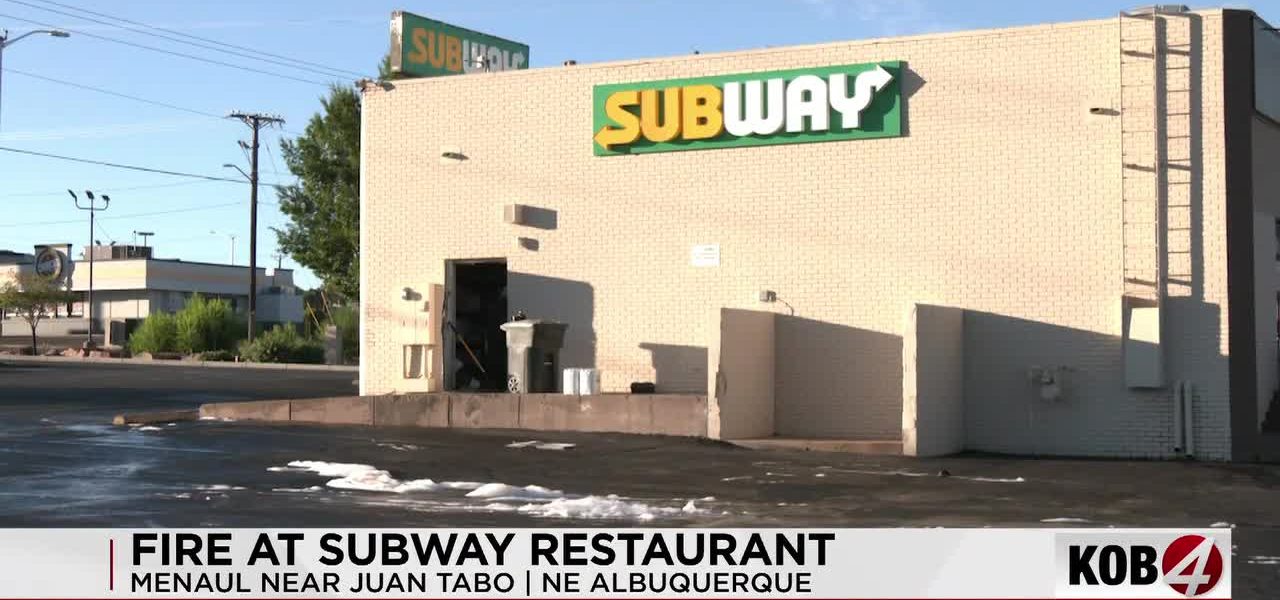
POLICY WIRE — Albuquerque, United States — It didn’t make headlines across the globe, not really. But on a quiet Friday morning in Albuquerque, New Mexico, just before 5 a.m., the mundane sizzle of breakfast preparations at a Subway restaurant on Menaul near Juan Tabo turned into something much less palatable: an actual blaze. Albuquerque fire crews were called in, facing down a very American sort of crisis—a fast-food eatery on fire—and in doing so, they inadvertently touched upon a silent, structural fault line running through the global economy, from the sun-baked streets of New Mexico to the bustling bazaars of Lahore.
They’ve done this before, fire crews, everywhere. Albuquerque fire crews knocked down a fire at a fast food restaurant Friday morning. There’s a certain grim predictability to it, a franchise model — so carefully calibrated for consistency — now unexpectedly compromised by an accidental, perhaps even tragic, variable. It takes very little, after all, to disrupt the meticulously planned global enterprise that delivers customizable sandwiches in identical plastic baskets, day in and day out, across a hundred countries. [QUOTE_PLACEHOLDER]
AFR said they were called to the Subway on Menaul near Juan Tabo just before 5 a.m. Friday. This isn’t a story of daring rescues or dramatic explosions; it’s far more insidious. When they arrived, they said smoke was coming from the roof. This isn’t the kind of headline that moves markets or topples governments. But it ought to be, if you’re looking closely at the fragile capillaries of local economies, and how tightly they’re woven into the wider financial organism.
It took a little more than a half hour to get the flames out. A minor incident, you might say, — and perhaps it was. They said the damage was mostly contained to the roof. One almost chuckles at the understatement. The damage might be confined to a roof in Albuquerque, but the implications for the brand’s image, the franchisee’s livelihood, and the broader global network, they spread much further. Because these kinds of micro-disruptions — call it frictional economics — ripple. They can expose the limits of contingency planning for small-scale entrepreneurs operating under massive, corporate umbrellas.
Consider this: Subway, that quintessential American purveyor of subs, boasted approximately 37,000 restaurants in over 100 countries as of 2023, according to its corporate website. That’s a staggering footprint, a latticework of franchise agreements stretching from North America to Asia, Africa, and beyond. In nations like Pakistan, for instance, a fast-food franchise isn’t just about quick lunch; it’s often a powerful symbol of economic development, a beacon of foreign investment, and a hard-won small business for many families. They invest heavily, often their entire life savings, banking on the brand recognition and operational uniformity that promises steady returns.
But then, a fire. A faulty wire, perhaps, or a grease buildup, an act of sheer entropy. In Albuquerque, it means repairs — and insurance claims. In Karachi or Dhaka, a similar incident might mean utter ruin. There, the margins are tighter, access to capital for rebuilding scarcer, and bureaucratic hurdles for recovery — permits, inspections, loan applications — far more challenging. It’s a harsh truth that the globalized market doesn’t always provide equal footing when things go sideways. And it does go sideways.
📄 POLICY WIRE WHITEPAPER PUBLISHED: PAKISTAN'S NATIONAL SECURITY POLICY PRIORITIES
👉 READ BY CLICKING HEREWhat lessons does a roof fire in the New Mexican desert offer to a potential Subway franchisee in, say, Lahore, Pakistan? Probably a very simple, unglamorous one: contingency, maintenance, and robust local infrastructure matter even more when your primary appeal is uniform safety and reliability. These global brands—they represent a sort of exported promise of stability, an ‘American’ way of doing business that’s supposed to be reliable. But even that promise, apparently, can get a bit charred.
And so, while the firefighters packed up their hoses, probably grabbing coffee somewhere, the local news briefly noted the extinguished fire. Albuquerque fire crews knocked down a fire at a fast food restaurant Friday morning. But beneath that dry reportage, a more profound narrative burns—the ongoing struggle for small businesses, regardless of continent, to weather not just competition, but the simple, brute forces of accident and decay in a world that offers no true insulation from the unpredictable.
What This Means
This localized, seemingly trivial incident lays bare a broader challenge facing globalized business models: the often-overlooked fragility at the hyper-local operational level. Economically, franchise systems like Subway rely on scalability — and standardized execution. When a unit suffers a fire, even if the damage is contained, it disrupts supply chains for local suppliers (who just lost a customer, however temporarily) and impacts local employment. For the franchisee, it means lost revenue, increased insurance premiums, — and the formidable task of reconstruction. This financial vulnerability is particularly acute in developing markets such as Pakistan, where a single franchise failure can send a family into severe debt, reflecting the high stakes involved in ‘bringing an international brand home.’ Policy-wise, the incident raises questions about local safety regulations, building codes, and emergency response capabilities in rapidly expanding urban centers. Are these sufficiently robust to support the widespread adoption of standardized international business practices, or do they present latent risks that multinationals and local entrepreneurs often underestimate? The seemingly isolated event functions as a small tremor, reminding us that even the most globally distributed enterprises are ultimately grounded in specific, fallible local contexts. Asia’s markets often teeter under such pressures, much like an individual Subway outlet.