

Silent Valleys, Deadly Choices: New Mexico Deputy Shooting Stirs Old Questions in Chimayó
POLICY WIRE — Chimayó, N.M. — In the stark silence of northern New Mexico, the echoes of a deadly night still hang, though the details remain remarkably scant. A domestic disturbance, a man killed by...

POLICY WIRE — Chimayó, N.M. — In the stark silence of northern New Mexico, the echoes of a deadly night still hang, though the details remain remarkably scant. A domestic disturbance, a man killed by law enforcement, and then—the familiar hum of an investigation that often speaks volumes through its quiet omissions. It’s a sequence many towns know too well, a grim testament to the often opaque machinery of state force operating on the fringes.
New Mexico State Police are piecing together what happened after deputies shot and killed a 60-year-old man in the tranquil, historic community of Chimayó. Not just any community, mind you—one with deep roots, where privacy runs as deep as its acequias. The incident, now under the New Mexico State Police Investigations Bureau, began with a woman calling for help. [QUOTE_PLACEHOLDER]
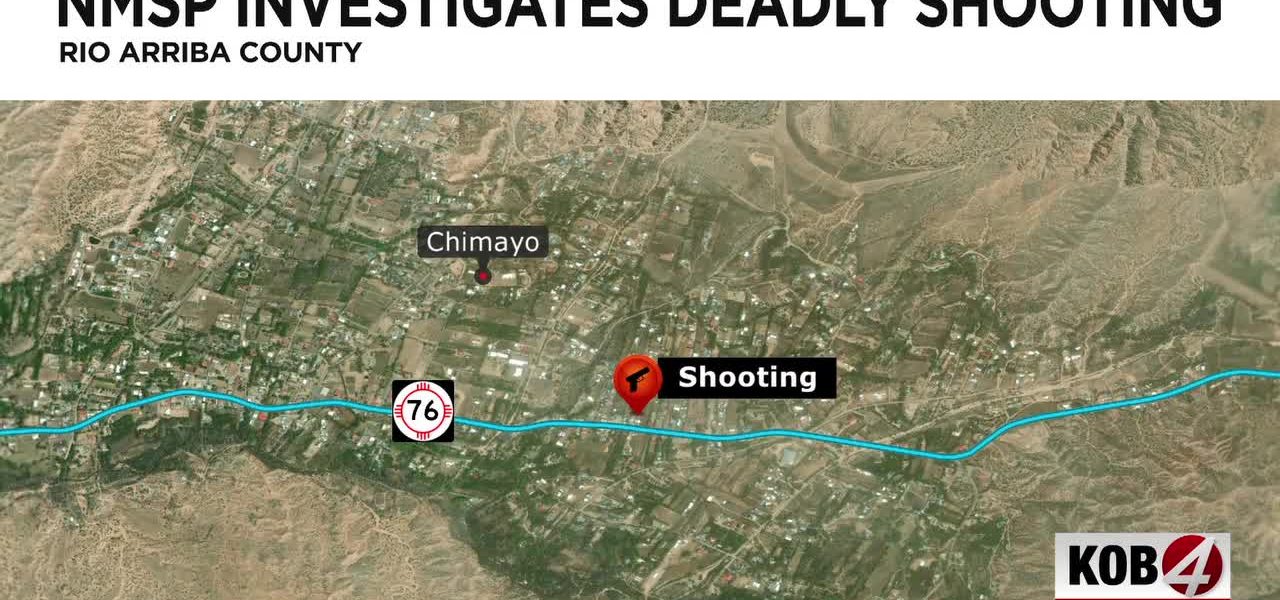
You see, deputies were called to 748 State Road 76. Why? A woman reported that Derek Torres threatened to kill her — and himself. Quite the alarming preamble, isn’t it? She told deputies Torres was highly intoxicated, assaulted her — and chased her with a knife while they were on the way. Those are direct statements from the record, folks. They paint a picture of a harrowing scene, even before sirens cut through the twilight. Then the deputies arrived, according to state police. And they found Torres. They fired their weapons for reasons still under investigation. Think about that for a second: for reasons still under investigation. One might wonder at what point an initial response shifts from crisis management to something else entirely.
The agency said its Investigations Bureau took over the officer-involved shooting investigation involving the Rio Arriba County Sheriff’s Office on June 25. An initial encounter, then a deadly outcome. After the shooting, Torres barricaded himself inside the home — and ignored commands to come out, state police said. So, what started outside continued indoors. Deputies then went inside, found Torres and gave medical aid until emergency crews took him to a hospital, where he later died. No deputies were hurt, we’re told. That’s an important distinction, particularly in cases that stir local emotions.
But the story doesn’t end with a hospital bed. Because accountability, or the pursuit of it, tends to loom large. The agency said it won’t identify the deputies. Instead, they directed questions about duty status or administrative action to the Rio Arriba County Sheriff’s Office. It’s a procedural maneuver, sure, but it’s one that often leaves communities wondering who, precisely, holds the cards. It isn’t just about what happened, but who gets to tell the story—and, more importantly, who decides what parts of that story remain unsaid.
This isn’t an isolated incident, not by a long shot. Across the United States, police kill roughly 1,100 people each year, according to data compiled by Statista, with only a small fraction of officers ever facing charges. This sobering statistic underscores the broader systemic issues at play. This pattern of fatal encounters, often initiated by calls concerning domestic disputes or mental health crises, plays out in quiet rural settings as much as in bustling metropolises. And these are the moments that erode public trust, layer by layer, especially when critical details remain out of reach for weeks, sometimes months.
For communities like Chimayó, where tight-knit relationships and ancestral lands mean everything, a lack of transparency hits particularly hard. It’s not merely a local blotch on a national ledger; it resonates in the community’s soul, casting long shadows on the relationship between its citizens and those sworn to protect them. The silence from official channels can sometimes be more deafening than the initial gunshot.
📄 POLICY WIRE WHITEPAPER PUBLISHED: PAKISTAN'S NATIONAL SECURITY POLICY PRIORITIES
👉 READ BY CLICKING HEREWhat This Means
The incident in Chimayó isn’t just another report of law enforcement action; it’s a window into the political economy of information control and trust, especially in areas with limited media presence. When a wire service like ours reports on something like this, it’s not just about the local context, but its universal policy implications. We’re watching a playbook often seen in situations far from New Mexico – think about Karachi or Lahore, where the immediate aftermath of a similar incident, particularly one involving an altercation with police, can be shrouded in ambiguity for weeks. It’s a systemic challenge, this reluctance to share specifics promptly, which creates an information vacuum. In the developing world, or even places like Pakistan, such vacuums are often filled with speculation, rumor, and potentially, social unrest, compounding what was already a difficult situation.
From a governance perspective, this lack of immediate transparency, the channeling of questions to different bodies, and the decision to not identify deputies initially, mirrors a broader trend. It reinforces the idea that state actors operate under a different set of rules, one where self-protection can supersede public right-to-know, at least in the short term. Economically, while this specific event in a small community might not have direct, immediate fiscal consequences beyond investigative costs, the erosion of public trust in law enforcement can carry a heavy price in civic engagement and communal stability. It hinders collaborative efforts crucial for addressing social issues, everything from domestic violence to broader public safety. When people feel unheard or, worse, purposefully uninformed, they begin to distance themselves from institutions designed to serve them. And that, in any country, whether it’s the arid landscapes of New Mexico or the bustling bazaars of Islamabad, isn’t a healthy outcome.
Consider the delicate balance. When a police force in any region – from New Mexico to South Asia – finds itself embroiled in controversy over the use of lethal force, the initial handling of information is often more scrutinized than the actual event by those seeking to understand its impact. Failure to provide timely, comprehensive details can turn a contained incident into a protracted narrative of institutional mistrust. This can breed long-term discontent. As my colleagues might say, the public isn’t always wrong when they sense they’re not getting the full picture. It’s rarely about a single incident; it’s about the cumulative weight of similar events, and how authority responds to questions about them.
The Rio Arriba County Sheriff’s Office, like its counterparts globally, has a tightrope to walk: investigating an officer-involved shooting while maintaining credibility with the community it serves. Its initial quietude, however pragmatic it might be for a procedural investigation, casts a long, potentially distorting shadow. PolicyWire has written extensively on similar dilemmas facing global institutions, for instance, how information control impacts public discourse even in seemingly disparate situations. Here, in Chimayó, that same principle is very much at play, stripped down to its rawest, most human form.