


Hollywood’s Unscripted Campaign: Spencer Pratt Draws Exiled Gold to ‘Reclaim’ LA
POLICY WIRE — Los Angeles, USA — There’s always another plot twist in this town, isn’t there? It wasn’t a mayor declaring a new civic vision, or a seasoned council member laying out a...

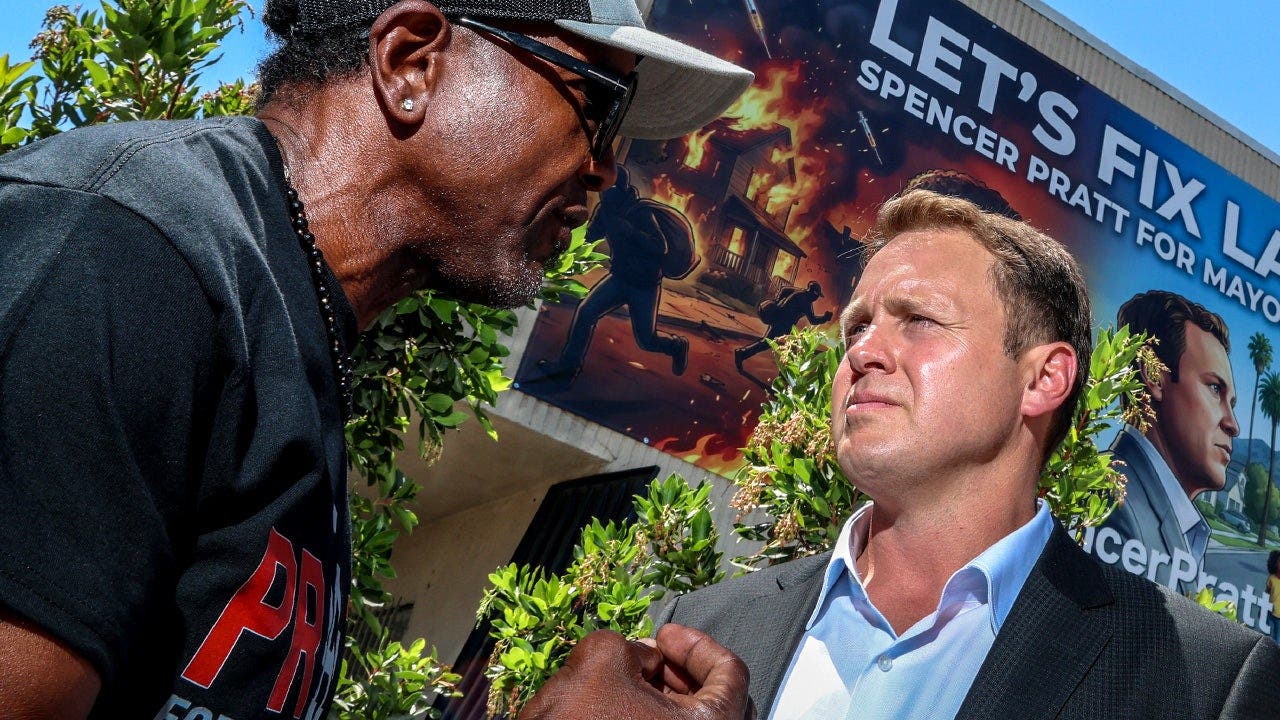
POLICY WIRE — Los Angeles, USA — There’s always another plot twist in this town, isn’t there? It wasn’t a mayor declaring a new civic vision, or a seasoned council member laying out a policy roadmap. Nope. This time, the peculiar whisper turning into a roar involves Spencer Pratt, once best known for cultivating crystals and reality TV notoriety. He’s reportedly exploded in fundraising charts—a veritable gold rush—on the back of a most unusual cohort: desperate ex residents.
It’s a peculiar thing, the civic impulse. Sometimes it means neighborhood cleanups, sometimes it’s impassioned pleas at city hall. But in the city of angels, where aspiration often trumps realism, it apparently now means ex-pats, pining for a past L.A. they can’t quite define, pouring cash into the coffers of a celebrity outsider. These are folks who, we’re told, feel an urgent need to bankroll a campaign to reclaim LA. From what, precisely, remains wonderfully vague, a Rorschach test for every disgruntled former Angeleno with a chequebook and a chip on their shoulder. They’re convinced that someone, somewhere, lost the city’s soul. And now, they’ve tapped a familiar, if unexpected, face to get it back. [QUOTE_PLACEHOLDER]
This isn’t about traditional politicking; that’s clear enough. We’re witnessing something raw — and deeply Californian. It’s an election cycle, sure, but also a cultural reckoning where celebrity often provides a convenient shortcut past policy debates. One day you’re feuding on camera, the next you’re being positioned as the savior of the metropolis. Who needs a white horse when you’ve got an Instagram following? Because, let’s be honest, people respond to a brand more than a blueprint these days.
The money’s rolling in, allegedly from a shadowy consortium of folks who left for places like Nashville, Austin, or Scottsdale, carrying a mix of nostalgia and bitterness in their wake. They miss their old brunch spots, maybe the idea of Griffith Park before the parking got truly biblical. It’s a classic American phenomenon, really: leaving home, only to then try — and change it from afar. Their contributions have reportedly seen Pratt’s financial muscle grow almost overnight, confounding seasoned campaign managers who’d likely dismiss his appeal as, well, not serious enough.
And yet, here we’re. It’s a bold statement about who holds influence now. Not the traditional party structure, not even local advocacy groups necessarily. But an enigmatic coalition of those who fled, funding a personality with undeniable star power. You don’t need an old boy’s network when you’ve got internet reach — and a vague promise to ‘reclaim’ things.
But what does this ‘reclaiming’ entail? Affordable housing? Less traffic? Better surfing conditions? A return to a simpler, more glamorous era of Hollywood perhaps, before TikTok complicated everything? The platform, in this new political landscape, sometimes feels less important than the feeling. It’s about tapping into a collective angst, a shared yearning for what used to be—or what they think used to be.
Consider the broader implications for diasporic influence, a dynamic well understood in many parts of the world. Just look at the Pakistani diaspora, for instance, particularly those in the Gulf or North America. Their remittances don’t just support families; they often play an unspoken role in their homeland’s economic stability, and increasingly, they exert political pressure from afar. They invest, they send money home, — and sometimes, they weigh in on who should be leading. A 2022 World Bank report, for instance, showed Pakistan receiving an estimated $29.9 billion in remittances that year alone, much of it from expatriates invested in their home country’s future and, implicitly, its governance. So, this ‘ex-resident’ phenomenon isn’t just some quirky LA story; it’s a localized manifestation of a global truth: those who leave often never truly cut the cord.
It speaks to a deeper malaise, a sense that local government isn’t delivering, prompting people to look beyond traditional channels. This isn’t just about L.A.’s gridlock or homelessness crisis; it’s a frustration that fuels what some might call ‘soft power from exile.’ If you’ve got enough money, you can certainly try and shape the narrative—and maybe even the outcome—of a local election, no matter where you live now. This movement feels less like an organized political machine and more like an investment in a very specific brand of cultural grievance, dressed up in civic ambition.
What This Means
Politically, Pratt’s ascent highlights the continued fracturing of established political capital. It suggests that celebrity endorsement, or in this case, direct celebrity candidature, is morphing into a viable, sometimes even preferred, path to power, particularly at the local level where name recognition can mean everything. This trend short-circuits the traditional campaign trail, prioritizing instant resonance over slow-burn policy discussions. For L.A., it portends a potentially tumultuous future where the city’s complex, systemic issues might get sidelined by broad, emotive promises of ‘reclamation.’
Economically, this scenario points to the considerable, and often untapped, financial leverage of affluent, disaffected former residents. It suggests that money flowing from outside a locality can disproportionately influence its internal political dynamics. Think of it as an economic referendum on a city’s current trajectory, paid for by those who’ve voted with their feet. If these trends continue, we might see more ‘exile funds’ shaping the political landscape, a new kind of electoral theater where personal connection trumps community immersion. And it’s also worth noting the symbolic value here; wealth leaving a region, only to return as political capital, speaks volumes about a shifting sense of belonging and civic duty. It’s a red flag waving over local democracy, hinting at what might be bought and sold next.
In short, whether Pratt becomes the accidental mayor or simply another footnote in L.A.’s sprawling, bizarre history, his surprising fundraising push signals a seismic shift. The city, — and perhaps cities everywhere, better be ready.