


The £120M Puzzle: Player Exodus and Financial Rebalance at Stamford Bridge
POLICY WIRE — London, England — Forget the beautiful game for a moment. Instead, picture the high-stakes trade of human capital, meticulously quantified — and shuffled across global markets. This...

POLICY WIRE — London, England — Forget the beautiful game for a moment. Instead, picture the high-stakes trade of human capital, meticulously quantified — and shuffled across global markets. This isn’t about commodities or derivatives; it’s just the raw, unsentimental reality of top-tier football, where club loyalty often bends to the unyielding will of the ledger. And right now, Stamford Bridge—that famous ground of Chelsea Football Club—finds itself squarely in this transactional vortex, trying to reshuffle its hand with another manager, Xabi Alonso, stepping up to the roulette wheel.
It’s a peculiar spectacle, this ongoing dance of astronomical sums — and fleeting affections. A club like Chelsea, recently bought and quickly looking to redefine its identity, has found itself needing a hard reset. There’s a fresh face in the dugout, — and he’s reportedly drawing some lines in the sand. He’s said to only want players who are 100% committed to the club as part of the squad. Sounds simple, doesn’t it? But commitment in this realm often equates to value, and a player’s desire to depart can drastically impact that. [QUOTE_PLACEHOLDER]
Enter Enzo Fernandez, the Argentine midfielder whose arrival felt like a fresh breeze, but who now, apparently, yearns for new horizons. He’s only been there three — and a half years, you know. Still, his intentions are quite clear. Real Madrid is in the picture, certainly. Club reports and market analysts indicate Chelsea are said to value Fernandez at £120m—a staggering sum in any currency—yet Madrid reportedly isn’t eager to meet it. That figure alone should tell you all you need to know about the economy of a football superstar, and the sometimes arbitrary, dizzying sums involved. Sometimes a club simply needs the cash flow. It’s an inconvenient truth, but cash does still rule the game.
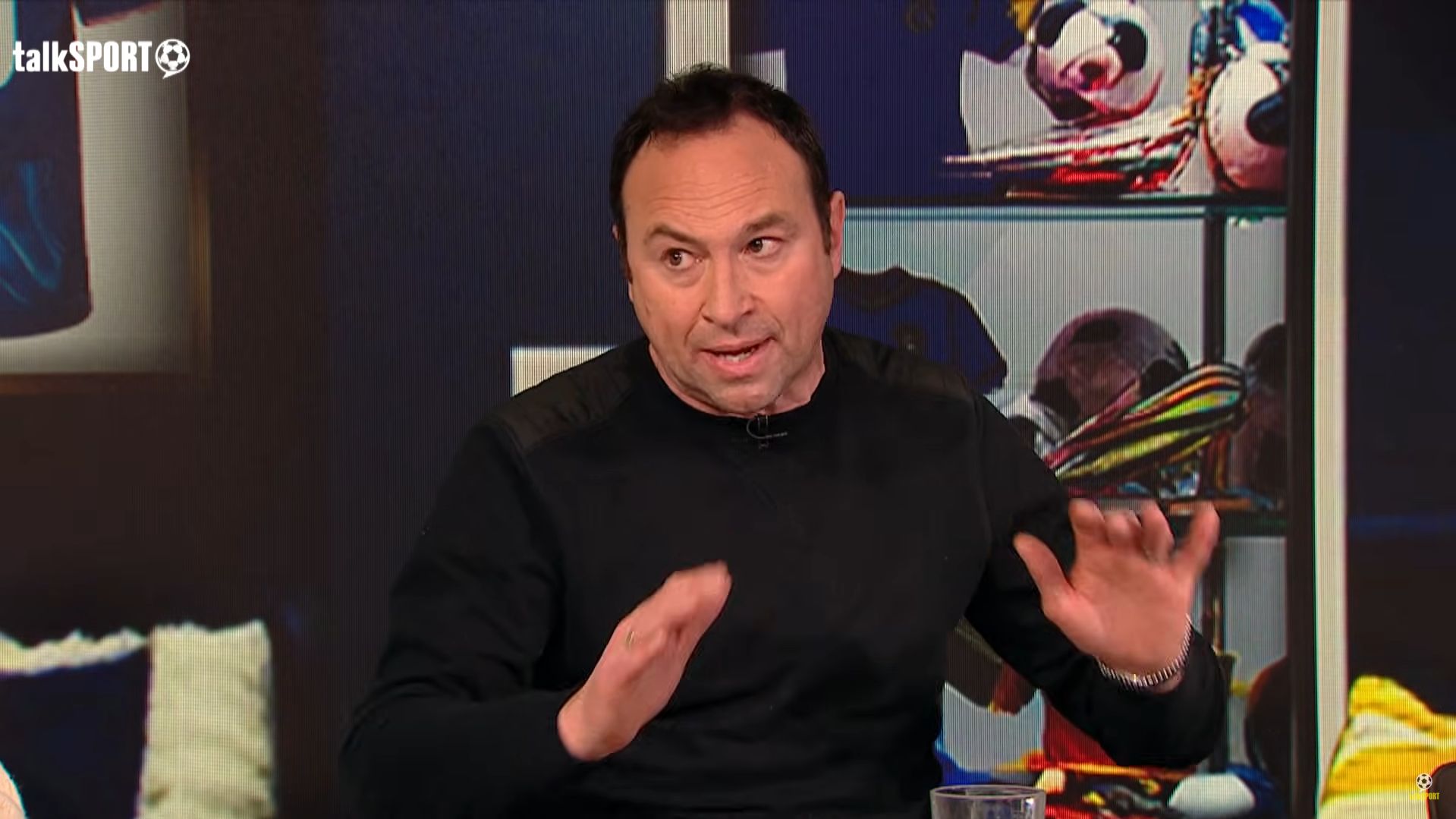
So, the search for a replacement becomes a game of musical chairs with multi-million-pound implications. There’s a pundit, Jason Cundy, who’s laid out a surprisingly blunt suggestion for Chelsea’s next move, if Fernandez does indeed pack his bags. Cundy has eyes on Bruno Guimaraes, the Newcastle United midfielder, to fill the Argentine’s boots. His rationale for this particular move hinges less on pure footballing brilliance—though Guimaraes has plenty of that—and more on what can only be described as calculated, cold economics.
He put it plainly to talkSPORT: And they [Newcastle] will, by all accounts, have to sell financially. I’m on board with that – that’s double thumbs up, that. It’s a sentiment that probably makes accountants sleep better than football romantics. But this isn’t a story for romantics, is it? This is about leverage, assets, — and liquidity. And it reflects the brutal reality for even ambitious clubs like Newcastle, who operate under the relentless gaze of financial fair play rules and the insatiable demands of the global market.
Chelsea’s management, they can’t afford to get wrong this summer window. There’s a clear shopping list: a new centre back, another midfielder (maybe Guimaraes, maybe not), — and an attacker. But it’s not just about who’s coming in; a number of players who need to be moved on. It’s a complete overhaul, an aggressive rebalancing act, hoping to turn past spending into future success. But getting all those chess pieces to fall where they should? That takes some doing. And money. Lots of money.
What This Means
The perpetual churn at elite European football clubs like Chelsea serves as a potent microcosm of the globalized labor market, albeit one lubricated by petrodollars and unprecedented broadcasting revenues. These massive transfer fees—such as the stated £120 million valuation—aren’t just digits on a screen. They represent the distilled value of rare human talent, driven by performance, market scarcity, and fan fervor, all bundled up and sold to the highest bidder. This commercial framework often eclipses any romantic notion of sport, pushing football deeper into the realm of geopolitics and economic strategy. For instance, the sheer scale of investment in European football clubs, often from Gulf states or other foreign entities, inadvertently ties cultural passions to economic diplomacy. It provides soft power leverage, a global visibility that can resonate from Manchester to Karachi. Millions across South Asia and the broader Muslim world watch these leagues with avid devotion, and the players and financial flows here become part of a larger global narrative—one of aspiration, wealth, and influence.
the requirement for clubs like Newcastle to sell financially speaks to the regulatory strictures imposed by football’s governing bodies, attempting to enforce a semblance of fiscal responsibility—a concept that seems quaint when nine-figure sums are bandied about for a single individual. This dynamic forces a constant evaluation of player assets, a calculation of their present utility versus their potential market value. It becomes a brutal zero-sum game, where one club’s financial relief can be another’s opportunity to strengthen. Such a system encourages short-term thinking, a relentless pursuit of immediate gratification in results and revenue, frequently at the expense of long-term stability or, indeed, the cultivation of loyalty both on and off the pitch. For a more expansive look at such financial maneuvers, one might consider The Calculated Art of Letting Go in the broader European context. And it’s not just players; managers become figures of immense capital investment and short shelf-lives, their successes or failures often deciding fortunes faster than a blink. Beyond the Scorecard details how this volatility echoes in broadcasting and economic trends.