

Tehran’s Quiet Shift: The Weight of an Empty Chair After Khamenei
POLICY WIRE — Tehran, Iran — The chanting’s faded now. After days of carefully orchestrated grief—a vast, heaving ocean of black-clad faithful coursing through Tehran’s arteries, past...

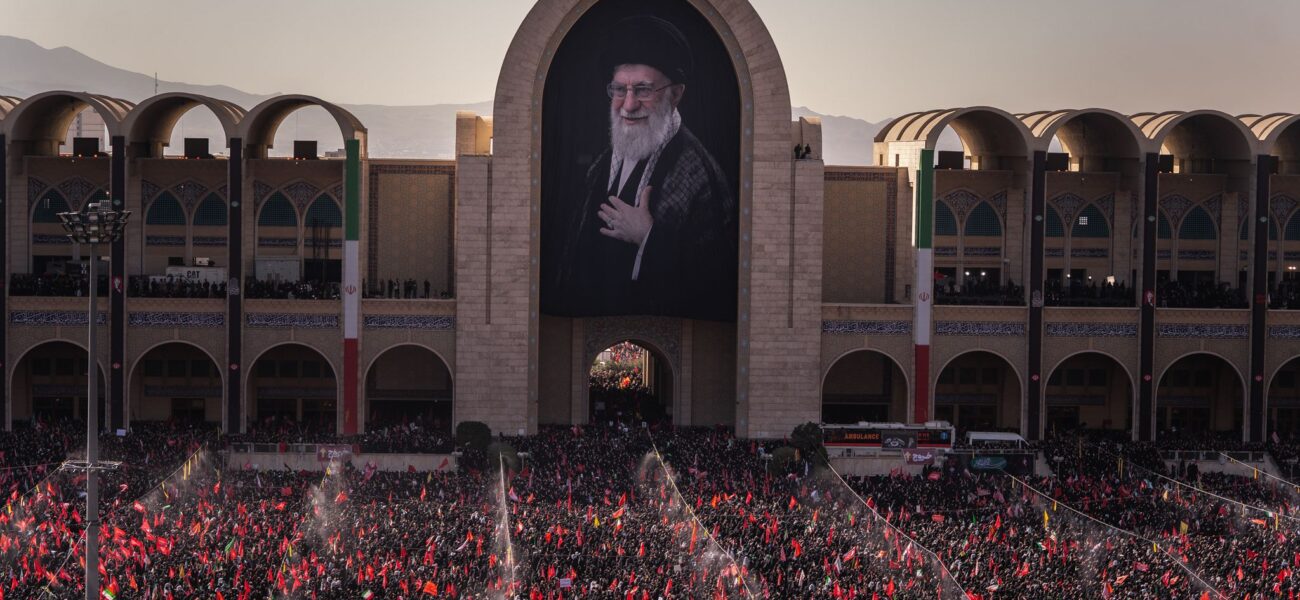
POLICY WIRE — Tehran, Iran — The chanting’s faded now. After days of carefully orchestrated grief—a vast, heaving ocean of black-clad faithful coursing through Tehran’s arteries, past images of the man they eulogized as architect of a modern revolution—the silence feels almost louder than the dirges. Streets are returning to their slow churn. Shopkeepers in the Grand Bazaar aren’t discussing the succession openly, not yet, but the knowing glances, the hushed conversations over cardamom tea, they’re everywhere. Supreme Leader Ayatollah Ali Khamenei has taken his final rest in Qom, his passing marking not just the end of a singular life, but the closing of a distinct, iron-willed chapter for the Islamic Republic. It’s a seismic shift, — and everyone knows it.
His body now beneath the earth, the true struggle begins above it. For over three decades, Khamenei stood as the ultimate arbiter, the theological anchor, the one who held every sensitive decision in his hand, a guiding figure for generations. And suddenly, he’s gone. His departure creates a power vacuum the likes of which Iran hasn’t seen since Khomeini’s death in ’89. The formal process dictates the Assembly of Experts—an 88-member body of clerics—will convene. They’ll weigh potential candidates, ostensibly based on piety, administrative acumen, and a deep understanding of jurisprudential governance. But don’t kid yourself. It’s never that clean, is it?
Behind the velvet curtains, the Islamic Revolutionary Guard Corps (IRGC), a state within a state, will flex its considerable muscle. They’ve long been seen as the primary guarantors of the system, guardians of the revolution, with vast economic holdings and ideological sway. And they’re certainly going to have a powerful say in who eventually inherits the mantle. You’d be foolish to think otherwise. The choice of successor will redefine Iran’s trajectory, potentially softening or hardening its stance against the West, shaping its nuclear ambitions, and — perhaps most significantly — its posture in an already volatile Middle East.
Regional players, especially across the Muslim world, are watching with bated breath. In Islamabad, officials are undoubtedly considering the implications for geopolitical stability. Iran, as a major Shi’ite power, plays a monumental role in shaping the political landscape from Iraq to Yemen, Lebanon to Afghanistan. Pakistan, a Sunni-majority nation, shares a long border with Iran and its own complex relationship with both regional sectarian dynamics and U.S. foreign policy. Any internal turmoil in Tehran could spill over, creating headaches along shared frontiers, influencing trade, or impacting proxies. “We have always navigated complex regional realities, and the stability of our neighbors remains paramount,” one senior Pakistani diplomat, who spoke on condition of anonymity, conceded when pressed on the matter.
Because, for ordinary Iranians, the future feels distinctly opaque. Many younger citizens, increasingly disillusioned by economic hardships and social restrictions, weren’t particularly enthused by the state’s outpouring of grief. Youth unemployment, for instance, hovered stubbornly above 20% in 2023, according to World Bank figures, a stark reality often masked by state media narratives. It’s hard to mourn when you’re worried about where your next meal is coming from, or when your protests are met with a swift, often brutal, response. But what choice do they’ve? None, really.
President Ebrahim Raisi, a hardliner already eyed as a potential successor, delivered a somber eulogy, urging unity. “The enemy dreams of our division, but they will find only an iron fist of unwavering resolve,” Raisi proclaimed to the mourners. He’s positioning himself, of course, for a broader role, as are many others. The deep state is playing chess. They’ve been preparing for this day for years, you can bet your last rial on it.
📄 POLICY WIRE WHITEPAPER PUBLISHED: PAKISTAN'S NATIONAL SECURITY POLICY PRIORITIES
👉 READ BY CLICKING HEREWhat This Means
Khamenei’s death isn’t just a political changing of the guard; it’s a profound inflection point. Economically, the country’s severe brain drain, persistent inflation, and heavy international sanctions mean the new leadership inherits a deeply challenged domestic situation. They’ll need to demonstrate legitimacy — and capability quickly to an already restive populace. Politically, the question isn’t just who follows Khamenei, but what kind of leadership emerges. Will the next Supreme Leader maintain the ironclad revolutionary principles and anti-Western stance, perhaps even intensifying it? Or will an unexpected consensus-builder emerge, however unlikely given the current climate?
For regional stability, expect a period of nervous quiet. States like Saudi Arabia — and Israel will be analyzing every flicker of intent from Tehran. Any perceived weakening could tempt rivals; any consolidation of a more aggressive hardline stance could push an already combustible region closer to the brink. It’s not just about a leader, it’s about an entire ideological infrastructure built around him. Breaking news: structures like that don’t just disappear. The consequences of this transition, internal — and external, will reverberate for years. Policy Wire will be here to track them all, as it has done since the start, observing the intricate dance of power in this complex corner of the world, from Tehran’s streets to Damascus’s precarious calm.