


Inflation’s Cruel Pencil Push: A Native Food Truck, New Mexico’s Parents, and the Shifting Cost of Childhood
POLICY WIRE — ALBUQUERQUE, N.M. — It’s a familiar seasonal rhythm, one played out in department store aisles and harried parents’ calculations: the annual back-to-school shopping frenzy. But...

POLICY WIRE — ALBUQUERQUE, N.M. — It’s a familiar seasonal rhythm, one played out in department store aisles and harried parents’ calculations: the annual back-to-school shopping frenzy. But this year, in the sun-baked streets of Albuquerque, a modest family-run food truck, Urban Rez Kitchen, is doing more than just dishing out good food. It’s wading into the thorny economics of childhood, and by doing so, spotlighting a financial struggle that ought to make Washington squirm. Because when a food vendor becomes a de facto social safety net, you know something in the broader system isn’t quite right.
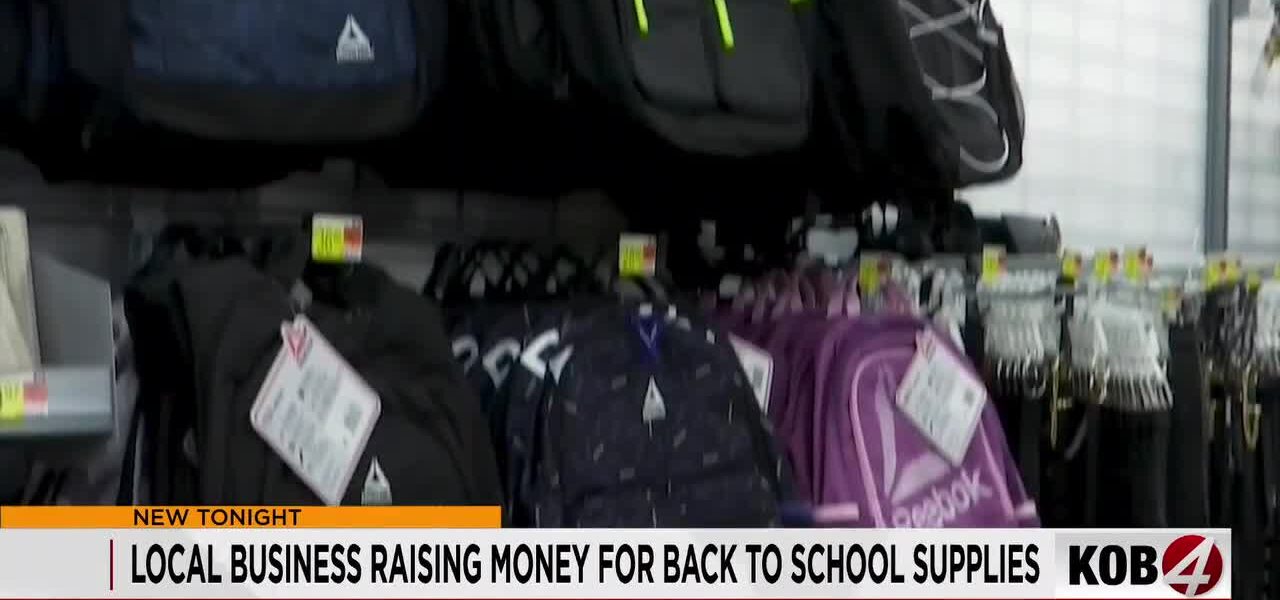
Tyrone Arkie, the man behind the griddle and the mission, isn’t angling for a pat on the back; he’s simply confronting a cold, hard fact: educating a child in America costs money. A lot of it. And that tab keeps climbing. With his family’s Urban Rez Kitchen, Arkie, alongside Americans for Native Opportunity and the Native Leadership Collective, aims to equip 400 local kids with the basic necessities. Not luxuries. Just pencils, notebooks, and backpacks—the tools for entry into what we still, charitably, call opportunity.
“Look, I grew up with siblings. I saw how fast the costs mounted, even then,” Arkie recently remarked, stirring a simmering stew of green chile perhaps, while discussing the stark economics of composition books and crayons. “Now, with my own two kids, you’re looking at well over a hundred bucks just for the absolute basics. That’s a mortgage payment for some folks, or groceries for a week. It’s not just ‘some extra cash’ anymore.” His initiative offers a direct, no-questions-asked solution: “When they come to the event, Aug. 1, they can get whatever they need, just like my kids. They need what they need.” It’s a pragmatic, almost brutal simplicity—a testament to real-world problems demanding immediate, undiluted answers.
And those real-world problems are intensifying. The National Retail Federation (NRF) projects that the average family with K-12 students expects to shell out a staggering over $890 on back-to-school supplies this year, an all-time high—a figure that, for many, is simply unreachable. That’s a 15% jump since pre-pandemic levels. Inflation isn’t just a number on cable news; it’s the cost of a fresh start for a child. But for some, that cost is prohibitive. It’s what transforms an ordinary August tradition into a fiscal tightrope walk, often forcing parents to choose between a full pencil case and a full pantry.
The situation in New Mexico isn’t unique, but its starkness, set against a backdrop of historic struggles within Native American communities, lends it a particularly biting edge. These communities often find themselves navigating the treacherous shoals of insufficient resources, where governmental pledges of support frequently falter at the local level. The state’s tax-free weekend, running July 31 through August 2, offers a slight reprieve. But for those scraping by, 5 or 8 percent off an already impossible sum changes little. It’s like putting a band-aid on a gushing wound—it looks good, but the underlying issue persists.
Congresswoman Melanie Stansbury, whose district includes Albuquerque, didn’t mince words when Policy Wire inquired about the broader context. “Mr. Arkie’s work, and the work of so many community organizers, is a heroic effort,” she stated, her voice tight with conviction. “But it shouldn’t have to be. We’ve got to confront why American families, right here in the wealthiest nation on earth, are forced to rely on local businesses to ensure their kids have pens and paper. This isn’t just about charity; it’s about systemic economic inequality that demands a national response, not just community goodwill.”
📄 POLICY WIRE WHITEPAPER PUBLISHED: PAKISTAN'S NATIONAL SECURITY POLICY PRIORITIES
👉 READ BY CLICKING HEREEven Governor Michelle Lujan Grisham, often keen to trumpet New Mexico’s progressive policies, had to concede the persistent bite of economic pressure. “We’re doing everything we can at the state level to alleviate these burdens, from tax holidays to investing heavily in education,” she said in a recent policy briefing, responding to a question on back-to-school costs. “But the reality is, global economic shifts, combined with decades of underinvestment, mean that too many families are still facing excruciating choices. We applaud local initiatives like Urban Rez Kitchen, because they fill gaps that, frankly, shouldn’t exist.” Her acknowledgment, however measured, suggests an inconvenient truth that governments, despite their best intentions, can’t always smooth over.
This reliance on community benevolence isn’t alien to other parts of the world, either. Consider families in Pakistan’s Karachi, navigating similarly complex urban economies where school fees, uniform costs, and basic supplies represent an annual financial hammer blow. For them, often with thinner safety nets, the kindness of strangers, the local mosque, or a relative’s strained remittance is often the only way a child can step foot in a classroom with a modicum of dignity. The U.S. might boast a vastly different economic stature, but the gnawing anxiety of parental provision, and the subsequent scramble for resources, echoes across continents, exposing a global underbelly of vulnerability where education, theoretically a universal right, becomes an aspirational commodity.
Urban Rez Kitchen isn’t just selling tacos or serving a community; they’re quietly serving notice. They’re pointing a finger not at the kids who need the help, nor at the parents struggling to provide it, but at the economic currents that make such extraordinary measures necessary in the first place. Their efforts are a balm, sure. But they’re also an uncomfortable mirror held up to a society that often prefers its crises neatly compartmentalized, rather than confronting the fact that a food truck is patching up holes in the foundation of its next generation.
What This Means
The Urban Rez Kitchen initiative, though localized and ostensibly about school supplies, serves as a poignant barometer for America’s broader socio-economic health. Economically, it points to the silent capitulation of mainstream economic policies to persistent inflationary pressures, especially concerning household budgets. When essential items like school supplies—not just high-ticket items—become a significant financial hurdle for middle- and low-income families, it suggests a profound hollowing out of purchasing power. The implied critique is sharp: despite an era of purportedly robust employment figures, a vast swathe of the population remains precariously balanced on the edge of financial strain, necessitating ad hoc charitable interventions for fundamental needs. Politically, this scenario presents a thorny challenge for incumbents. It allows for partisan skirmishes over who’s to blame for inflation—whether it’s unchecked government spending or corporate greed—but the lived experience of struggling parents often cuts through the rhetoric. And a growing dependence on charity erodes the public’s faith in the state’s ability to ensure a baseline quality of life. For future policy-making, this situation screams for a re-evaluation of how governmental safety nets integrate with the market. Are tax holidays truly effective, or do they merely mask systemic issues? Should education subsidies target specific needs more directly, perhaps mimicking schemes seen in other nations where universal education isn’t just about tuition, but also the attendant, often overlooked, costs of participation? It suggests a critical need for policy shifts that address the ‘hidden’ costs of basic life, before the ‘basics’ become an unattainable luxury for too many, impacting not just individual families but the very bedrock of a functional, educated society. These micro-crises in Albuquerque—much like the complex political economy of the Monroe softball tournament, for example—often reveal larger systemic fault lines beneath the surface of official narratives.