

Stream Dreams, Broadcast Blunders: Netflix’s Big League Strikeout
POLICY WIRE — Los Angeles, United States — For a platform built on predictive algorithms and user experience, Netflix somehow fumbled the most basic requirement of live sports: showing the ball....

POLICY WIRE — Los Angeles, United States — For a platform built on predictive algorithms and user experience, Netflix somehow fumbled the most basic requirement of live sports: showing the ball. Imagine, if you will, spending untold millions to stream one of baseball’s most inherently entertaining spectacles, the Home Run Derby, only to decide, somewhere deep in a production bunker, that fans really wanted avant-garde camera angles more than, you know, seeing the bat connect and the ball fly. It’s a baffling misstep, a directorial ego trip that turned a guaranteed crowd-pleaser into a frustrating, head-scratching exercise for viewers who just wanted to watch some dingers.
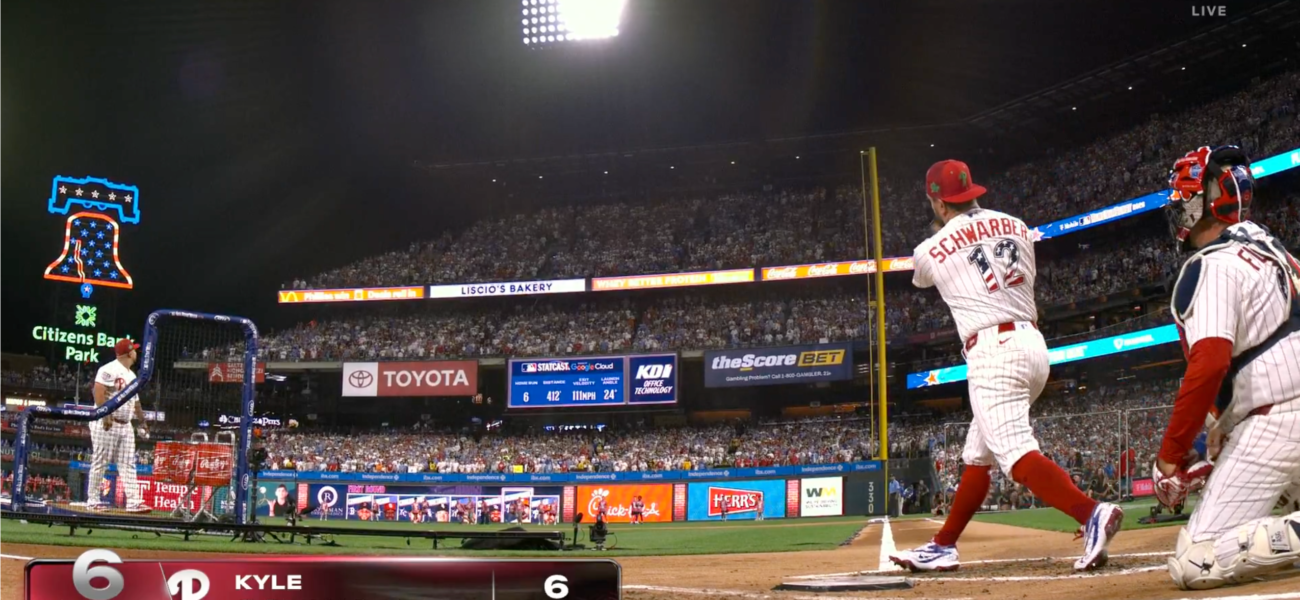
MLB, in an almost counter-intuitive moment of genius, actually streamlined the event this year. They ditched the ticking clock, allowing hitters to swing until they slowed down, rewarding hot streaks instead of rushed hacks. It’s arguably the best structural improvement the Derby’s seen in ages. And yet, Netflix—bless its ambitious, if occasionally tone-deaf, heart—managed to trip over its own cinematic ambitions, snatching defeat from the jaws of a guaranteed victory. One moment you’re marveling at a prodigious blast; the next, you’re staring intently at a pitcher’s strained face, completely missing the ball’s journey. Talk about misplaced priorities.
Because, seriously, who asked for this? The broadcast frequently eschewed the money shot—the moment of impact, the ball’s graceful arc into the stands—in favor of tight close-ups on sweaty foreheads or prolonged stares at the pitcher. Viewers, frankly, just wanted the visual poetry of bat on ball. Instead, it was like a student film trying too hard to be artful, missing the forest for the stylized trees. “We’re not just broadcasting,” explained Sarah Chen, Netflix’s VP of Global Content Strategy, in a prior interview, reflecting the company’s broad vision. “We’re reimagining engagement, constantly iterating on how audiences experience content across diverse cultural landscapes.” But for a global audience, be it in Los Angeles or Lahore, seeing the darn ball remains a universal constant. Netflix’s misjudgment wasn’t just a technical glitch; it exposed a fundamental disconnect between their corporate storytelling ethos and the raw, unvarnished appeal of live athletic competition.
The pre-game circus didn’t help either. While MLB’s Chief Media Officer Robert Davies had confidently asserted that the “partnership represents a commitment to evolving our game, bringing America’s pastime to new screens and new generations,” the platform kicked things off with Will Ferrell and company, a segment whose manufactured awkwardness and terrible audio felt more like an extended commercial than genuine entertainment. It’s the old streaming trap, isn’t it? The reflexive, almost desperate, need to cross-promote; a streaming giant trying to leverage its content kingdom, even if it meant interrupting a sports broadcast. The lack of basic exit velocity data—a standard data point in modern baseball broadcasts, mind you—further stripped away crucial context, leaving stat-hungry fans feeling short-changed. This wasn’t innovation; it felt like a retreat.
And then there was the commentator situation. The main lounge setup with baseball legends Barry Bonds — and Albert Pujols promised insight. They’re Hall of Famers, for goodness sake! But the vibe was more pleasant cocktail hour than incisive play-by-play. They seemed oddly subdued, adding little sparkle to the unfolding action. On the other side, Matt Vasgersian, Anthony Rizzo, and Hunter Pence had the energy, sometimes too much of it, bordering on hyperbolic for routine swings. A proper balance? Somewhere in the middle, but Netflix’s inaugural full-Derby effort seemed intent on missing that sweet spot entirely. The visual blunders culminated in a bizarre non-call involving Junior Caminero’s final swing, where a crucial fair/foul determination was left to viewers’ imaginations, without a single replay. How do you manage that? It beggars belief.
📄 POLICY WIRE WHITEPAPER PUBLISHED: PAKISTAN'S NATIONAL SECURITY POLICY PRIORITIES
👉 READ BY CLICKING HEREWhat This Means
This isn’t merely a baseball broadcast review; it’s a bellwether for the future of live content in the streaming age. Netflix, a behemoth boasting over 270 million subscribers worldwide as of Q1 2024, is pushing aggressively into live events, sports included. Their Derby showing indicates a struggle to balance their brand of high-gloss, curated content with the raw, unpredictable demands of live sport. Politically, this signals a potential new front in the content wars. Traditional broadcasters, for all their perceived staleness, generally understand the assignment: show the game. If streamers can’t nail the basics, they risk alienating fanbases fiercely loyal to their sports. Economically, this means media rights, already astronomically priced, could become even more volatile. Broadcasters bidding billions might demand strict contractual adherence to established norms, or face significant blowback from audiences—and advertisers. If Netflix, or any streamer, fails to deliver a quality product, it not only impacts their own subscriber churn but could also influence how leagues approach future media deals, perhaps favoring established partners who guarantee a baseline viewing experience. It’s about perception; a sloppy broadcast, even of a casual event like the Derby, can damage a platform’s reputation for future, more critical live sports ventures. They need to understand that across global markets, from the Americas to Asia, audience expectations for sports are less about experimental camera work and more about clear, unambiguous storytelling through the game itself. You can’t just be bigger; you have to be better. Or at least, competently average.
Ultimately, Netflix proved it has the format from MLB sorted, — and its infrastructure seems robust enough. But it needs discipline. Real, unyielding discipline. The kind that tells a director, “No, don’t cut to the pitcher’s knuckles. Show us the ball flying into the goddamn bleachers.” It’s a simple truth that somehow became complicated in the pursuit of what can only be described as unnecessary cinematic flair. The broadcast wanted to be epic, but instead, it just left everyone squinting at their screens, asking, “Where’d the ball go?” And for sports, that’s not just a miss; it’s a strikeout. A big one.