


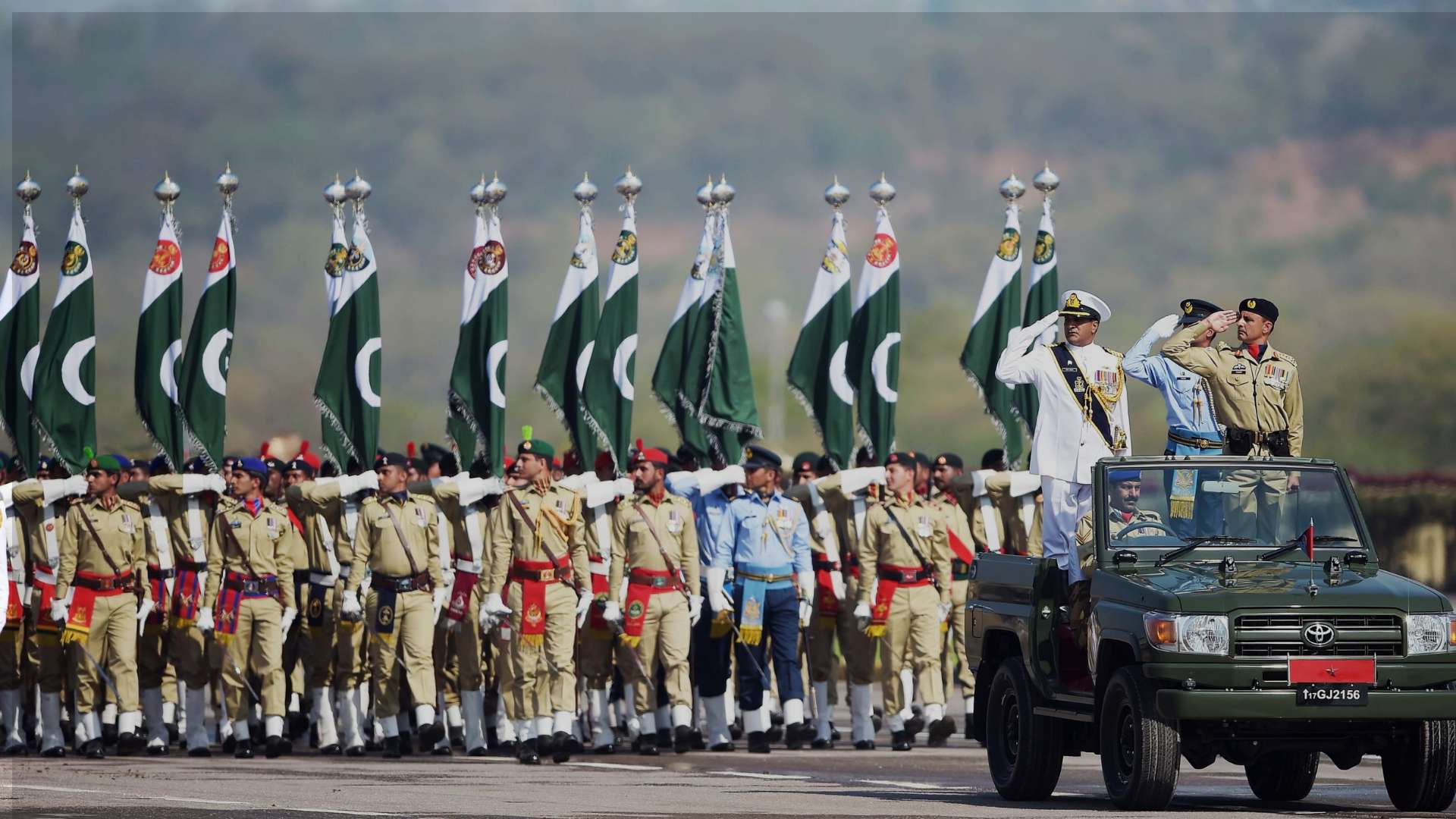
Strategic Necessity: Pakistan’s Defense Spending in a Volatile Region
In recent months, the regional security landscape has become increasingly complex for Pakistan, especially due to escalating tensions with neighboring India. The perceived threat of a potential...

In recent months, the regional security landscape has become increasingly complex for Pakistan, especially due to escalating tensions with neighboring India. The perceived threat of a potential military incursion has prompted Pakistan to reinforce its military posture along its eastern borders. In such a climate, the government has justified the need for sustained, and possibly increased, defense spending to maintain national sovereignty and ensure long-term strategic stability. This rationale does not come out of a vacuum; rather, it emerges from a history of conflicts, frequent border skirmishes, and a persistently unstable diplomatic environment between the two nuclear-armed nations.
To understand this perspective better, it is important to consider the military disparity between Pakistan and India. According to the 2025 Global Firepower Index, India ranks 4th among the world’s most powerful militaries, whereas Pakistan holds the 12th position. More striking is the difference in defense budgets. For the fiscal year 2025, India has allocated approximately $73 billion to its defense sector. In contrast, Pakistan’s defense budget stands at only $6.5 billion. Despite this massive difference in financial resources and equipment procurement capability, Pakistan has successfully maintained a credible deterrence posture. This accomplishment underlines the efficient resource utilization and strategic discipline of Pakistan’s armed forces.
Moreover, Pakistan’s defense strategy is not solely reliant on matching numbers or military hardware; it is grounded in tactical intelligence, terrain familiarity, and swift response capabilities. These strengths have enabled Pakistan to deter aggression despite facing a significantly larger and better-funded adversary. In many ways, this demonstrates the effectiveness of Pakistan’s military doctrine, which focuses on strategic depth, operational readiness, and regional balancing. The concept of minimum credible deterrence remains central to this strategy, ensuring that any aggression would be met with a proportionate and effective response.
Furthermore, recent developments in the region, such as the revocation of Article 370 by India in 2019 and the subsequent military build-up in Indian-administered Jammu and Kashmir, have heightened Pakistan’s security concerns. The lack of progress in diplomatic dialogues, combined with provocative rhetoric from across the border, adds to the urgency of maintaining a well-prepared defense infrastructure. In such an environment, robust military readiness becomes not just a necessity but a matter of national survival.
It is also worth noting that while Pakistan allocates around 2.4% of its GDP to defense, this figure is not excessively high when compared to other countries facing similar security challenges. For example, Israel, surrounded by hostile neighbors for decades, allocates over 5% of its GDP to defense. Similarly, India’s defense spending also represents a significant portion of its national budget. Thus, Pakistan’s defense expenditure should be seen as a proportionate response to the challenges it faces, rather than an undue financial burden on the state.
In fact, the benefits of maintaining strong defense capabilities extend beyond mere deterrence. A stable and secure environment encourages foreign investment, fosters internal development, and promotes a sense of national unity. For instance, the China-Pakistan Economic Corridor (CPEC), a key component of Pakistan’s economic strategy, can only thrive under secure conditions. Any instability, particularly along strategic routes, could jeopardize billions of dollars in foreign investment and infrastructure development. Hence, defense spending indirectly supports economic growth by ensuring that developmental projects proceed without disruption.
Additionally, history has shown that peace is best preserved when strength is assured. In the case of Pakistan, its defense preparedness has prevented major conflicts since the Kargil crisis of 1999. While minor skirmishes have occurred, the presence of capable military forces has often served as a de-escalatory factor, compelling both sides to avoid full-scale conflict. This pattern underscores the importance of maintaining military equilibrium in South Asia, a region often described as a nuclear flashpoint.
Moreover, while some critics argue that defense funds could be redirected toward education or healthcare, it is essential to strike a balance. National security and development are not mutually exclusive; in fact, they complement each other. Without a secure environment, no nation can achieve sustainable progress. Countries such as South Korea and Turkey have managed to grow their economies while maintaining strong defense frameworks, offering examples for Pakistan to follow.
The role of Pakistan’s armed forces also extends beyond conventional warfare. From disaster relief operations during floods and earthquakes to supporting civilian authorities in times of crisis, the military has consistently proven to be a reliable pillar of national resilience. Such contributions further justify the investment in their training, welfare, and operational capacity.
In conclusion, while the disparity in military spending between Pakistan and India is vast, the effectiveness of defense is not determined solely by the size of the budget. Strategic foresight, efficient use of resources, and a well-trained military force have enabled Pakistan to maintain a balanced and stable position in the region. As long as tensions remain unresolved and diplomatic channels face hurdles, Pakistan’s justification for maintaining a strong defense posture remains valid. The preservation of sovereignty, protection of strategic interests, and deterrence of potential threats are responsibilities that demand preparedness. Thus, in the current geopolitical context, Pakistan’s defense spending is not just a policy choice-it is a strategic imperative.
Author