


Ghost in the Baltic Fog: Moscow’s Naval Gambit off German Shores
POLICY WIRE — Rügen, Germany — There’s a certain grim ballet playing out in the chill waters of the Baltic, a quiet but potent dance of provocation and watchful response. It isn’t always overt,...

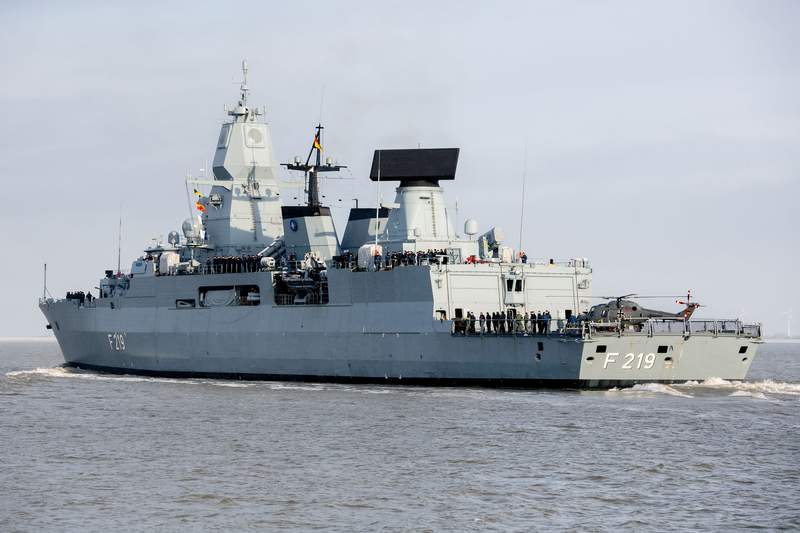
POLICY WIRE — Rügen, Germany — There’s a certain grim ballet playing out in the chill waters of the Baltic, a quiet but potent dance of provocation and watchful response. It isn’t always overt, loud. Sometimes, it’s just a shape on the horizon, a silhouette appearing where it wasn’t expected—and certainly not welcomed. And that’s precisely what transpired when a Russian warship recently decided to casually loiter just off the tranquil German island of Rügen. Call it a routine patrol, call it a subtle flex, or call it Moscow’s habitual tug on Europe’s already frayed nerves; either way, it doesn’t escape notice.
It’s not just some accidental detour for a misplaced trawler, is it? This isn’t a friendly wave. This sort of presence — particularly from a nation currently engaged in Europe’s most brutal land war in decades — registers like a high-pitched whine that only certain ears can pick up. Those ears belong to naval command centers, to intelligence analysts, and to policymakers already grappling with a continental security reshuffle.
“We monitor these provocative acts with unwavering resolve,” stated Hans Müller, a calm, deliberate spokesperson for the German Ministry of Defence. “It’s a clear message, perhaps intended to disrupt, but frankly, it’s one we’ve heard before, in varying nautical guises. Our maritime assets remain vigilant; our airspace and territorial waters are sacred.” His tone was steady, almost practiced, like a conductor describing a discordant note he’s long learned to anticipate.
The incident itself was deceptively mundane: a vessel, identified as Russian, operating in international waters but close enough to trigger radar pings and diplomatic murmurs. But its location? Rügen. That’s Germany’s backyard, an island known more for its white cliffs — and beach resorts than as a potential flashpoint. But in this new, old Cold War — or whatever you want to call this mess — everything’s a potential flashpoint.
The geopolitical backdrop here couldn’t be starker. European nations, Germany prominent among them, have pumped billions into Kyiv’s defense efforts. They’ve sanctioned Russia to the hilt, endured energy crises (partially of Russia’s making, mind you), and are now in the midst of a scramble to rearm themselves. Germany, famously reticent about military spending for generations, has pledged a colossal €100 billion special fund to modernize its armed forces, pushing its defense spending towards the NATO target of 2% of GDP—a figure unseen in decades, and one reported by NATO statistics as having been just over 1.3% as recently as 2021. Because when a neighbor acts like a schoolyard bully, you eventually learn to buy bigger shoes. Or, you know, missiles.
“NATO’s commitment to collective defense isn’t a theory; it’s what these persistent incursions aim to test,” declared Sarah Jenkins, a NATO Allied Maritime Command Media Officer, her voice crisp over a secure line. “We’re watching. They know we’re watching. This isn’t a game, but it’s certainly a well-rehearsed strategy to probe boundaries.” Her assessment underscored the subtle aggression that defines these close encounters, a dance on the edge of legality and decency.
But beyond the immediate security chatter, what does such an incident *really* signal? Is it just a cost-free intimidation tactic, a sort of ‘boo!’ to Brussels, or something more? These seemingly small chess moves always carry larger implications, reverberating far beyond the sandy beaches of the German Baltic coast. And that’s where the analysis needs to stretch its legs, not just look at the direct maritime threat but the expansive political ripple. (Sometimes, it just makes you shake your head at the theater of it all, doesn’t it?)
What This Means
This Baltic foray isn’t just about Germany’s immediate security; it’s a bellwether for the wider global chessboard. Russia’s continued demonstration of force, however restrained, maintains pressure on Western unity, pushing NATO members like Germany to prioritize military readiness. And this isn’t just about what Germany does internally. When a nation diverts massive funds to its own defense — necessitated by an external threat — it invariably has knock-on effects elsewhere. Bilateral aid, trade initiatives, even diplomatic bandwidth directed towards emerging economies often get squeezed.
Take, for instance, Pakistan. A country juggling its own complex internal dynamics and navigating its position amidst shifting global alliances—balancing historic ties with the West against growing economic and security cooperation with powers like Russia and China. This European theatric reminds Islamabad that global stability is fragile, influencing decisions on everything from energy imports (Pakistan remains a potential market for Russian energy) to its strategic autonomy. Germany’s economic prowess, usually a significant factor in international development partnerships, becomes slightly more insular when facing such direct, sustained threats. Kyiv’s enduring fight is just one front; the Baltic represents another, silently siphoning attention and resources that could otherwise be used to bolster economic ties or stability in South Asia. So, while a Russian warship off Rügen feels geographically distant, its implications for global diplomatic and economic prioritization are anything but.
Because ultimately, when the major powers start clashing even subtly in strategic waters, every other nation, regardless of how far removed, feels the vibrations. It means altered investment flows, reshaped diplomatic agendas, and a continuous reassessment of who your true friends are, and who just tolerates you because of the present political convenience. And for countries striving for stability and development, that continuous reassessment isn’t just exhausting; it’s a profound strategic headache.