

Strategic Convergence: Why Pakistan-Azerbaijan Ties Matter More Than Ever
This week, Azerbaijan Deputy Economy Minister Samad Bashirli visited Islamabad, which was more than a routine diplomatic visit. The visit was a statement of intent an acknowledgment that Azerbaijan...

This week, Azerbaijan Deputy Economy Minister Samad Bashirli visited Islamabad, which was more than a routine diplomatic visit. The visit was a statement of intent an acknowledgment that Azerbaijan and Pakistan are ready to elevate their long-standing political relationship to a new level marked by economic and strategic partnership.
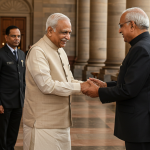
The Islamabad conferences, in particular the one involving Bashirli and Abdul Aleem Khan, the Pakistani Federal Minister for Communications, illustrate the rapid turnaround of regional dynamics. Against the background of global uncertainty, supply chain shifts, and heightened geopolitical rivalry, smaller yet strategically placed nations such as Pakistan and Azerbaijan are becoming empowered through bilateral alliances.
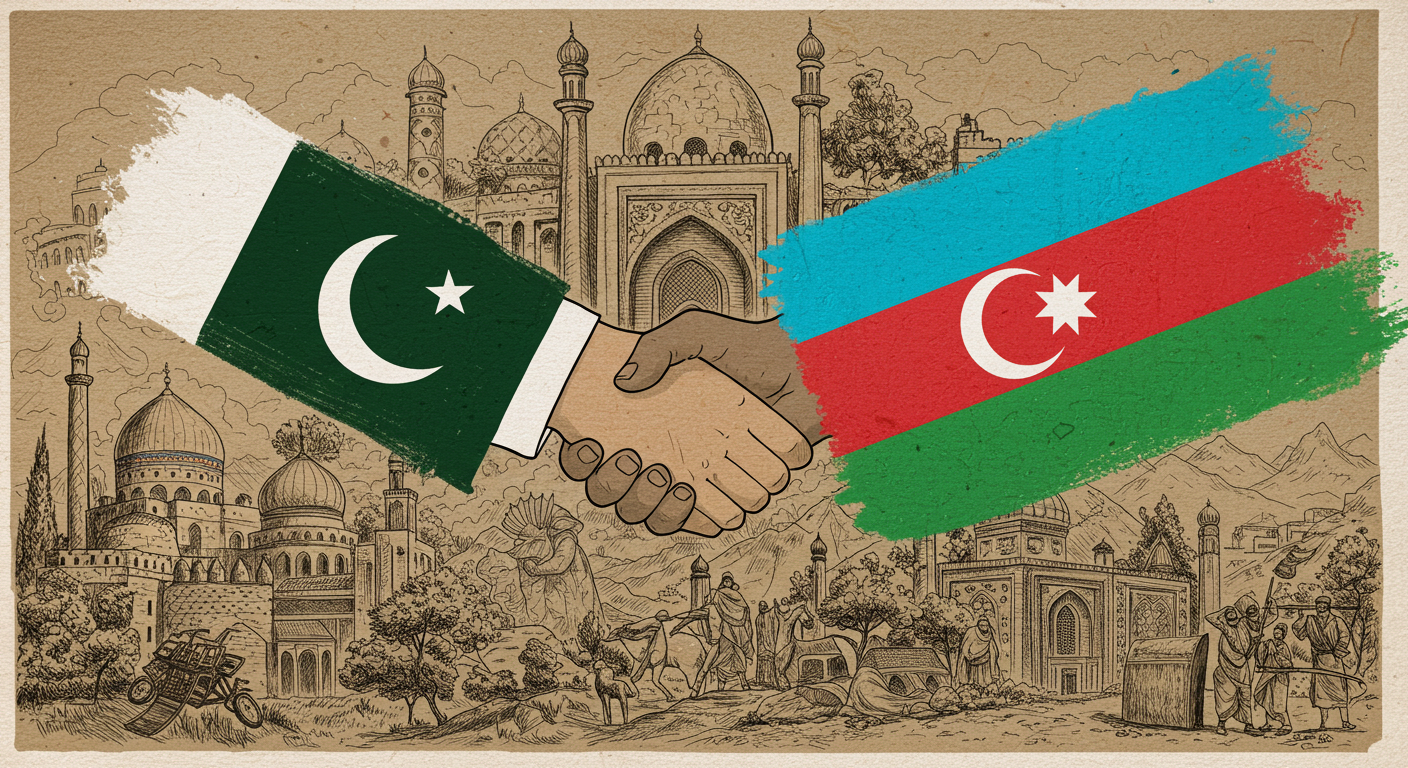
To Pakistan, this relationship is not merely a material source of benefit but supremely symbolic. Azerbaijan has never hesitated to stand with Pakistan, particularly where there has been diplomatic tension with India. Such loyalty has yielded large returns in Islamabad’s foreign policymaking, as well as in the form of wide public approbation. The simultaneous showing of Azerbaijani, Turkish, and Pakistani flags whether promoted in Baku souvenir shops or waved by crowds at national events in Pakistan is no accident. It is the manifestation of a profound convergence based on common values, regional identity, and self-confidence.But trust alone is not enough. This visit underscores that both countries are now ready to translate their feelings into a tangible structure through trade channels, flows of investments, and cooperative institutions.
Abdul Aleem Khan’s claim that Pakistan offers a market of over 250 million people is not just demographical bravado; it is actually a real opportunity. Not only does Pakistan’s population comprise over a billion people, but it is also youth-oriented, technologically advanced, and urbanizing at a fast pace. As the country reforms its regulatory environment and invests in building infrastructure through initiatives like the China-Pakistan Economic Corridor (CPEC), it is creating both the physical and economic infrastructure on which to found increased cross-border trade.
Azerbaijan, strategically located between Europe and Central Asia, will greatly gain from belonging to this economic order. Expansion of the energy industry in the country, logistic capability, and the imperative of becoming a Eurasian transit point all converge with Pakistan’s aspirations to construct regional connectivity from the Caspian Sea to the Arabian Sea.
This is more than diplomatic theory. The Pakistan-Azerbaijan Chamber of Commerce, already operational in Islamabad, is evidence of the intent of both parties. It’s creating connections between private sectors, creating investment potential, and lowering bureaucratic barriers all the kind of behind-the-scenes activity that turns talk into action.
Wider still, this outreach is symptomatic of Pakistan’s shifting priorities in foreign policy. Regionally, conventional diplomatic efforts have been overshadowed by stories of war primarily with India. However, Pakistan’s recent forays from Central Asia to Africa are evidence of a shift in approach towards economic diplomacy. Rather than being a response to long-standing competition, Pakistan is currently developing new alliances premised on mutual gain and collective development.
This has nothing to do with trade volumes or investment shares. It’s all about reordering Pakistan’s position in the world and region. Strategic autonomy, once conceived in purely military terms, now rests on the development of diversified economic ties that can shield Pakistan from coercion or exclusion. The timing of the move by Azerbaijan is significant. When powerful world players are too busy with their own domestic issues, Baku sees Pakistan as a stable and rising power in South Asia a country that has vast size, a strategic location, and an eagerness to engage in cooperation. This self-assurance, as perceived in the attitude and outcome of Bashirli’s visit, is a diplomatic achievement for Islamabad.
There are challenges. Converting infrastructure plans into functioning trade corridors requires funds, coordination, and security arrangements. Pakistan is not waiting for perfect conditions to materialize. It is working assiduously all the while investing in improving its road infrastructure, increasing its port facilities, and automating its trading procedures. Every agreement with Azerbaijan feeds into this development path.
Its geopolitical relevance is no less significant. It demonstrates that Pakistan does not depend on the sanction of great powers to make considerable alliances. The country has allies such as Azerbaijan who remain with it on the basis of respect, not compulsion. In a world where external power is usually conditional, this type of alliance is uncommon and highly valuable.
In brief, Islamabad’s sessions were more than a photo event. Their priority agenda was the re-working of the bilateral framework. Since both countries look towards a future that is characterized by connectivity, energy security, and economic interdependence, this visit can be viewed as a turning point where a friendly relationship transformed into a strategic partnership. For Pakistan, it is another step on the path to a foreign policy worthy of its ambitions: assertive, collaborative, and based on economic power.
Author