
Spain’s Secular Soul: Pope’s Grand Tour Hits Hard Realities
POLICY WIRE — Madrid, Spain — Forget the predictable pomp. Pope Francis isn’t just dropping into Spain for a ceremonial handshake and a blessing of dusty cathedrals; he’s on a political...

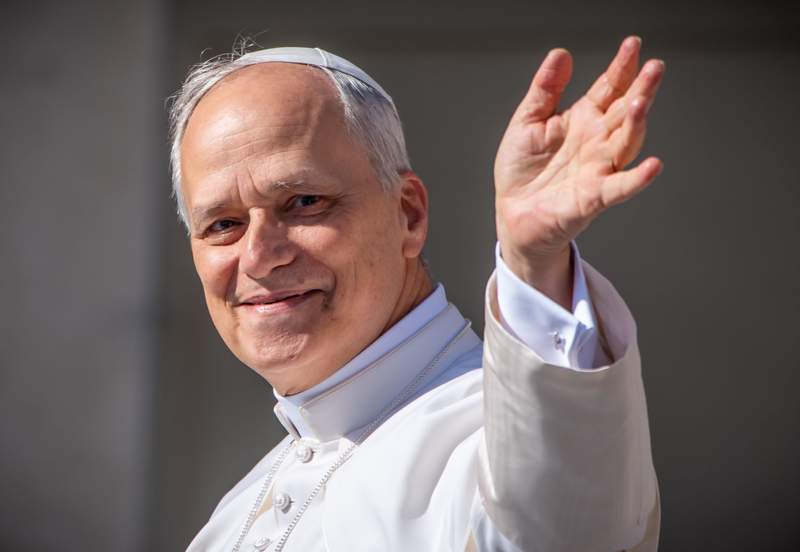
POLICY WIRE — Madrid, Spain — Forget the predictable pomp. Pope Francis isn’t just dropping into Spain for a ceremonial handshake and a blessing of dusty cathedrals; he’s on a political tightrope walk, and everybody knows it. His six-day sojourn, sweeping from the ancient boulevards of Madrid to the sun-baked outposts of the Canary Islands, feels less like a triumphal procession and more like a high-stakes, spiritual rearguard action against Europe’s relentless march toward secularism.
It’s a curious itinerary, honestly. While the official narrative speaks of connecting with the faithful and honoring Spain’s rich Catholic heritage, the undercurrent whispers of something far grittier. Spain, once a bulwark of the Vatican’s influence, has seen its religiosity erode faster than coastal cliffs in a storm. And that makes this visit — this carefully orchestrated series of masses, speeches, and private meetings — less about celebration and more about survival, a subtle probing for renewed relevance in a land increasingly indifferent to ecclesiastical pronouncements.
Because the numbers, let’s be blunt, aren’t looking good for the Church. Pew Research Center data from 2018 indicated a staggering 58% of Spanish adults under 35 consider themselves religiously unaffiliated or non-practicing. Think about that for a second. It’s a seismic shift, marking a continent-wide trend the Pope consistently rails against. He’s not here for the tourism; he’s here to remind folks what they’ve, perhaps, carelessly let slip away.
“His Holiness’s visit, naturally, strengthens our bilateral ties—it’s a dialogue of shared European heritage, not a theological directive meant to dictate domestic policy,” observed Ana María Pastor Julián, a former Spanish government minister and member of parliament, her words laced with the practiced diplomacy of a nation fiercely protective of its secular character. And she’s right, mostly. The Spanish government, keen to maintain cordial relations while resisting any perceived overreach, has deployed its usual red carpet treatment, ensuring all official interactions remain strictly within diplomatic parameters.
But for the Church, it’s always about more than handshakes. “We’re not merely observing ritual; we’re reclaiming lost ground, faith, particularly among our younger generations, who often feel adrift in the modern tide,” insisted Archbishop Carlos Osoro of Madrid, his voice carrying the conviction of a shepherd struggling to keep his flock intact. It’s a sentiment heard in various guises across a continent grappling with dwindling congregations, shrinking seminaries, and the slow, inevitable creep of empty pews. This trip is an overt attempt to inject vigor—or perhaps, simply stem the bleeding.
Consider the broader context, too. The Pope, a tireless advocate for interfaith dialogue, regularly engages with leaders from the Muslim world. His outreach efforts—whether it’s signing a joint declaration with the Grand Imam of Al-Azhar in Abu Dhabi or holding a high-profile meeting with religious scholars in Pakistan—are carefully noted. This trip to Spain, a nation profoundly shaped by centuries of Muslim rule during Al-Andalus, presents a unique backdrop for such efforts. The historical layers of religious coexistence and occasional friction are still very much part of the national psyche, even if only subconsciously. His presence subtly reinforces a message of understanding, particularly critical at a time when Europe itself struggles with questions of cultural integration and religious identity. It’s a delicate dance, really.
And let’s not forget the Canary Islands. That inclusion isn’t some whimsical choice. It’s a geopolitical checkpoint, a literal doorstep to Africa and a recurring entry point for migrants, many fleeing conflict and economic desolation across the Maghreb. The Pope’s stops there, his direct engagement with communities wrestling with the migrant crisis, aren’t just pastoral; they’re politically loaded. They underscore the Church’s moral stance on human dignity and asylum, often at odds with stricter national immigration policies, turning a simple blessing into a humanitarian statement.
What This Means
The Pope’s Spanish excursion isn’t merely about saying mass. It’s a calculated, multifaceted strategic play by the Vatican. Economically, a robust religious infrastructure, however diminished, still holds sway—from cultural tourism surrounding sacred sites to charity operations. Politically, his presence offers an indirect but potent pushback against populist currents that often demonize immigration or undermine religious pluralism. But it’s also a fight for hearts — and minds. He’s trying to reinvigorate a generation of Spaniards who’ve become accustomed to—or, more accurately, don’t much care for—the Church’s once-dominant role in public life. The long-term efficacy? That’s an entirely different conversation. But the message is clear: the Vatican isn’t throwing in the towel yet. Not in Spain. Not anywhere, if they can help it. The stakes, for an institution fighting global irrelevance in certain quarters, couldn’t be higher. This is less a pilgrimage and more of an organizational audit, albeit with significantly more pomp and circumstance than any quarterly report.
It remains to be seen whether a whirlwind six-day tour can truly move the needle, or if it will simply be another footnote in the grand, meandering story of Spain’s slow divorce from its deeply Catholic past. But you can be sure of one thing: Francis, the seasoned diplomat and shrewd spiritual leader, won’t let it go by without making his presence—and his priorities—felt, whether the Spanish are ready to listen or not. He’s certainly tried to execute a playbook of subtle diplomacy.