

Spain’s Iron Chancellor? Sánchez Weathers Scandal Storm, Defies Political Gravity
POLICY WIRE — Madrid, Spain — For seasoned political watchers, there’s a distinct, almost rhythmic exhaustion to how many contemporary democracies operate. It’s a relentless grind of accusation,...

POLICY WIRE — Madrid, Spain — For seasoned political watchers, there’s a distinct, almost rhythmic exhaustion to how many contemporary democracies operate. It’s a relentless grind of accusation, counter-accusation, — and survival against a backdrop of performative outrage. And few epitomize this modern political theatre quite like Spain’s long-serving Prime Minister, Pedro Sánchez.
It’s not often you see a leader, facing a barrage of corruption allegations targeting those closest to him—scandals swirling like a winter gale around his personal and professional spheres—respond by, well, just… staying put. Sánchez, now an eight-year fixture in La Moncloa, has mastered this particular art. He isn’t merely weathering the storm; he’s daring it to knock him over, planting his feet firmly in the eye of the tempest. We’re talking serious heat, accusations that haven’t stuck to him personally, perhaps, but certainly singe his inner circle—specifically, questions about alleged influence peddling by his wife, Begoña Gómez, that have sparked a preliminary judicial inquiry. It’s all rather messy.
And messy isn’t usually a good look, not in this era. But Sánchez, a former academic turned political brawler, isn’t known for playing by conventional rules. He’s a survivor. He resigned once, remember, only to stage a spectacular comeback. That’s why his current stance—a mixture of outrage at alleged “smear campaigns” and resolute determination—feels less like desperation and more like a carefully calibrated political act. He’s framing it as a war against the political opposition and what he calls ‘fake news factories,’ trying to weaponize legitimate criticism against him as an attack on democratic institutions.
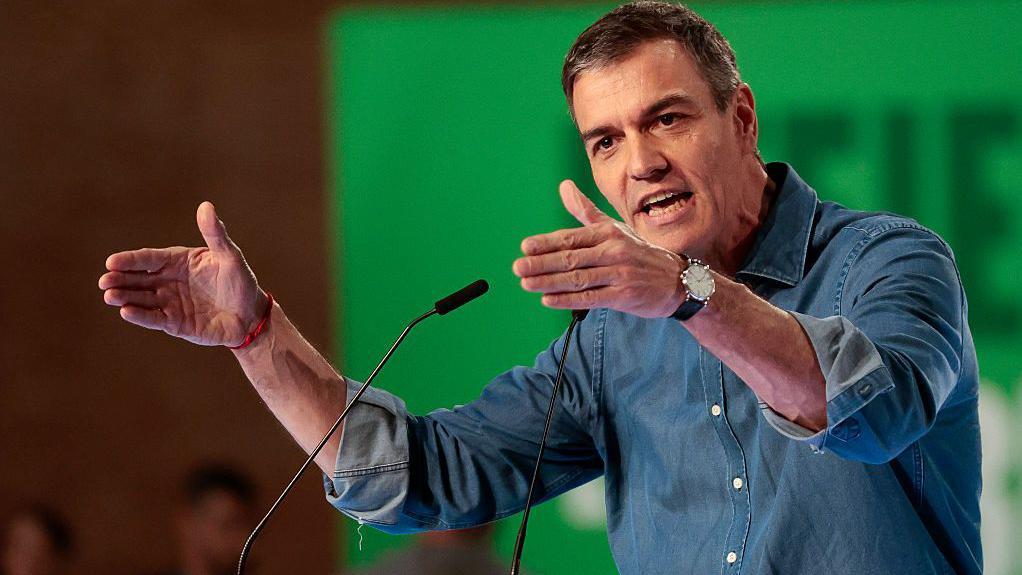
“They’ve tried to break me, to break my family, but they won’t break the will of the Spanish people,” Sánchez recently declared at a Socialist Party rally, his voice crackling with manufactured defiance. “We won’t cede an inch to those who seek to destabilize our nation for their own petty gains.” It’s a line he’s honed, this ‘us versus them’ narrative, a rhetorical shield against scrutiny that frankly, sometimes works.
But the opposition isn’t buying it, not for a minute. The conservative Popular Party (PP), Sánchez’s perennial antagonists, smell blood. They’ve been circling, picking apart the administration’s handling of the economy, foreign policy, and now, what they describe as a collapse of ethical standards. “This isn’t about smear campaigns; it’s about accountability,” snapped Alberto Núñez Feijóo, the leader of the PP, his usual calm demeanor strained. “When the Prime Minister’s household is under judicial review, he can’t simply scream ‘conspiracy’ and expect it to vanish. The integrity of our institutions is on the razor’s edge, and it’s a direct consequence of his government’s ethical flexibility.” Harsh words, but it’s what his base wants to hear.
Spain, it seems, remains as politically volatile as ever. The broader economic context doesn’t help either. Despite efforts to diversify, Spain’s youth unemployment rate still sits stubbornly at 27.6% as of Q1 2024, according to Eurostat—a persistent wound in the national psyche that fuels discontent and provides fertile ground for anti-incumbency sentiment.
This European political drama, while ostensibly local, doesn’t unfold in a vacuum. Madrid’s shifting political winds carry implications for regions far removed from the Iberian Peninsula. For nations across South Asia and the broader Muslim world, Spain’s internal stability and leadership can significantly influence diplomatic postures. Sánchez, has adopted a more pronounced pro-Palestinian stance than many of his EU counterparts, even moving towards formal recognition of a Palestinian state. But any internal instability could disrupt such delicate diplomatic tensions, affecting Spain’s credibility as a voice in the Middle East and its standing with countries like Pakistan or Saudi Arabia, who keenly observe shifts in European foreign policy towards the region. And that sort of ripple effect is rarely discussed in the immediate maelstrom of domestic scandals, but it’s always there, humming beneath the surface.
What This Means
Sánchez’s remarkable endurance in the face of what would derail most leaders isn’t just a testament to his personal stubbornness; it’s a symptom of deeper cracks in Spain’s political landscape. His left-wing coalition, cobbled together from disparate regional parties, inherently possesses a ‘siege mentality’ – they see themselves as constantly under assault from an entrenched conservative establishment and a hostile media. This sense of victimhood allows Sánchez to convert personal scandals into a broader ideological struggle, mobilizing his base even as polls suggest a slight dip in public trust.
Economically, the distraction of scandal hampers governance. Important reforms might stall, — and investor confidence could waver, particularly if the allegations escalate. But this ‘digging in’ strategy has an endgame. Sánchez is likely betting that by appearing to be persecuted, he can generate enough sympathy to either weather these specific allegations or, failing that, unify his side for a snap election where he can present himself as the bulwark against reactionary forces. For Europe, a weakened or politically unstable Spain means one less cohesive voice in the EU Council, potentially impacting everything from shared defense policies to migration strategies. For the Muslim world, it could translate into a less consistent, more unpredictable European partner at a time when clarity and solidarity are increasingly important.