


China’s Flood-Stricken Zoo: A Stark Reflection of Climate’s Unscripted Fury
POLICY WIRE — Wuyishan, China — It wasn’t the roaring typhoon itself, but the insidious creeping water—foot by relentless foot—that truly boxed in the keepers at one Wuyishan zoo. They...

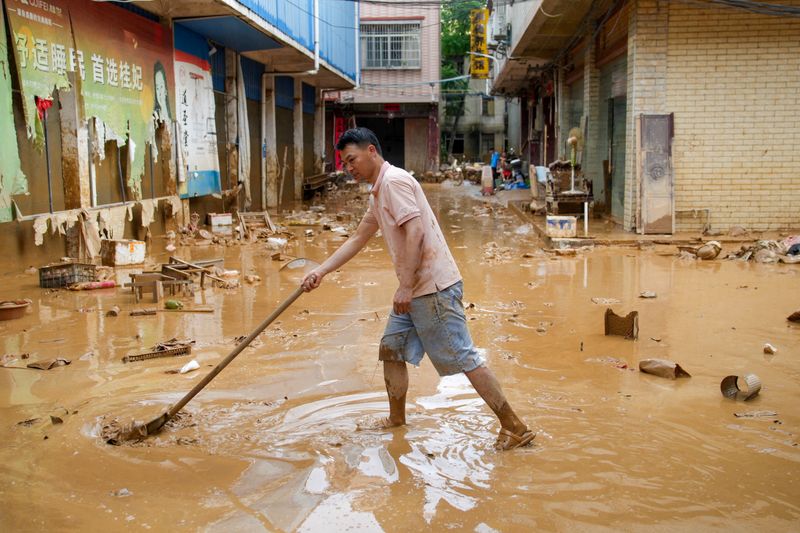
POLICY WIRE — Wuyishan, China — It wasn’t the roaring typhoon itself, but the insidious creeping water—foot by relentless foot—that truly boxed in the keepers at one Wuyishan zoo. They didn’t have much of a choice, not really. As Cyclone Haikui unleashed its deluge, turning serene enclosures into swirling death traps, their response was less about exotic wildlife management and more about primal, desperate improvisation: they locked the animals back into their indoor cages, often tiny holding cells, not for long-term confinement, but because the alternatives seemed even grimmer. You do what you gotta do, they’ll tell you.
It’s a chilling paradox, isn’t it? To protect captive creatures from nature’s unleashed ferocity, humanity’s default setting often reverts to further restricting them. These weren’t ‘escapes’ in the classic Hollywood sense; there wasn’t any dramatic scaling of fences. Instead, it was an acknowledgment that the meticulously planned habitats—complete with moats and open spaces—had been overwhelmed. And frankly, the idea of a half-drowned tiger or a panic-stricken bear roaming the submerged streets alongside bewildered residents wasn’t exactly high on the crisis management checklist.
The city, a tranquil haven normally celebrated for its tea plantations and scenic peaks in Fujian province, found itself fighting a tide not just of water, but of existential dread. Footage from inside the park showed deer up to their necks in muck, monkeys perched precariously on ceiling fixtures. It painted a brutal picture, highlighting how thin the veneer of control really is when Mother Nature decides to throw a tantrum.
Local authorities, already stretched thin dealing with hundreds of thousands displaced across the region, had their hands full. “Look, when you’ve got six feet of water coming in and nowhere to go, you do what you have to,” stated Mayor Lin Wei of Wuyishan, his voice tinged with the weary resignation of a man who’d seen too many 100-year floods in too short a span. “It’s an impossible situation for folks, let alone a tiger, — and we had to ensure public safety first and foremost. Our priority was preventing further disaster.” He sounded like someone who’d had very little sleep.
But the incident gnaws at something deeper. It’s a microcosm of the larger, often terrifying, decisions societies now confront in the accelerating age of climate change. How do you plan for the unprecedented becoming the routine? And because global warming doesn’t discriminate, this sort of grim calculus isn’t foreign to nations like Pakistan, where relentless monsoon seasons routinely turn populated areas into inland seas, raising profound questions about infrastructure resilience and even animal welfare in similar dire straits. The region, generally, seems to be staring down the barrel of increasingly volatile weather patterns.
Dr. Aisha Rahman, an independent climatologist specializing in Asian monsoon systems, didn’t pull any punches. “This isn’t just about one typhoon,” she offered, her tone measured but firm. “It’s about a climate accelerating past our ‘100-year flood’ models, consistently breaking new records. Our planning cycles can’t keep up. And frankly, our ecosystems, and the captive animals within them, pay a brutal price for our collective, short-sighted inertia.” It’s hard to argue with her, really.
📄 POLICY WIRE WHITEPAPER PUBLISHED: PAKISTAN'S NATIONAL SECURITY POLICY PRIORITIES
👉 READ BY CLICKING HEREChina, for its part, has been investing heavily in climate adaptation, building out massive dam projects and early warning systems. But even Beijing’s substantial efforts can falter when faced with such raw force. In fact, China suffered economic losses amounting to 2.1 percent of its GDP due to natural disasters between 2000 and 2021, according to the World Bank—a statistic that underscores the immense challenge. Even with all the resources in the world, nature has a way of reminding us who’s truly in charge. This recent event adds another stark chapter to the region’s ongoing battle against extreme weather, a narrative powerfully mirrored in events from other storm-ravaged corners of Asia, such as those faced by China and Taiwan during Tropical Storm Bavi.
What This Means
The Wuyishan zoo debacle isn’t just an animal welfare story; it’s a flashing red light for disaster preparedness everywhere. Economically, this signifies more than immediate clean-up costs. It hints at the deeper, ongoing fiscal drain of repeatedly rebuilding — and reacting to ‘unprecedented’ weather events. For Beijing, which strives for an image of national strength and advanced governance, such incidents expose vulnerabilities that no amount of economic growth can fully paper over. The choices made under duress in Wuyishan reflect a wider, unspoken societal contract with nature, where containment is preferred to uncontrolled chaos—even when containment itself feels like a desperate, tragic measure. Politically, it’s a tightrope walk: balance human safety, environmental concern, and the stark reality of climate impact. The incident certainly won’t soften criticisms about climate inaction globally, and it places increased pressure on governments—especially in developing nations with sprawling, high-density populations and strained resources—to bolster resilient infrastructure against ever more aggressive weather. But what does that truly mean when even sophisticated defenses are washed away? It suggests a re-evaluation of what ‘safety’ actually entails when nature throws its heaviest punch.