


New Mexico’s Climate Paradox: Storms vs. Fires
New Mexico battles a climate paradox: simultaneous flash floods & wildfires. This localized crisis previews global volatility, straining resources & economies worldwide.

POLICY WIRE — ALBUQUERQUE, N.M. — A disquieting alchemy often brews in the American Southwest, a region constantly reminding us it’s [QUOTE_PLACEHOLDER] one of the warmest places in the U.S. but also one of the driest. Right now, it’s stirring a potent concoction: the simultaneous threat of downpours — and raging infernos. On a day that could aptly be described as ‘very on-brand’ for June’s end, New Mexico braces for this bizarre meteorological duality, offering a grim, localized preview of what global climate volatility portends.
It’s not just a passing shower or a dry spell—it’s often both, hitting different locales within hours of each other. The landscape itself, already a study in arid beauty, now plays host to extreme contrasts. Monsoonal showers — and storms are set to fire off in some central areas could as early as mid-morning. Then, eastern New Mexico gets the main show starting in the early afternoon, bringing with it a low-end risk for some storms to become strong to severe, accompanied by strong wind gusts and large hail. Yes, hail. While others just down the road—sometimes literally—will be hoping a single drop hits the dusty earth.
And so, while parts of the state could contend with flash floods from possible heavy rain, central and north-central regions anticipate a more sinister kind of storm: the dry variety. That means little to no rainfall, just cloud-to-ground lightning strikes and gusty erratic winds—a pyrophile’s dream. Imagine that—rain, but not enough to matter. It’s enough to make you scratch your head. Albuquerque itself faces a rather slim 10% chance of seeing rain making it down to the ground from the clouds.
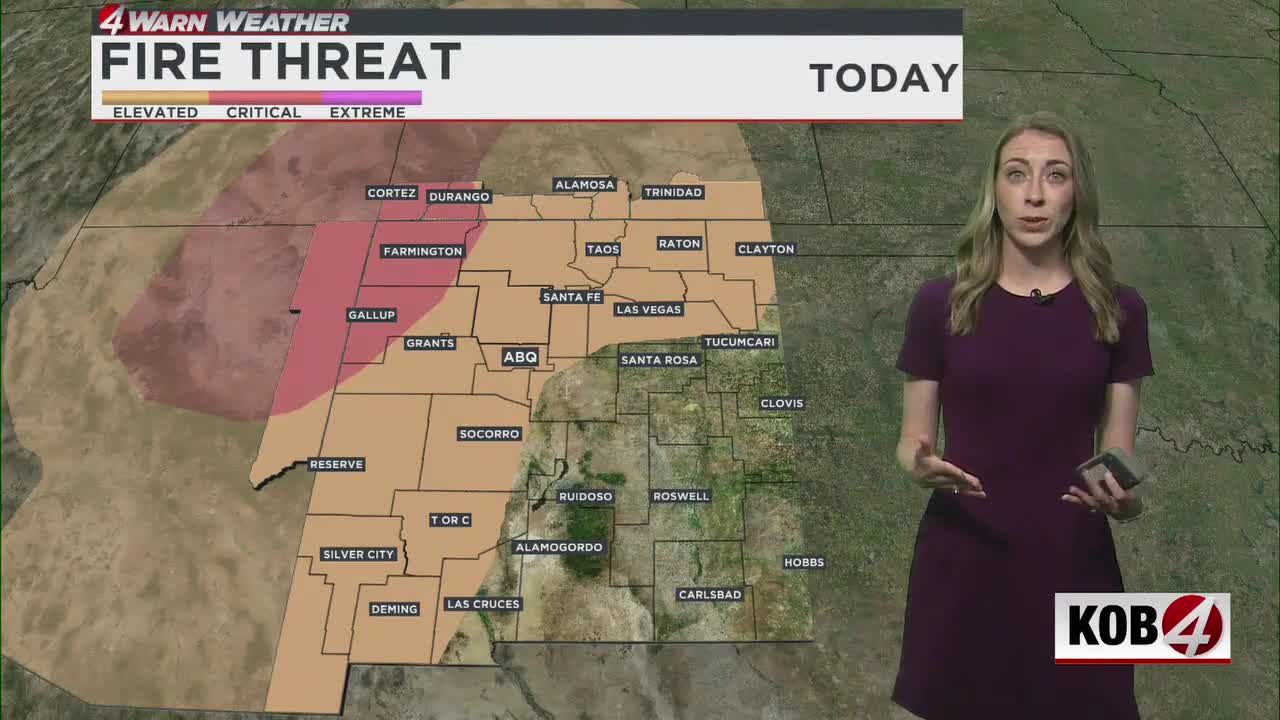
Because Mother Nature, it seems, has a particularly cruel sense of humor for arid zones. A Red Flag Warning is in effect for portions of San Juan County, McKinley County and Cibola County from 1-7 p.m., as elevated to critical fire weather becomes a pressing concern across northern and western New Mexico. The highest threat will spread across the Four Corners. It’s an almost perfect storm of contradictory elements, a weather report that reads less like a forecast and more like a choose-your-own-adventure tragedy.
But this isn’t just about New Mexico, is it? Across continents, from the parched landscapes of Balochistan in Pakistan to the drought-ridden American Southwest, the narratives of climate instability echo with a chilling consistency. These are regions intrinsically defined by water scarcity, where an ephemeral downpour can trigger flash floods rather than provide sustenance, while simultaneously [QUOTE_PLACEHOLDER] elevating the wildfire risk yet again Tuesday. According to a 2023 report from the National Climate Assessment, the Southwest has experienced a staggering 28% increase in days with critical fire weather conditions over the past decade, a statistic that underscores shared vulnerabilities stretching from the Grand Canyon to the Hindu Kush.
It’s this global pattern that connects seemingly disparate locales. Pakistan, too, frequently battles the dual demons of drought — and devastating floods, often within the same season. Just recently, northern areas faced unprecedented glacial melt flooding, even as southern provinces braced for severe heatwaves. Their experience with managing water, often scarce yet at times catastrophically abundant, provides a sober parallel to New Mexico’s struggle—a constant tightrope walk between deluge and desertification. Policy planners and emergency services, from Lahore to Los Alamos, wrestle with these identical, intensifying paradoxes, grappling with the allocation of precious water and the deployment of resources to counter simultaneous, opposing natural disasters.
And let’s be honest, living in places where summers bring temperatures near climatological normals while also throwing fire-starting lightning from bone-dry skies requires a certain resilience. Temperatures are still expected to warm up into the afternoon, mainly near climatological normals. It will be very bright with high UV levels, so beware. For those in eastern New Mexico, wetting rains will favor eastern New Mexico and, more specifically, southeastern New Mexico. Others, however, might just get a light show, — and a renewed sense of impending conflagration. It’s enough to make you think about whether urban planning here, or anywhere similar, is truly ready for what’s coming next.
What This Means
This localized weather schizophrenia isn’t an anomaly; it’s the new normal—a volatile oscillation that carries serious political and economic implications. For one, the persistent cycle of dry lightning followed by potential flash floods strains local and state resources to their breaking point. Emergency services are pulled in opposing directions, juggling fire suppression efforts with flood rescues. It means state budgets, already lean, get stretched thin dealing with reactively addressing one crisis after another. And the insurance markets? They’re getting hammered, leading to higher premiums, if coverage is even available, for homeowners and businesses alike.
But the ramifications extend beyond immediate disaster response. The ongoing threat to water resources—either too much too fast or too little for too long—impacts agricultural output, land value, and inevitably, migration patterns. Communities reliant on stable environmental conditions for their livelihoods are facing existential questions. Just consider the long-term impact on the very habitability of some of these regions. Embers and resilience: New Mexico’s fire fight a microcosm of global climate strains, underscoring how climate shifts are redrawing demographic maps, pushing people towards—or away from—areas once deemed viable. the economic stability of infrastructure—roads, power grids, communication networks—is under constant assault. This isn’t merely about inconvenient weather; it’s about the accelerating erosion of predictability that governments and economies depend on, leaving a landscape of uncertainty in its wake. It forces a hard look at policy choices, requiring robust investments in resilient infrastructure and sophisticated climate adaptation strategies, or risk an unending cycle of catastrophic recovery. We’re seeing this play out now, across America and across the globe, as nations grapple with similar, intractable challenges.