
Solar Superstorms: The Hidden Danger That Could Paralyze Our World
In the modern, tightly connected society, the most immediate problems for our infrastructure often result from human causes, including wars, cyber attacks or pandemics. But one threat lurks above the...

In the modern, tightly connected society, the most immediate problems for our infrastructure often result from human causes, including wars, cyber attacks or pandemics. But one threat lurks above the Earth’s atmosphere and though it could severely harm modern civilization, its dangers go mostly ignored: geomagnetic storms. Many solar events, especially the major solar superstorms, can seriously harm satellites, communication networks, power grids and affect the whole economy. There is more proof of their increased impact, but the main question is if we are ready for another solar superstorm.
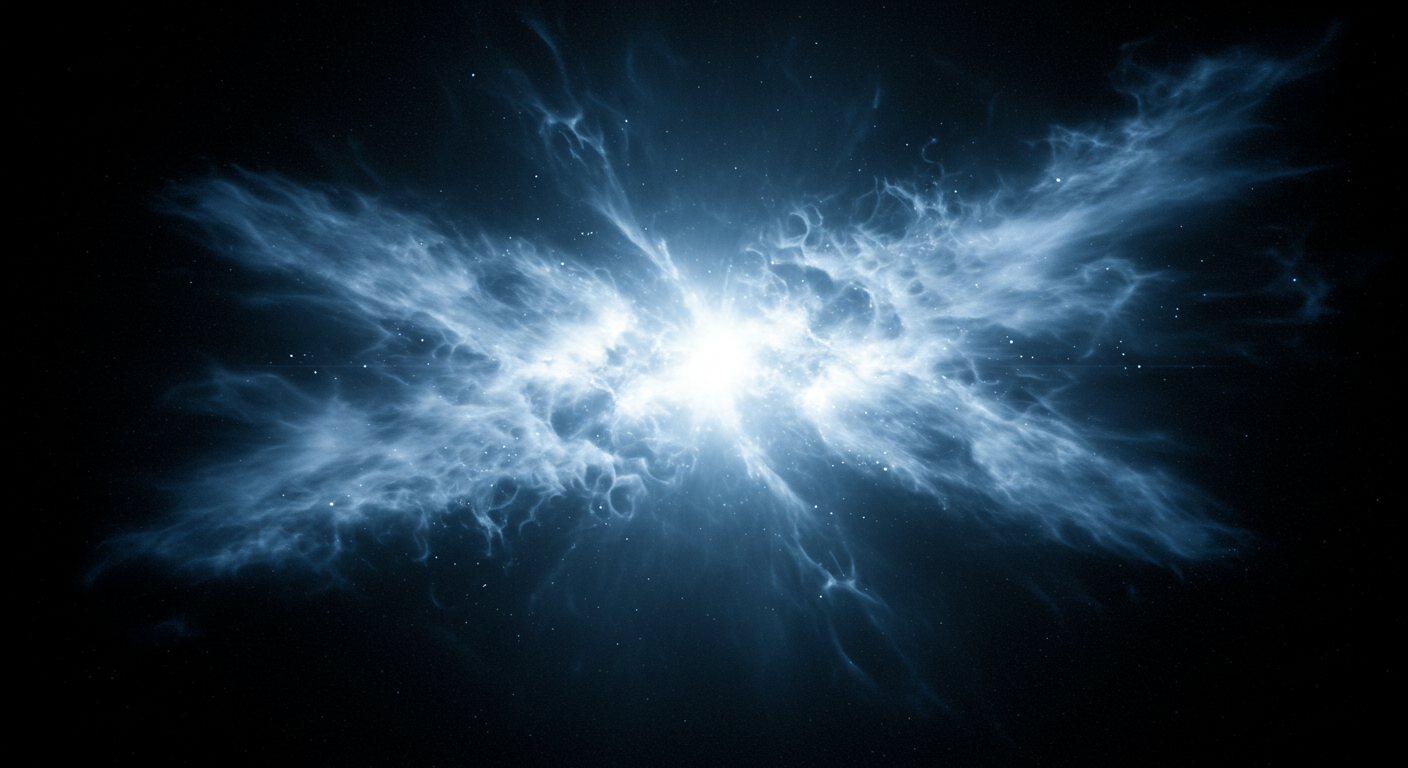
Solar activity such as flares or CMEs causes particles called solar wind to affect Earth’s magnetic field, resulting in geomagnetic storms. While little disruptions are caused by most geomagnetic storms, larger ones may cause many problems worldwide. Rare solar storms can inflict major damage on satellites, electrical systems and communication lines, bringing major disruptions to people and communities worldwide.
The most terrifying solar superstorm, perhaps, was in 1859 and it is known as the Carrington Event because British astronomer Richard Carrington first saw the solar flare connected to the event. A huge surge of solar particles from the Carrington Event damaged the telegraphs, led to various fires caused by electricity and brought auroras south all the way to the Caribbean. Nowadays, much technology relies on satellites, so an attack like this would probably cause big problems for our world.
Because technology is developing rapidly, the role of satellites for communication, navigation, forecasting weather and the military is more significant than ever. All parts of our infrastructure are tied together by satellites, power grids and fiber optics. If a solar superstorm happens, it could seriously disrupt or damage the systems that control satellites and power transmissions which could cause more failures in these networks.
Thanks to the many things we now rely on, a solar superstorm happening today could put the world economy in chaos. An important event could result in internet outages, issues with the stock exchanges and damage banks in many countries. If some services were not available for just a week, the consequences could be very serious for the world’s economy, especially for financial services, transportation, healthcare and defense.
Besides, the systems we depend on now are less well protected than those of 1859. In 1859, people and societies were unconnected by power grids and no one had even thought of the internet. Nowadays, large segments of society could not function properly if international communications stopped working, even just for a brief period. Moreover, the rise of IoT and increased automation means many important systems would lack protection if a solar storm occurred.
A new solar cycle fing that started in 2020 and a rise in solar activity make us realize we need to act fast. The sun commonly experiences active times marked by solar flares and CMEs. Solar cycle 25 is expected to reach its highest phase around 2025. Despite most solar flares being largely harmless, they remind us that big future events are likely to happen.
In the year 2021, a big CME approached Earth closely which caused alarm among scientists and specialists. Even though the solar event was relatively minor, it made clear that the sun’s behavior can be a serious threat. How soon could we know if there was about to be a solar superstorm? Scientists can follow solar activity and anticipate flares, but it’s unlikely we will ever have a system that can determine exactly the effect a solar superstorm would have.
The Space Weather Prediction Center (SWPC) at NASA, along with the European Space Agency (ESA), are helping to gather information about space weather. Even though predictions have improved, we are not capable of guarding against a major solar event hitting us directly. Really, we might not have much time, even minutes, to get ready for what a solar superstorm could bring.
There is general recognition among scientists that geomagnetic storm risks exist, but the world is still very poorly prepared for such occurrences. Even though a 2018 report from the National Academy of Sciences mentioned that the electrical grid is very at risk of geomagnetic storms, few measures have been taken to secure it. Actually, even though solar storms are well known to be a major risk, just 1 in 5 U.S. utility companies have taken action to deal with the problem.
The Canadian government published a report in 2020 recommending improved defenses for solar storms, mainly for the electrical grid. The report added that the power grid was not at this time enough to handle a significant geomagnetic event. In the United Kingdom, while efforts to be prepared for solar storms are stronger, there isn’t yet an all-encompassing, worldwide strategy to address these events.
International monitoring of space weather is not enough which is vital for forecasts and protective actions. Whereas the U.S. and Japan have modern equipment to monitor space weather, many other states do not even have the means to detect solar activity, much less make plans to address it. Also, not working together to share data in real time makes it tough to handle a major solar storm as a group.
Space weather is so important to tackle because of the severe consequences possible in a solar superstorm. Such events must be handled by the world community because the effects of a solar superstorm spread to many countries. A solar superstorm can affect countries everywhere and big changes in space infrastructure would be noticed on a worldwide scale. Therefore, those controlling parts of space should come together to strengthen monitoring systems, coordinate global reaction plans and back studies into safety technologies.
Working together globally to spot space weather in real-time using advanced satellites and equipping structures to handle solar storms would give enough time to take steps to avoid harm. Sharing important data and research with other countries in space weather forecasting could greatly help the world get ready for possible threats.
Even though the threats are challenging, some methods can be used to protect from them. Protecting main systems, especially the power grid and satellites, is among the most powerful strategies. For the power grid, one way to deal with surges is to use geomagnetic shielding and other protective tech to protect transformers from being overloaded. Radiation shields can be fitted to satellites or they can be moved to a different position in space so that they do not directly experience the strongest solar radiation.
Space weather should be taught and prepared for across all levels of government and industry. It should be required by law for critical operators of infrastructure to protect against solar storms, in the same way other dangers are prevented. Also, raising funds for space weather studies and building more accurate space weather models could help us determine when solar superstorms are approaching.
While we do not know exactly when a solar superstorm will happen, we need to be ready and this means starting now. Space technology is being used more and solar activity is happening more often which means the dangers of geomagnetic storms are now greater than at any other time. While various countries are trying to deal with these problems, a lot more must be done. We should get ready for a solar superstorm today, before it turns into a disaster happening in every country.
Because technology is advancing, the risk of a solar superstorm reminds us how much we could be affected. All the ways we are linked can easily expose us to a natural disaster we can’t prevent. It is our duty to protect our future: by finding new ideas, uniting globally and taking action early, against the silent threats of space weather. Only by doing this will we be fully prepared for future challenges.
Author