


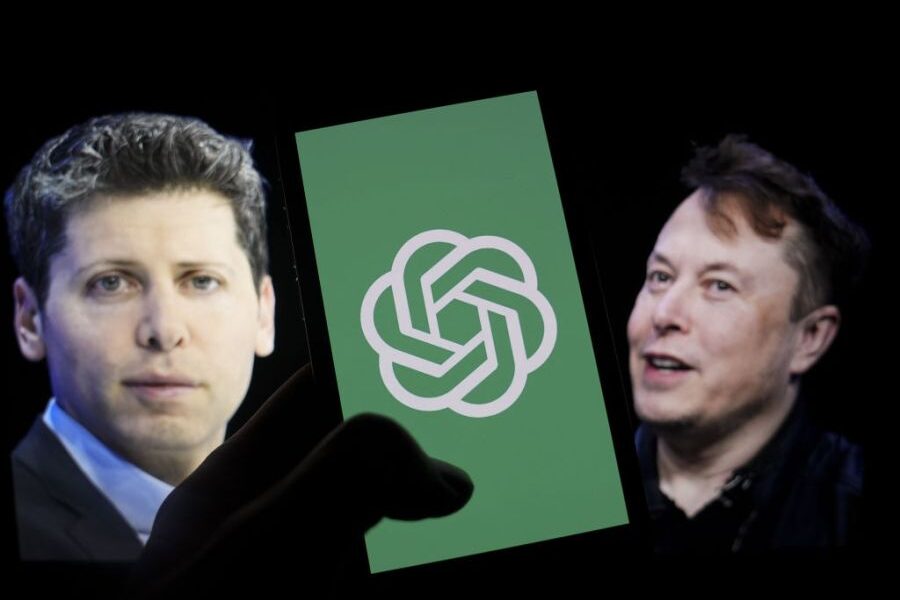
AI Titans Exposed: Film Challenges Altman & Musk
A new film scrutinizes AI leaders Sam Altman and Elon Musk, challenging Silicon Valley's myths. Discover how this cinematic critique impacts public trust and AI's future.

POLICY WIRE — New York, USA — It wasn’t too long ago, was it, that the very idea of artificial intelligence promised salvation—a brave, shiny new world forged by brilliant minds operating on an entirely different plane? But turns out, even saviors get a good, hard look in the mirror. Especially when that mirror’s the unforgiving lens of cinema.
Word’s out on a new flick, an unsettling feature apparently titled Artificial, that’s set to dismantle some cherished Silicon Valley myths, aiming its high-powered critique directly at poster boys Sam Altman and Elon Musk. And it ain’t pulling any punches, folks. The initial buzz—from a report that’s made its way through the circuit—suggests this isn’t just a critical documentary; it’s an indictment, portraying these tech luminaries not as benevolent visionaries, but perhaps as something considerably less flattering.
It’s always a funny thing, isn’t it, how the public’s darlings eventually get hauled over the coals? This film, if the early whispers hold true, positions Altman, the OpenAI chief, and Musk, of Tesla and xAI infamy, in a pretty grim light. The report describing Artificial frames their cinematic avatars with an unflinching gaze, portraying a landscape of ambition possibly unbound by ethical restraints. The gist, you understand, seems to be a deep-dive into the personal cost and global implications of chasing AGI at breakneck speed. But because we’re limited to what’s said, the finer details remain for the full viewing. For now, we only know a prominent source has noted it portrays them as [QUOTE_PLACEHOLDER], adding that the film raises significant questions about their methods.
Musk, a man who doesn’t shy away from controversy (or self-aggrandizement, let’s be honest), has often voiced dire warnings about AI, even while developing it himself. A classic ouroboros, that. Altman, on the other hand, often cultivates a more measured, if still immensely powerful, public persona. So, what’s this film truly getting at? It’s painting a picture, they say, where the lines between innovation and exploitation—or perhaps just sheer arrogance—get incredibly blurry. And that’s potent stuff.
One wonders how such a portrayal might resonate in parts of the world grappling with the immediate, tangible effects of burgeoning AI. Take Pakistan, for instance. A country that’s hungry for technological advancement and often views figures like Musk and Altman as symbols of progress. Its burgeoning tech sector—which, by the way, saw an estimated 85% growth in IT exports in 2021 alone, according to the Pakistan Software Export Board—is eager for integration, but often remains wary of external technological hegemony. What does it mean for these nations, where jobs are already precarious, when the architects of automation are depicted as potentially reckless? Do they double down on AI adoption, hoping to ride the wave, or do they recoil, recognizing the perils portrayed?
The report mentions the film suggests a certain kind of ideological inflexibility, arguing that Altman’s focus remains singularly on the advancement of the technology, allegedly stating [QUOTE_PLACEHOLDER] without sufficiently addressing global socio-economic ripple effects. This isn’t a unique sentiment; it’s one that often shadows high-flying tech. Musk too, has been described as exhibiting a single-minded drive, supposedly declaring [QUOTE_PLACEHOLDER] at critical junctures of development. These are powerful figures, shaping our future. The public’s got a right to poke around a bit, hasn’t it?
📄 POLICY WIRE WHITEPAPER PUBLISHED: PAKISTAN'S NATIONAL SECURITY POLICY PRIORITIES
👉 READ BY CLICKING HEREAnd it’s not just about ego; it’s about control. About who wields this astonishing power. Think of it: artificial intelligence is arguably the most transformative technology since electricity, or perhaps even fire. How its development is perceived, — and crucially, how its creators are perceived, isn’t merely about gossip. It impacts public trust, regulatory pressure, — and the global scramble for AI supremacy. It’s serious business. They’re telling a story here, and it’s a messy one, reportedly showcasing the unvarnished reality of these titans’ decision-making processes—decisions that carry truly staggering weight.
What This Means
This film, assuming it garners significant attention—and how could it not, with those targets?—isn’t just a bit of Tinseltown gossip. No, sir. It represents a potential watershed moment in how the public, and by extension, policymakers, view the architects of advanced AI. Politically, a widespread negative portrayal could very well stoke the fires of regulatory bodies globally, demanding tighter oversight. Legislators, who often move with the alacrity of continental drift, might suddenly feel a jolt to action if the narrative shifts from innovation to exploitation. We’ve seen similar shifts with social media platforms; Big Tech rarely enjoys enduring hero status.
Economically, this sort of cinematic broadside could—and likely will—have ripple effects on investment, particularly for companies perceived as mirroring the film’s critiques. Investor confidence, while generally robust in AI, isn’t bulletproof. Public perception translates directly into market sentiment, and if the general populace starts to view AI development through a skeptical, perhaps even hostile, lens, funding flows could get… complicated. it highlights the increasing tension between technological determinism and ethical governance—a global wrestling match that Pakistan and other emerging economies, acutely aware of their digital futures, watch with particular interest. After all, if the titans themselves are seen as morally compromised, what does that say about the machines they’re birthing?
It’s all part of a larger conversation—a rather uncomfortable one for some, I imagine—about accountability in an era where technology seems to outpace our collective capacity to control it. The era of the unadulterated tech genius, it seems, might just be drawing to a close, supplanted by an era of uncomfortable scrutiny. And perhaps, that’s precisely what we need to usher in the next stage of our engagement with artificial minds.