


Silent Waves: US Non-Apology Jolts India, Echoes Across Asia
POLICY WIRE — Washington D.C. — An awkward silence, thick and profoundly deliberate, is what really defines the state of U.S.-India relations this week. Forget the high-fives and the grand...

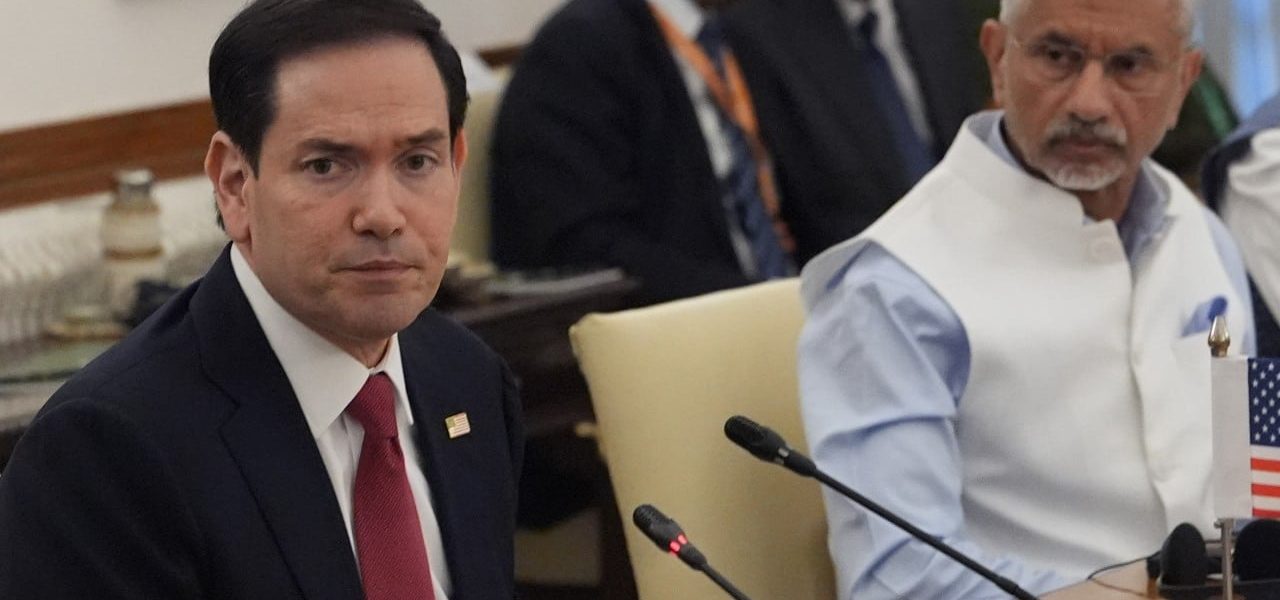
POLICY WIRE — Washington D.C. — An awkward silence, thick and profoundly deliberate, is what really defines the state of U.S.-India relations this week. Forget the high-fives and the grand declarations of a shared strategic future—of democratic values holding back the tide. Because when America’s top diplomat, the much-photographed Marco Rubio, found himself on the phone with India’s seasoned External Affairs Minister, S. Jaishankar, the usual pleasantries evaporated.
It wasn’t an ordinary chat. Three Indian sailors lay dead, fatalities of a U.S. Navy operation, — and Washington couldn’t muster even the faintest whisper of an apology. This isn’t just a diplomatic oversight; it’s a seismic event, ripping a nasty fissure through the carefully constructed façade of a so-called [QUOTE_PLACEHOLDER] narrative—a description Washington used freely for years, pitching India as some kind of sterling counterweight to China, a firm anchor in the tumultuous Indo-Pacific.
But when lives are lost under questionable circumstances—especially at the hands of an alleged ally—and accountability stalls at mere regret, well, words lose their meaning. Minister Jaishankar, in no uncertain terms, conveyed India’s “strong protest” directly to Secretary Rubio during their Friday conversation, then took to social media to amplify New Delhi’s unambiguous displeasure. It wasn’t merely a formal statement; it was a public declaration that America’s silence on this issue was, and is, unacceptable. But that diplomatic punch clearly didn’t land hard enough to loosen an apology from Washington’s iron-clad grip on its narrative.
This incident isn’t an anomaly, folks; it’s a symptom. It highlights a recurring pattern in how Washington, often with an almost disarming confidence, handles its allies, particularly in regions it deems strategically _important_, not necessarily equal. Take Pakistan, for instance. For decades, it’s been on the receiving end of fluctuating American affections—sometimes a frontline ally, other times a rogue state. We’ve seen countless instances where civilian lives, tragically caught in the crosshairs of drone strikes or botched counter-terrorism ops, have been mourned privately by Islamabad, with Washington’s apologies—when they came—often arriving late, qualified, or completely absent. There’s a certain diplomatic arrogance at play, a casual presumption of regional hierarchies that chafes at the idea of genuine parity.
And let’s be real: this kind of non-response gnaws at the fabric of any purported alliance. For India, a rising global power, not a client state, the absence of contrition here is not just an insult—it’s a question mark hanging over the entirety of the relationship. It’s a blatant reminder that American interests, for all the talk of shared values, almost always supersede those of its partners when push comes to shove. This sentiment, frankly, isn’t lost on others in the South Asian and wider Muslim world either, who’ve watched American foreign policy evolve—or sometimes, stagnate—over the past two decades. They’ve seen Washington’s diplomatic maneuvers up close, — and they’ve felt the tangible consequences of its policies.
The strategic framing of the Indo-Pacific—where India is supposed to be a cornerstone—just got a good, hard jolt. The idea of India as an [QUOTE_PLACEHOLDER] begins to sound less like a true collaboration and more like a conveniently adopted phrase when confronted with a direct, tragic confrontation that lacks proper U.S. accountability. It makes nations, even allies, wonder where they actually stand in the pecking order. India, quite reasonably, expects more than a mere acknowledgement of their anger; they want atonement, a gesture that confirms the [QUOTE_PLACEHOLDER] isn’t just strategic lip service.
This matters profoundly. Data from the Stockholm International Peace Research Institute (SIPRI) for 2023, for example, indicates a consistent increase in global military expenditure, with India itself a significant player in defense imports and strategic alliances. To suggest such a substantial regional force, an emerging economic giant, can be treated with such casual disregard after a deadly incident is, quite frankly, a miscalculation of epic proportions on Washington’s part.
What This Means
This incident, far from being a localized tragedy, carries some heavy geopolitical implications. Politically, it tests the very foundation of the QUAD (Quadrilateral Security Dialogue)—an alliance that ostensibly aims to check Chinese influence. If a core member like India feels disrespected and finds its citizens’ deaths dismissed, how much genuine cohesion can exist within such a group? It sends a clear, if unintentional, message to New Delhi that Washington’s priorities often place its own operational latitude above partner sensitivities. And India has alternatives—it’s not dependent solely on the U.S. for strategic depth. Moscow — and even Beijing, though a rival, observe these interactions with keen interest.
Economically, while direct trade links probably won’t falter overnight, investor confidence and the deeper layers of strategic collaboration might suffer a chill. Perceptions matter, particularly in today’s interconnected global economy where political stability is a major determinant of investment decisions. Any perceived instability in crucial bilateral relationships could introduce an element of risk, however subtle, into long-term strategic investments or joint ventures. This wasn’t a good look for Washington, no sir. Not at all. It chips away at credibility. It makes one wonder about the sincerity of grand pronouncements versus the cold, hard reality when things go sideways—and when they absolutely, sometimes tragically, do. It’s a moment of clarity for many, one suspects.