

Albuquerque’s Erasure: Diner Collapse Signals Deeper Rot in Historic Infrastructure
POLICY WIRE — Albuquerque, United States — Forget the collapse; it was the two-month dance of civic duty, or lack thereof, that really tells the story here. A once-vibrant corner of downtown...

POLICY WIRE — Albuquerque, United States — Forget the collapse; it was the two-month dance of civic duty, or lack thereof, that really tells the story here. A once-vibrant corner of downtown Albuquerque, soaked in decades of local lore, now faces a very final act: demolition. It’s not just a building going down, it’s another hard lesson on the brittle foundations of old cities and the slow-grinding gears of municipal response. Sometimes, bureaucracy just moves at its own pace—even when a chunk of a landmark diner peels away like old paint.
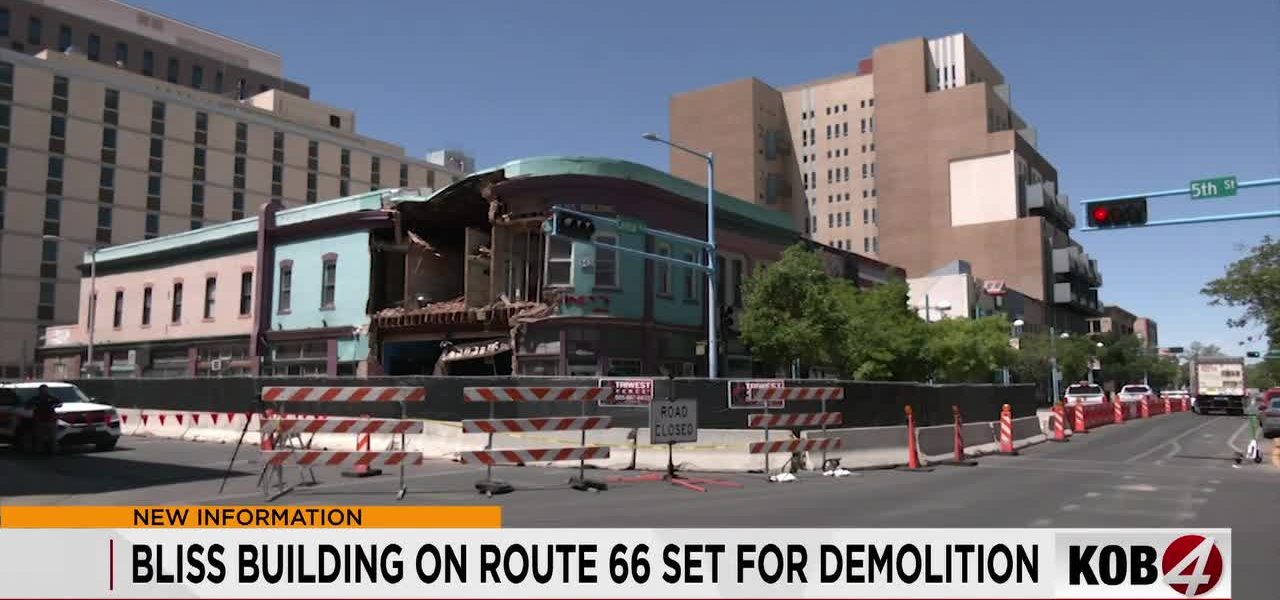
They called it the Bliss Building. For generations, it harbored businesses, stories, — and yes, Lindy’s Diner, a local institution. But the blissful ignorance (or perhaps, administrative inertia) regarding its deteriorating condition culminated this week. Following a partial collapse of Lindy’s Diner on April 27, the city finally issued the green light for Guzman Construction Solutions to level the structure at 500 Central Avenue SW. That means goodbye, history; hello, dust — and concrete trucks. [QUOTE_PLACEHOLDER]
It’s not like the city didn’t get warnings. But officials tend to move in their own time, don’t they? Code Enforcement first peeked at Lindy’s from the outside on March 20. That was after local media—KOB 4, to be exact—had to prod the Planning Department following a tip. Between March 21 and April 10, the city actually received two 311 complaints about the property. It took those calls, — and that initial outside look, to spur another inspection on April 2. Then, a deeper evaluation on April 20. Only after *that*—just a week before part of the restaurant physically caved in—did the city finally red-tag the place and issue an emergency shutdown order. You could say it wasn’t exactly preemptive action.
Mayor Tim Keller offered the standard boilerplate. He noted, «The Bliss Building has been part of Albuquerque’s story for generations, and we know many are sad to see this outcome,» then pivoted to the imperative. «Our priority is protecting public safety and moving quickly to address the risks posed by this structure while supporting the downtown businesses, residents and visitors.» Because what else is a mayor going to say when a part of the city is literally crumbling? The real action, or inaction, often speaks louder than the official press release.
Planning Department Director Alan Varela promised, «On Monday we will begin coordinating with the contractor on an expedited schedule so that this unfortunate matter can be taken care of as soon as possible.» An expedited schedule, naturally, only comes after everything’s already gone south. The debris, they found, had no asbestos. But the structure itself? Sections of piping — and flooring adhesive definitely contained the hazardous stuff. Now crews have to take specific safety steps to manage those materials. Good thing they’re thinking of it now, eh?
But the demolition of the Bliss Building, born of sudden disaster, holds stark lessons far beyond New Mexico’s borders. Look at cities across South Asia, for instance—places like Karachi or Dhaka. They’re growing at a furious clip, too often with a lax approach to building codes, maintenance, and historical preservation. They face a similar, arguably more urgent, conundrum. Old structures stand, sometimes illegally extended or poorly maintained, until a heavy monsoon or an earthquake decides their fate. Tragedies become commonplace. Preserving cultural heritage and ensuring public safety in the Global South is a complex, underfunded balancing act, not dissimilar in principle, but exponentially magnified in its human cost.
What This Means
The Bliss Building’s demise isn’t merely local news; it’s a symptom of broader urban governance challenges. Economically, this isn’t just a loss of bricks and mortar; it’s a direct blow to downtown Albuquerque’s fragile ecosystem. Road closures at Fifth Street — and Central, necessitated by continued structural instability, choke off arteries. While officials encourage supporting nearby businesses, getting to them when your primary thoroughfare is partially shut isn’t exactly ‘business as usual’. The mayor’s office, facing a structural integrity crisis just weeks after it green-lighted development, has little political room to maneuver beyond swift action now. The city’s belated official response—inspecting after tips, issuing warnings just before collapse—raises questions about proactive municipal oversight versus reactive cleanup operations. What happens when these slow processes encounter genuinely antique infrastructure, which many cities still rely upon for their character? It’s an expensive lesson in foresight.
For Pakistan, India, or Bangladesh, this narrative rings eerily familiar. These rapidly urbanizing nations often wrestle with decades-old colonial-era structures alongside sprawling, hastily constructed high-rises, all within a regulatory framework frequently hampered by under-resourcing and corruption. The choice between demolishing a heritage site for public safety and the fervent desire to retain cultural touchstones is constant, often contentious. Albuquerque’s fate, then, becomes a minor case study in a global architectural predicament. It’s a reminder that neglecting our old buildings doesn’t just mean losing pretty facades; it risks lives, snarls commerce, and chips away at a city’s very soul. And sometimes, after months of warnings, the city finds itself burying its own past—literally—under mountains of rubble.