


Silent Sentinels and Hidden Scars: America’s Decades-Long War on Its Own Wartime Waste
POLICY WIRE — Acoma Pueblo, New Mexico — It’s a cruel twist of history, isn’t it? Decades melt into centuries, generations pass, yet the scars of conflict — even ‘practice’ conflict —...

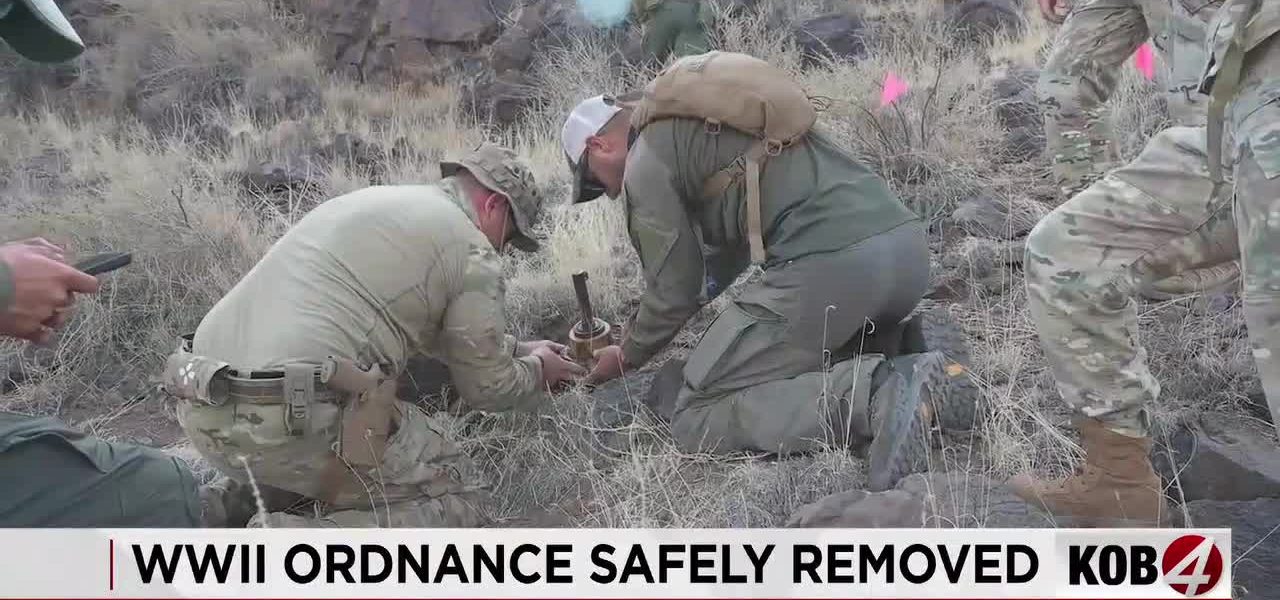
POLICY WIRE — Acoma Pueblo, New Mexico — It’s a cruel twist of history, isn’t it? Decades melt into centuries, generations pass, yet the scars of conflict — even ‘practice’ conflict — linger, sometimes with explosive consequences. On a serene stretch of New Mexico high desert, where golden eagles patrol ancient skies, an echo from World War II’s hurried preparations recently served as a potent, if silent, reminder that old wars don’t just fade away; they keep demanding our attention, often in the most unexpected places. It took a coordinated, year-long slog by military explosives experts, tribal leaders, and environmentalists just to remove a single, inert chunk of history. And they’re nowhere near done.
This wasn’t some long-lost battlefield discovery. This was Badger Butte, smack dab on Acoma Pueblo land, where for an undisclosed period, a World War II-era practice bomb had been quietly, menacingly nestled. Not just anywhere, either — it sat uncomfortably close to an active, protected bald eagle nest. Think about that for a moment: the symbols of American freedom and nature, perched precariously beside a rusty relic of America’s fight for freedom overseas. The sheer irony, you know? It took Kirtland Air Force Base’s 377th EOD flight, working hand-in-glove with the Pueblo and New Mexico State Police, until last Wednesday to finally clear it. They didn’t just stumble on it, though; this was a targeted operation, part of a larger mission to scour the region for these ‘legacy hazards.’
For Master Sgt. Scott Underdahl, section lead of the 377 EOD, it was a mission accomplished. “I’m pleased to declare the completion of the Acoma Eagle Nest Permit and UXO saga that started all the way back in March 2025,” he said, undoubtedly relieved. “Everything went smoothly and, most importantly, it was a safe operation.” Smoothly, maybe, for the final act. But don’t mistake that for simple. Because what we’re talking about here is painstaking, methodical work, often in rugged, unforgiving terrain. And these aren’t just one-off incidents; they’re the enduring byproduct of a nation using vast swathes of its own territory as training grounds during wartime. They’d clear bombing ranges by dropping thousands upon thousands of these practice bombs, thinking they’d eventually degrade. Turns out, the desert holds onto its secrets—and its ordnance—for a very long time.
The desert soil, especially in states like New Mexico, Texas, and Nevada, still hides literally millions of pounds of unexploded ordnance (UXO) and contaminated waste from military activities dating back over a century. A 2017 Government Accountability Office report noted that the Department of Defense estimated the cost to investigate and clean up contaminated sites at current and former defense locations within the U.S. could range anywhere from $200 billion to $1 trillion over the next several decades. That’s a staggering sum, money that could’ve gone to—well, you name it—if not for the ghosts of wars past. It shows the incredible long-term financial burden the cleanup operations pose. But money isn’t the only cost.
It’s not just American soil that tells this tale. Think of Afghanistan, Pakistan, Iraq — regions that have endured decades of conflict, both hot and cold, international and internal. The ground beneath their feet is often a minefield, quite literally. Just like in New Mexico, generations of Pakistanis, for instance, in areas near the Afghan border or former conflict zones, have grown up with the omnipresent danger of UXO. The economic and human development impacts there are immense; farming can’t happen, children can’t play safely, entire communities live under the constant, silent threat. It’s a global blight. Even with advanced technology, removing this detritus is often manual, painstaking, — and lethally dangerous.
📄 POLICY WIRE WHITEPAPER PUBLISHED: PAKISTAN'S NATIONAL SECURITY POLICY PRIORITIES
👉 READ BY CLICKING HEREAcoma Pueblo Governor Brian Vallo, for his part, emphasized the profound cultural and environmental dimensions of such cleanup efforts. “Our land isn’t just dirt — and rock; it’s our heritage, our living museum, home to creatures we hold sacred. Protecting it, from ancient spirits to contemporary hazards like these bombs, is a duty we’ve never taken lightly. It’s about preserving more than just acreage—it’s about preserving our future.” His statement cuts right to the chase, underscoring the deep connection between indigenous communities and their ancestral lands, a connection often ignored or steamrolled in the haste of military operations.
What This Means
This incident isn’t an isolated anomaly; it’s a window into the ongoing, unseen war against America’s own legacy waste. Politically, it highlights a simmering tension between federal military activities and tribal sovereignty—who pays for these cleanups, who decides what constitutes acceptable risk, and whose voices truly matter in environmental mitigation efforts. Economically, the sheer cost projection—potentially $1 trillion—is an astronomical unfunded liability, a ghost expense from conflicts that were ‘won’ decades ago. And it’s not going away. It represents not just environmental degradation but a drain on public resources that could otherwise fuel innovation, infrastructure, or social programs. From an environmental standpoint, protecting sensitive habitats—like the eagle’s nesting site—against such an anachronistic threat becomes a costly, bureaucratic maze, proving that even a non-explosive bomb can cause profound, protracted damage.
The lesson here? Conflict leaves behind more than just memories and history books; it leaves a physical, often dangerous, footprint that can haunt a nation’s landscape—and its treasury—for centuries. The meticulous removal of this single practice bomb near Acoma Pueblo serves as a stark, inconvenient truth: cleaning up after a war, even one long since past, is far more complex, costly, and time-consuming than the fight itself. And America, like so many nations across the Muslim world struggling with post-conflict reconstruction, has a lot more cleaning up to do.