


Albuquerque’s Daily Grind: Rock Blasting and the Echoes of Urban Growth
POLICY WIRE — Albuquerque, New Mexico — It’s just another Thursday. For drivers navigating the relentless expansion of Albuquerque’s West Side, it often feels less like a city on the rise and...

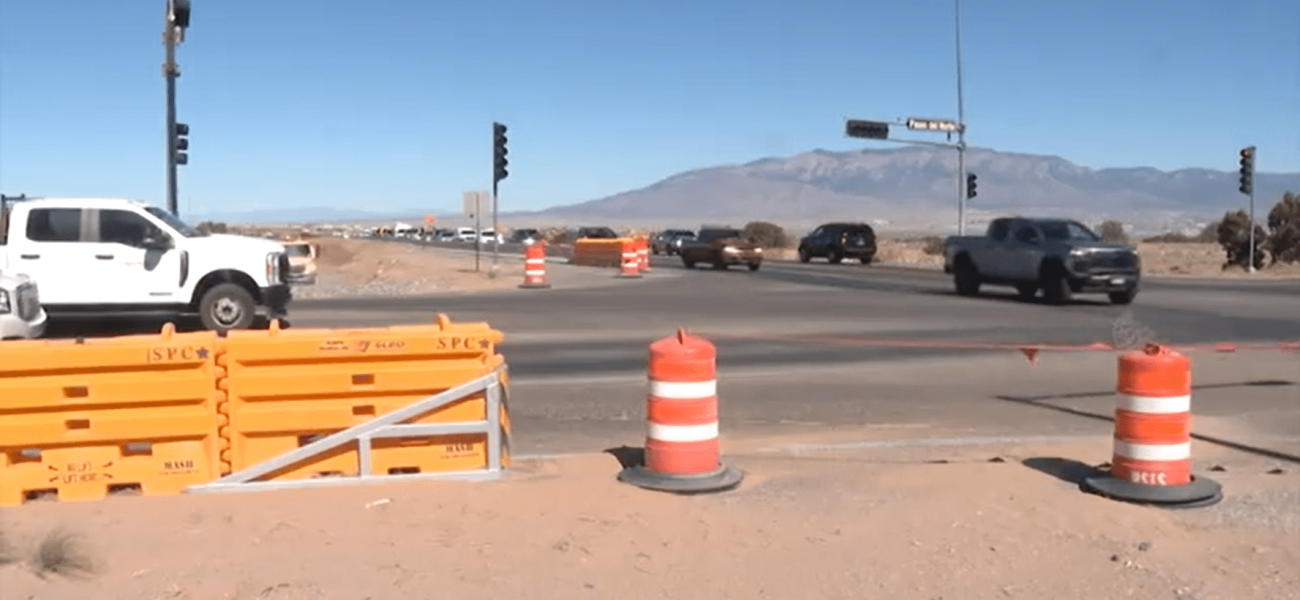
POLICY WIRE — Albuquerque, New Mexico — It’s just another Thursday. For drivers navigating the relentless expansion of Albuquerque’s West Side, it often feels less like a city on the rise and more like a perpetually open construction site, a sprawling testament to progress measured in barricades and detours. This week, the crucible of convenience, Paseo del Norte, closes again. But this isn’t just about traffic; it’s a symptom. It’s the rumble of distant dynamite, signaling deeper questions about urban growth, geological challenges, and the sheer grit required to build a metropolis in an arroyo-riddled desert.
For roughly 29 hours, beginning noon on Thursday and stretching to Friday at 5 p.m., Paseo del Norte will be shut down between Universe and Unser. Not for a marathon, not for a parade, but for rock blasting—an act of necessary, if incredibly disruptive, violence against the stubborn geology of New Mexico. Workers are breaking rock for a pair of storm drainage areas. Because, you see, it sometimes rains here, and when it does, the water has to go somewhere, preferably not through someone’s living room. Friday is penciled in for road repairs, patching up whatever the blasts might jostle loose.
“We don’t enjoy disrupting daily routines, not at all,” remarked Sarah Chen, Albuquerque’s Public Works Director, her voice tinged with the weary familiarity of someone constantly defending progress. “But this isn’t just about tomorrow’s commute. It’s about securing our infrastructure for the next 50 years, ensuring our arroyos don’t become rivers during flash floods, protecting homes and businesses. It’s complex, it’s messy, but it’s essential for a growing city.” Her department has been issuing warnings about these seismic endeavors for weeks now, with similar operations expected to continue through the rest of the year. In April, city planners assured residents seismographs would be monitoring any geological tantrums near homes.
This isn’t an isolated incident. The constant construction on arteries like Paseo del Norte mirrors infrastructure challenges seen globally—from the booming, traffic-choked metropolises of Pakistan to rapidly expanding cities across the Muslim world. The sheer scale of development required to accommodate surging populations, often in landscapes fraught with natural obstacles, means that residents learn to live with a perpetual state of flux. The methods, the budgets, and the political will might vary wildly—one need only compare the meticulous public consultation in a U.S. city with the rapid, often top-down execution of a mega-project in Lahore—but the core problem remains: how do you build out without tearing apart daily life?
Project Lead Engineer, Marcus O’Malley, who’s overseen a fair share of these subterranean battles, put it starkly: “We’re talking about controlled demolition, literally shaping the landscape with explosives. It’s a precise science, but safety is paramount. Every rock thrown, every tremor felt, we track it. We have a crew, a dedicated crew, working round the clock to minimize the disruption. They don’t want their own commute trashed either, believe me.” He isn’t wrong. This kind of work is never glamorous. It’s dusty, it’s loud, and it invariably attracts the ire of hurried commuters, all while shaping the foundations of the future.
📄 POLICY WIRE WHITEPAPER PUBLISHED: PAKISTAN'S NATIONAL SECURITY POLICY PRIORITIES
👉 READ BY CLICKING HERECommuters typically navigating this stretch—and according to recent New Mexico Department of Transportation data, over 60,000 vehicles traverse Paseo del Norte daily near Unser—are encouraged to take the long way round. The recommended detour heads south on Universe Boulevard, east onto Rainbow Boulevard to Kimmick Drive, then north on Kimmick to rejoin Paseo del Norte. It’s a labyrinth. It’s what many Albuquerqueans consider a Tuesday, frankly, navigating the seemingly unending expansions that have seen the city’s western flank burgeon. From new neighborhoods to the expansion of commercial hubs, this kind of work is just the price of admission to a growing community, one that’s slowly, explosively, building itself outwards.
What This Means
The latest closure isn’t just a momentary headache; it’s a stark reminder of Albuquerque’s persistent growth pains. Economically, these repeated disruptions translate into tangible losses for local businesses relying on steady traffic flow. Delivery schedules get jammed, customer access shrinks, — and worker commutes stretch, affecting productivity. For residents, it’s a daily tax on time — and patience. Politically, such projects inevitably strain public relations for city hall, balancing the necessity of future infrastructure against the immediate, tangible frustration of constituents. And make no mistake, every project—like the long-awaited “Y” project which addressed another long-standing West Side traffic choke point—requires significant capital. These blasting operations for storm drainage, while specific, point to a larger environmental concern: effectively managing rainwater in an arid region prone to flash floods. It forces tough questions about urban planning in an age of climate uncertainty, demonstrating how seemingly localized issues often carry far broader implications.