

Madrid’s Gambit: Sánchez Doubles Down as Scandalous Tides Threaten His Throne
POLICY WIRE — Madrid, Spain — It wasn’t the opposition benches, usually buzzing with indignation, but an almost deafening silence that first hinted at the precipice. Then came the unexpected...

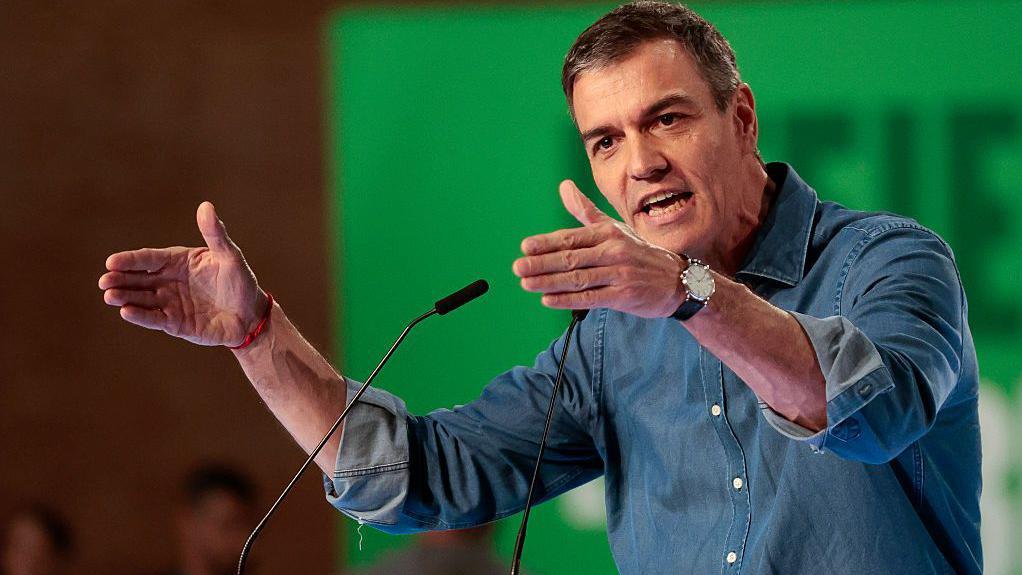
POLICY WIRE — Madrid, Spain — It wasn’t the opposition benches, usually buzzing with indignation, but an almost deafening silence that first hinted at the precipice. Then came the unexpected hiatus, a calculated disappearing act that felt less like reflection and more like a high-stakes poker play. Prime Minister Pedro Sánchez, a man who’s seen it all in his eight years atop Spain’s volatile political machine, opted for the dramatic pause, forcing a nation—and a continent—to hold its breath.
No, this wasn’t about another prickly budget negotiation or a spat with Catalonia. This was deeply personal, bleeding straight into the very core of his political credibility. Allegations swirling around his family, whispered initially, have erupted into a full-blown hurricane. It’s got the whole country talking, from bustling tapas bars in Seville to quiet villages tucked away in the Pyrenees. But then, doesn’t it always when power gets a bit too cozy with privilege? This latest imbroglio, it’s something different, though. It feels heavier. It might just be the thing that finally brings him down.
His Socialist Workers’ Party (PSOE) has seen its share of scraps, no doubt. But the current allegations, targeting his wife and raising questions about influence peddling, they’ve managed to weaponize public sentiment. It’s a rough business, politics. You spend years fighting your way to the top, only to find yourself perpetually swatting away wasps – and sometimes, those wasps grow teeth. Because it isn’t just about the judiciary doing its job, or political rivals sharpening their knives; it’s about the pervasive feeling, that inescapable itch, that maybe, just maybe, the rot runs deeper than anyone wants to admit.
Sánchez’s eight years, a political eternity in this modern age, have been a tightrope walk. He’s juggled minority governments, navigated global crises—you name it. He survived the initial shockwaves of the global pandemic, steered the country through economic uncertainty, even passed landmark social legislation. But now, it’s not his policies under the microscope, but the integrity of his inner circle. And that, frankly, is a beast of a different color. A leader’s perceived rectitude, or lack thereof, can define his legacy. This kind of challenge, it doesn’t just hit policy; it hits the national psyche.
The numbers don’t lie, — and they’re looking grim. A recent poll by El Periódico, for example, showed a dip in public trust in the government by 12 points in just the last three months—a stark indicator of the prevailing unease. That’s a huge drop. It reflects a growing skepticism, a suspicion that perhaps the rules are different for those at the very top. This kind of political theater, a leader retreating from public life to contemplate his future, can galvanize support—or simply confirm everyone’s worst fears about institutional decay. It’s a risky play. A massive gamble. But Sánchez, he’s always been one for high stakes.
Spain, a nation that has historically wrestled with the ghosts of its past—civil war, authoritarian rule—has slowly but surely built democratic institutions. It’s a young democracy, relatively speaking. And instances like these, they don’t just affect the leader. They challenge the very fabric of that democracy, making people wonder about the fairness of it all. It’s a scene replayed too often in various parts of the world, including far-flung locales like Pakistan, where similar cycles of corruption allegations, political infighting, and judicial scrutiny consistently plague the stability of elected governments. It makes you realize some universal truths about power, doesn’t it? How fleeting it’s, — and how easily undermined.
Critics, both within his party — and outside, have been quick to pounce. Opposition leader Alberto Núñez Feijóo of the conservative People’s Party (PP) wasted no time, declaring it a self-inflicted crisis. It isn’t just political opportunism; there’s a genuine belief that Sánchez’s political theatrics—what some call a tactical withdrawal—were designed to rally support and deflect attention from the actual substance of the allegations. Or perhaps, and this is the really grim bit, to present himself as a victim, a martyr to the cause of fighting fake news and smear campaigns. Whatever it’s, it’s certainly made for gripping headlines.
And because the European Union, bless its bureaucratic heart, thrives on stability, this internal Spanish tumult sends ripples. Spain isn’t just a picturesque tourist destination; it’s a significant EU player, a bridge to Latin America, and a critical voice in the Mediterranean. Instability in Madrid means potential hesitancy in Brussels, questions in Berlin, — and headaches in Paris. So, it’s not just Sánchez on the chopping block; it’s Spain’s reputation, too. The international community, always watchful, has certainly taken notice of the precariousness of policy gains when domestic crises hit this hard.
Whether he manages to navigate this treacherous terrain or finally succumbs to the pressure remains to be seen. He’s certainly got a fight on his hands. It won’t be easy, you know? He’s pledged to continue, saying something to the effect of needing to choose between resignation or renewing his mandate to [QUOTE_PLACEHOLDER]. He’s gambling that his renewed vigor, this almost heroic return from self-imposed isolation, will sway public opinion and silence his detractors. Only time will tell if that bet pays off, or if it proves to be his last, — and ultimately, losing hand. He might be standing, but the ground beneath him, it’s definitely shaking.
What This Means
Sánchez’s decision to continue leading the Spanish government, rather than resign, marks a strategic political calculation that could either stabilize his coalition or further entrench partisan gridlock. Economically, prolonged uncertainty regarding his leadership, especially amidst corruption probes, creates an unwelcome atmosphere for foreign investment. Businesses don’t much care for instability, particularly when it’s mixed with scandal. We could see a cautious slowing in certain sectors, as confidence wanes.
Politically, Sánchez has, perhaps inadvertently, reinforced a narrative among critics about his perceived self-serving nature. But it’s also true that his gamble—his dramatic pause and then declaration—is an attempt to frame himself as a bulwark against politically motivated judicial attacks, potentially unifying his base against what he labels as fake news and smears. This polarization, though, isn’t great for governance. It makes consensus building even tougher than it normally is. Such events frequently spark social unrest or calls for early elections, neither of which Spain really needs right now, particularly with critical European policies (think immigration, energy, and defense strategies) often requiring strong, decisive leadership from member states. It’s a high-wire act, plain and simple, for the man who once famously said he’d stay as long as he could, but didn’t quite foresee these kind of stakes.