


Silent Labor, Lunar Dreams: Europe’s Unsung Role in Artemis’s Grand Return
POLICY WIRE — Washington D.C., USA — It wasn’t the roaring spectacle of a rocket launch that truly crystallized humanity’s latest gambit toward the moon. Nor was it the familiar faces of...

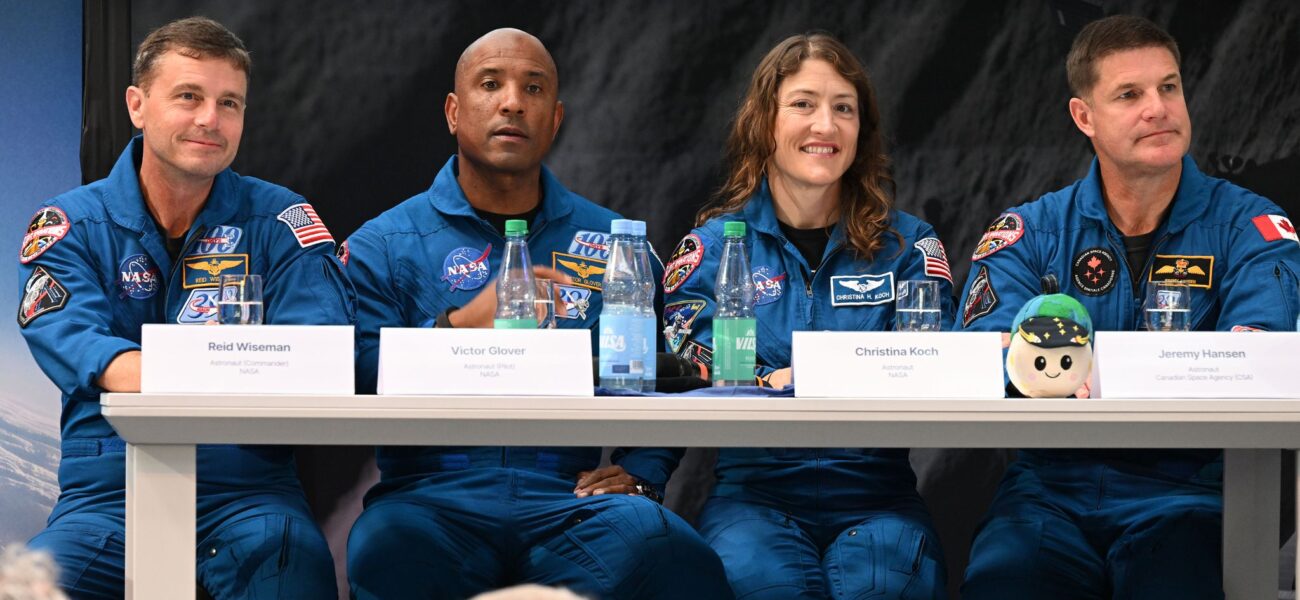
POLICY WIRE — Washington D.C., USA — It wasn’t the roaring spectacle of a rocket launch that truly crystallized humanity’s latest gambit toward the moon. Nor was it the familiar faces of astronauts, buoyant in the media spotlight. Instead, a quieter, less flamboyant exchange captured the real mechanics of ambition: a sincere expression of gratitude. It’s often the engineers, hunched over schematics and simulations, the ones whose names don’t become household words, that keep these multi-billion-dollar aspirations from becoming orbital debris. For the Artemis II crew, that gratitude apparently found its mark with European counterparts.
But this isn’t just about good manners in space; it’s a telling anecdote of international dependency, an intricate dance of geopolitical chess, and technological necessity. America’s moonshot, it seems, isn’t quite as wholly American as its patriotic branding might suggest. The Orion capsule, which will carry the Artemis II astronauts on their lunar flyby, relies on the European Service Module (ESM) — an Italian-built powerhouse that handles propulsion, power, water, and air. That’s no small print, you see.
For decades, the notion of space exploration conjured images of Cold War giants duking it out, solo. Now? It’s a mosaic. A delicate interdependency forged not just by shared dreams but by shared costs, diffused expertise, and the brutal logic of engineering. The Europeans aren’t just passengers in this venture; they’re operating critical life support. And if they aren’t [QUOTE_PLACEHOLDER], then what, exactly, is this mission truly celebrating?
The space race of today isn’t about planting flags. It’s about sustaining a fragile equilibrium in a theatre where nation-states still jockey for soft power. And for a substantial investment — ESA’s contribution to the Artemis program, including the ESMs, is reportedly in the ballpark of €1.5 billion (approximately $1.6 billion USD) for the first three modules, according to a 2019 report by SpaceNews — one would hope for a hearty thank you. You can’t just slap a mission together without those kinds of commitments. And you certainly can’t keep telling the world you’re going back to the moon without them.
The quiet acknowledgment to the Europeans doesn’t just reveal the practicalities; it highlights a subtle shift. Remember when the US, Soviet Union, China, and later India, would parade their cosmic achievements as singular national triumphs? That’s still happening, but the edges are blurring. For countries like Pakistan, with its own space agency (SUPARCO), which often works quietly on satellite projects and Earth observation, these grand, multinational endeavors provide a complex blueprint. It shows them how technological advancement isn’t solely a question of domestic ingenuity but also about strategic partnerships, a savvy understanding of global supply chains, and the careful cultivation of diplomatic ties in high-tech domains. They’re watching, keenly.
And it’s a reality check, isn’t it? The dream of independent space faring often hits the very tangible wall of budget limitations and specialized technical knowledge. Nobody builds a skyscraper solo anymore, — and the moon is a lot further than the highest building.
Consider the delicate diplomacy at play: America wants to return to the moon, Europe wants a seat at that high-tech table, and emerging space nations — from Islamabad to Abu Dhabi — aspire to contribute, or at least leverage, these colossal undertakings for their own national prestige and technological gain. They’re all trying to figure out where they fit, watching these intricate connections unfold.
📄 POLICY WIRE WHITEPAPER PUBLISHED: PAKISTAN'S NATIONAL SECURITY POLICY PRIORITIES
👉 READ BY CLICKING HEREIt’s not all rosy. We’ve seen, over the years, the tension between economic pressures — and technological ambition. Look at the NHL’s salary caps affecting player movement, or Japan’s niche engineering efforts that ripple globally. These aren’t just technical projects; they’re reflections of national strategies. Space, increasingly, falls into this category too.
What This Means
This thank-you isn’t a footnote; it’s a headline. It signals the irreversible trajectory of internationalizing humanity’s off-world ambitions. No single nation, not even the most powerful, can unilaterally sustain an expansive deep-space exploration agenda for long, or at least not without enormous, potentially unsustainable, cost. What it really means is that future endeavors beyond Earth’s atmosphere will inherently become negotiations: of budget allocations, of intellectual property, of political capital.
For rising powers in South Asia and the broader Muslim world, this paradigm shift offers both challenges and opportunities. While full-scale human lunar missions remain financially out of reach for many, contributing to, or even specializing in, smaller, yet critical, components could offer a viable pathway to gain influence and foster domestic technological growth. The ESM, for instance, isn’t flashy, but it’s essential. This distributed model of contribution means soft power is earned through specialized technical skill and reliable partnership, not just brute force launch capability. It isn’t just about what you can launch, but what you can sustain.
And yes, the optics still matter. For Europe, the partnership cements its status as an indispensable partner, validating years of investment in high-end space technologies. For the U.S., it manages to project global leadership while deftly offloading some of the technical and financial burdens. It’s an arrangement, an incredibly expensive, intricate arrangement, built on a network of subtle dependencies that stretches from Kourou to Cape Canaveral. And it’s the quiet strength of these links—not the loudest pronouncements—that will determine how far, and how soon, we truly return.