


Peak High Drama: Labrador’s Unlikely Odyssey on UK’s Tallest Summit Raises Eyebrows, Questions
POLICY WIRE — Fort William, Scotland — Britain’s highest peak, a grand symbol of Scottish wilderness, recently served as the improbable backdrop for a rather surreal incident. It wasn’t a stranded...

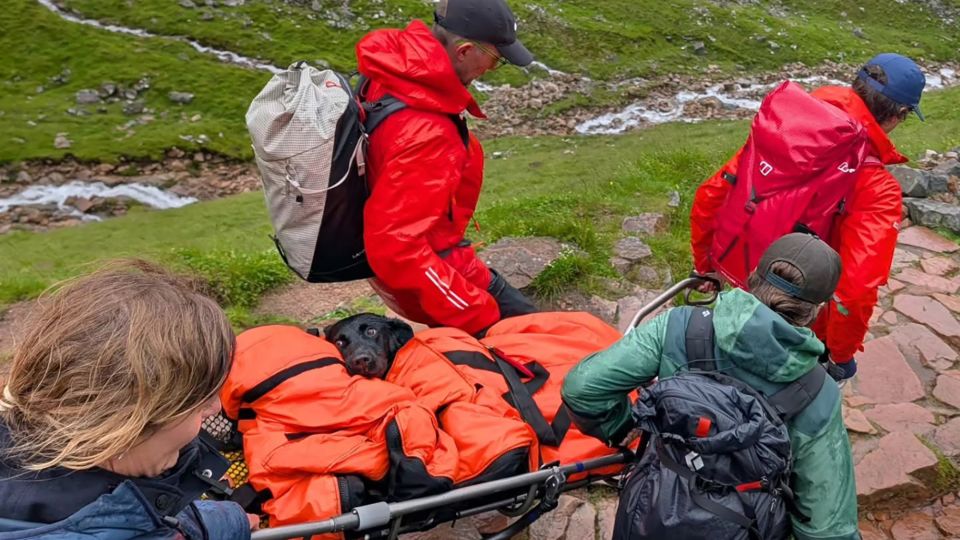
POLICY WIRE — Fort William, Scotland — Britain’s highest peak, a grand symbol of Scottish wilderness, recently served as the improbable backdrop for a rather surreal incident. It wasn’t a stranded climber or a sudden blizzard that called forth mountain rescue volunteers to Ben Nevis; no, it was a particularly disoriented Labrador retriever, found in what responders termed a decidedly altered state. A rescue operation unfolded with the peculiar diagnosis: suspected cannabis consumption. Indeed, the very notion—a Labrador, high on Ben Nevis—invites more questions than answers about the state of contemporary outdoor pursuits.
The saga began when a distress call pinged the Lochaber Mountain Rescue Team. They weren’t looking for lost hikers, but a canine in distress, reportedly displaying symptoms suggesting intoxication. What kind of intoxication on a remote mountain trail, you ask? The team, seasoned veterans of human predicaments both mundane and life-threatening, probably hadn’t quite prepared for this scenario. They scaled significant elevation, traversing treacherous terrain, only to discover a large Labrador—reportedly named Daisy (though names are sometimes changed in sensitive pet welfare reports)—looking decidedly unwell. Rescuers often find animals in rough shape up there. This was different. [QUOTE_PLACEHOLDER]
Her owners, a pair of bewildered tourists from out of county, reported Daisy had been fine on the ascent, then started exhibiting tell-tale signs: uncoordinated movement, dilated pupils, and an unsettlingly glassy stare. They weren’t quite sure what to make of it. After a careful assessment, paramedics with a flair for deduction, noting the smell and the specific physiological responses, posited a theory. But let’s be frank, the idea of Fido sampling forbidden treats at 4,413 feet above sea level does paint a vivid, if darkly comedic, picture. It’s almost too perfect for a cautionary tale, isn’t it?
The Labrador was carefully brought down the mountain, a substantial undertaking, especially given her condition. Veterinary examination following the descent reportedly solidified the initial suspicions. While the precise circumstances remain fuzzy—whether Daisy had sampled a discarded edible, perhaps a hiker’s forgotten stash, or something more directly offered (unlikely, we’d hope)—the incident underscores an increasingly prevalent, albeit rarely discussed, issue. Pet poisonings linked to recreational substances have seen a substantial rise in recent years, with reports from the ASPCA showing a 300% increase in calls about marijuana ingestion in pets over the past decade in the U.S.—an eyebrow-raising figure, even considering the general upward trend of calls for all types of toxic exposure.
This isn’t just a quirky local news item. It pulls on threads of broader societal conversations. Cannabis, once universally clandestine, is becoming increasingly visible, for better or worse, in various public spheres across Western nations. But what does it mean when its unintended consequences extend to mountain-climbing canines?
And where do we draw the line? Are we really so detached from our surroundings, so immersed in personal freedoms, that we forget about companion animals and public spaces? Pakistan, for instance, a nation grappling with its own complex relationship with traditional and illicit substances, often sees stringent penalties for drug offenses. While recreational cannabis use isn’t publicly discussed with the same casualness as in some Western liberal democracies, the presence of substances, and the problems they bring, isn’t unique. It just manifests differently—often with far more serious, even life-ending, consequences for people rather than merely a disoriented dog needing a hero’s rescue. And for good reason, I suppose, given the differing socio-cultural stakes.
📄 POLICY WIRE WHITEPAPER PUBLISHED: PAKISTAN'S NATIONAL SECURITY POLICY PRIORITIES
👉 READ BY CLICKING HEREBut the comparison, however imperfect, serves a point. Our cultural norms around intoxicants—and how they collide with natural environments and unwitting bystanders—are worth examining. This particular canine’s journey might seem absurd, but it’s a symptom of larger, shifting dynamics. It prompts questions about responsibility, public health, and—let’s be honest—the sometimes questionable judgment of humanity, and how that judgment trickles down to our four-legged friends.
Because who leaves illicit substances lying around, anyway? And especially in a pristine national park area? But then, perhaps the greater irony is the attention it garnered—a veritable media storm over a woozy Labrador, while far graver environmental or social degradations often pass largely unnoticed on the very same mountain paths.
What This Means
The tale of the high-altitude Labrador, however comical, points to more substantial shifts. Economically, this incident adds a layer to the burgeoning debate around the global normalization of cannabis. As legal frameworks evolve in places like Canada and parts of the United States, and conversations arise even in the UK, unforeseen societal ripples surface. From increased vet costs for pet poisonings to the reallocation of public safety resources (a mountain rescue team assisting a stoned dog, for goodness sake!), there’s a real fiscal impact, however minor these individual incidents may seem. It speaks to a changing consumer landscape where public awareness around responsible storage is desperately lagging behind legalization trends. Politically, this vignette provides a fresh angle for proponents and opponents alike to buttress their arguments about deregulation; advocates might cite individual irresponsibility rather than systemic failure, while critics could point to the societal spillover effects of a substance’s mainstreaming. On a micro-level, for the outdoor recreation industry, incidents like these might compel national parks to issue stricter guidelines regarding pet supervision or even broader behavioral expectations on trails. It’s an unspoken covenant: you tread on ancient land, respect it, and respect its fellow travelers—be they human or animal. But it seems some basic common sense is just getting lost in the weeds. And it makes you wonder what other peculiar rescues will soon grace the headlines. Policy Wire recently explored other aspects of global economics in this piece on NHL economics, highlighting that unintended consequences aren’t limited to canine capers on remote peaks.