


From Compacts to High-Octane Dreams: Japan’s Niche Engineering Echoes Global Aspirations
POLICY WIRE — Tokyo, Japan — Sometimes, the quietest whispers of engineering ingenuity from a distant corner of the automotive world can echo profound truths about global consumer trends and, indeed,...

POLICY WIRE — Tokyo, Japan — Sometimes, the quietest whispers of engineering ingenuity from a distant corner of the automotive world can echo profound truths about global consumer trends and, indeed, the very nature of aspiration. It isn’t always about billion-dollar mergers or grand manufacturing shifts. Occasionally, it’s a specific, rather specialized tweak to an unassuming car—a particularly focused act of refinement—that unveils more about international markets than a thousand economic whitepapers.
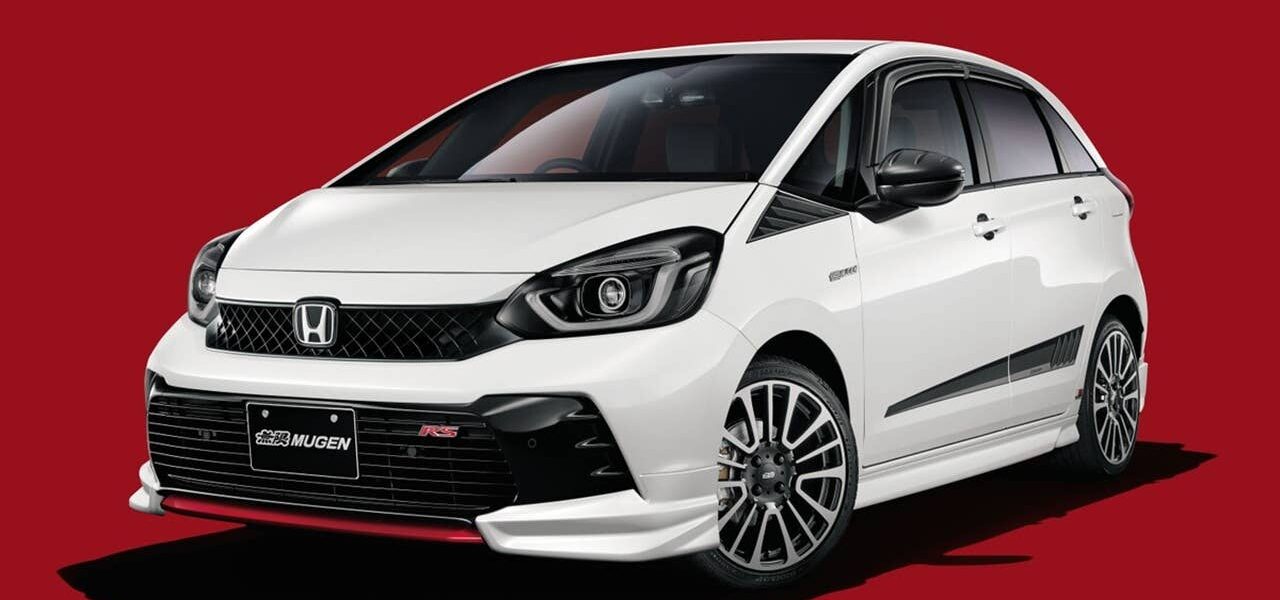
Consider the recent, somewhat niche, announcement involving Mugen. You know Mugen, don’t you? They’re the storied aftermarket performance house, synonymous with Honda’s sportier side. And they’ve taken the modest [QUOTE_PLACEHOLDER]—the humble, yet globally ubiquitous, Honda Fit—and, well, they’ve gone and done something truly peculiar with its underpinnings. Something borrowed, they say, from the high-performance [QUOTE_PLACEHOLDER]. A bold move, a very interesting bit of mechanical alchemy, effectively. It wasn’t about revolutionizing a fleet, but perfecting a tiny slice of it. And that, frankly, tells a whole story about who’s buying what, — and why.
This isn’t just about faster compacts for Tokyo’s narrow streets. No, it hints at deeper economic currents, at the surging demand for performance, authenticity, and customisation that ripples from East Asia clear across to the bustling urban centers of Lahore and Karachi. These aren’t just cars; they’re canvases for personal expression, even if the modifications originate halfway across the globe.
The Honda Fit, or Jazz as it’s known in some territories (we’re talking about the third-generation, GE8-platform car here, to be precise, if you’re keeping tabs), has long been the paragon of sensible, compact motoring. Reliable, fuel-efficient, surprisingly spacious—the very antithesis of a track monster. But Mugen, they don’t do sensible. They do go-faster bits, sometimes even for cars not overtly built for it. They [QUOTE_PLACEHOLDER] [QUOTE_PLACEHOLDER] [QUOTE_PLACEHOLDER] a chassis trick, apparently, something out of the top-tier [QUOTE_PLACEHOLDER] play book. An actual bona fide chassis trick, to be more precise, according to folks in the know. That’s a significant engineering transfer, even if it feels almost quixotic on a car known primarily for its practicality.
And why does this niche engineering escapade matter to the Policy Wire crowd? Because it illustrates a phenomenon: the aspirational consumption of developed-world technology and aesthetics in emerging markets. It’s a powerful current, really. Market analysts project that the automotive aftermarket in South Asia, including countries like Pakistan, could exceed $15 billion by 2027, as per figures from Grand View Research. That’s a staggering figure, mostly driven by a burgeoning middle class seeking differentiation and perceived quality that factory options just don’t deliver. It’s not always about outright speed; it’s about signaling. It’s about identity on wheels. This phenomenon, this global yearning for customization, it’s a policy matter, whether governments acknowledge it or not—impacting everything from import duties to intellectual property rights, and even safety regulations.
The pursuit of these precise, often expensive, enhancements speaks volumes. People in places like Pakistan, where vehicle ownership represents a considerable investment, they aren’t just buying transportation. They’re buying into an image, a global car culture, an idea of what mobility can be. And that idea, that premium, trickled-down engineering from Mugen on a Fit, it filters through various channels—legitimate distributors, gray market imports, sometimes even clever local fabrications based on global blueprints. These micro-trends, often overlooked in broader economic forecasts, reveal genuine dynamism at the consumer level.
📄 POLICY WIRE WHITEPAPER PUBLISHED: PAKISTAN'S NATIONAL SECURITY POLICY PRIORITIES
👉 READ BY CLICKING HEREBut there’s also an interesting contrast: this isn’t high-tech innovation pushing boundaries for, say, electric vehicles. It’s an internal combustion homage, an ode to mechanical precision. A lot of that passion, for tuning — and customization, is alive and well outside the West. And frankly, this ongoing fascination with modifying internal combustion engines, especially from storied Japanese tuners, acts as a sort of counter-narrative to the otherwise relentless global march towards electrification.
It’s not just that Mugen [QUOTE_PLACEHOLDER] the [QUOTE_PLACEHOLDER] Honda Fit [QUOTE_PLACEHOLDER] Civic Type R Chassis Trick; it’s that someone, somewhere, genuinely wants that upgrade, and others are prepared to pay for the distinction it provides. This micro-story, an almost technical footnote in the larger automotive narrative, suggests a significant current in global trade, consumer psychology, and even the subtle influence of cultural soft power emanating from engineering prowess. We’re often quick to label entire regions as emerging or developing, but their consumer preferences are frequently as sophisticated, if not more so, than those in older economies. And they’re not afraid to put their money where their aspirational dreams are. They just don’t want what everyone else has, that’s it.
What This Means
This niche product, a highly specific performance upgrade for an otherwise utilitarian vehicle, acts as a barometer for several intertwined policy and economic considerations. First, it highlights the enduring, and often underreported, power of aftermarket industries, particularly in regions with growing middle classes. Governments might prioritize primary manufacturing, but the economic activity surrounding vehicle customization—from parts importation to local labor for installation—is substantial. Policy makers should acknowledge this sector not as a fringe element, but as a legitimate, expanding part of their domestic economies, demanding considerations for trade agreements, safety standards, and intellectual property protection.
Second, the sheer appetite for high-end, brand-specific upgrades, even for a compact car, reflects a potent form of cultural aspiration. Consumers in many Muslim-majority nations, and indeed across South Asia, are not merely seeking functional transport; they’re expressing identity, status, and connection to a global ‘car culture’ that values precision engineering and performance heritage. This consumer demand drives not only market activity but also the flow of capital — and ideas. Ignoring such consumer psychology can lead to ineffective economic policies or even foster illicit gray markets where genuine demand isn’t met by legitimate supply. It’s about recognizing that purchasing decisions are rarely purely rational. They’re often intensely emotional, even political, on an individual scale. This precise chassis refinement, for a ‘tiny’ car, isn’t just a curiosity; it’s a window into market dynamics far broader than mere horsepower figures.