


Albuquerque’s ‘Ride or Die’ Couple: A Week of Freedom, Then the Familiar Handcuffs Return
POLICY WIRE — Albuquerque, United States — It’s a familiar American tableau, really: the criminal justice system’s revolving door, grinding its weary way through another iteration of...

POLICY WIRE — Albuquerque, United States — It’s a familiar American tableau, really: the criminal justice system’s revolving door, grinding its weary way through another iteration of release and re-arrest. Only a week. That’s all the freedom a certain Albuquerque couple, often whispered about as the city’s very own Bonnie and Clyde, managed to savor before familiar sirens wailed again and the clink of metal signaled a return to their less-than-luxurious accommodations.
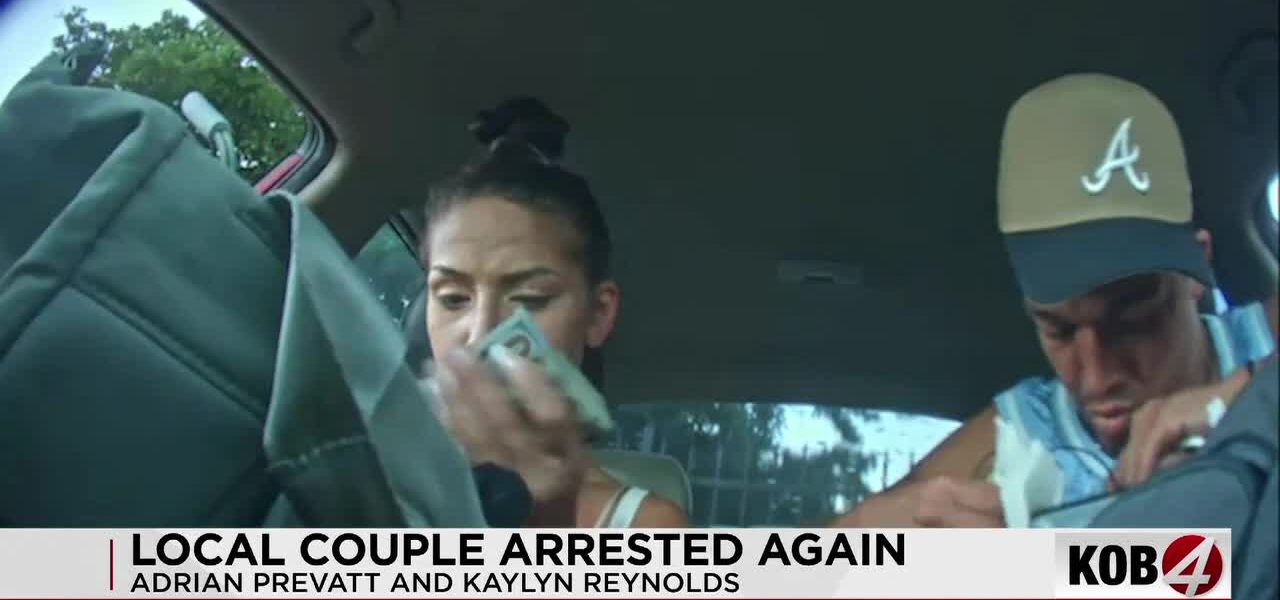
Adrian Prevatt and Kaylyn Reynolds had just stepped back into the world — with conditions, mind you — on July 2 after an earlier scrape. A week later, almost to the hour, they were back in cuffs. This isn’t just about two people making questionable choices; it’s a stark, public spectacle of a system perpetually struggling to reconcile due process with demonstrable public danger. A case study in how the abstract gears of justice play out on very concrete streets. [QUOTE_PLACEHOLDER]
Their latest entanglement on July 9 wasn’t a solo act, either. Police say the duo found themselves in a stolen pickup — a common thread in their recent exploits, it seems — involved in an alleged armed robbery at a Savers store on Carlisle Blvd. This time, however, Prevatt — and Reynolds were reportedly passengers. The lead roles, the ones allegedly holding employees at gunpoint and snatching merchandise, were taken by two other characters in this unfolding drama: Hailee Lovato and Terrance Jackson. Jackson, they say, was at the wheel.
It sounds like something from a made-for-TV movie, but it was all very real — and very much in the public eye. APD released both helicopter — and body camera video. You see the car darting around, crossing lanes like a bad dream, even tearing through a park. Officers on the ground, an eye in the sky; it’s a modern pursuit, you know? But because reckless pursuits are a dicey business, an APD spokesperson, Gilbert Gallegos, stated, Our officers try not to pursue people who are driving in a reckless manner when we have our helicopter up, so it’s a lot safer for officers and for the public. It’s a policy designed to protect innocents, yes, but it also paints a picture of suspects brazen enough to think they can outrun consequences, at least temporarily.
All four alleged accomplices were in that getaway vehicle for a spell, then Prevatt and Reynolds were dropped off under a parking garage — conveniently out of the most immediate line of fire, perhaps? After that, Jackson — and Lovato ended their escapade by crashing into a parked car. Jackson, in his haste, allegedly left his firearm inside the wreckage. Casual. Once all four were rounded up, it didn’t take long for officers to realize a couple of these faces were far too familiar. And, of course, they were.
Just one week prior, on June 29, Reynolds — and Prevatt were taken in. The charges? Only something as minor as swiping one of the department’s bait cars, not to mention a grab bag of cash, guns, ammunition, and other goodies. It was during that arrest, captured on police video from inside the stolen bait car, that Reynolds was heard telling Prevatt, Bro, I’m smart, babe. Give me a high-five. Prevatt, ever the romantic, retorted, I love the f*** out of you. You’re my ride or die. It’s almost sweet, in a perverse, criminal sort of way. Like something out of a pulp fiction novel, isn’t it?
And then the problem becomes glaring. Because they’re not staying in jail. Gallegos didn’t mince words, observing, The problem is they’re not staying in jail. This is a great example of that. Both were released on July 2, conditions notwithstanding. Gallegos wasn’t shocked — probably not even a little surprised — that they ended up back in cuffs exactly seven days later. He elaborated on their earlier spree: The fact is, they previously stole items. They were specifically looking. They were excited that it was someone from the military, — and they were able to find guns and magazines with ammunition. It paints a troubling portrait of calculated thievery, not just random acts.
📄 POLICY WIRE WHITEPAPER PUBLISHED: PAKISTAN'S NATIONAL SECURITY POLICY PRIORITIES
👉 READ BY CLICKING HEREAnd the trouble isn’t just with the two romantically entangled protagonists. Jackson — and Lovato also come with baggage. Jackson, for example, served time for voluntary manslaughter back in 2018. Lovato faced DWI charges in 2025, which, well, suggests either a time-traveler or a bureaucratic filing anomaly (but likely just an input error — these things happen, you know?). For the July 9 incident, Jackson faces armed robbery with a deadly weapon, receiving or transferring stolen motor vehicles, possession of a firearm by a felon, aggravated fleeing, and leaving the scene. Lovato’s charges include armed robbery — and conspiracy. As for Reynolds and Prevatt, they’re charged with receiving or transferring stolen motor vehicles and conspiracy related to the July 9 episode. They’re also staring down charges from the June 29 bait car incident: unlawful taking of a motor vehicle, burglary, three counts of receiving stolen firearms, conspiracy, and unlawful carrying of a deadly weapon. It’s quite the rap sheet, collectively speaking.
Hopefully they stay in jail, and we shouldn’t have to be waiting and keep doing this over and over again to determine whether they’re a danger to society, Gallegos concluded. It’s a sentiment that probably resonates with most folks who pay attention to these kinds of recurring headlines. It’s about more than just these four individuals; it’s about the very real costs, both economic and societal, of a system that can seem caught in its own perpetual loop. Federal justice department data from 2022 indicates that roughly 60% of property offenders are rearrested within three years of release, demonstrating a systemic challenge that goes far beyond Albuquerque’s city limits.
What This Means
This isn’t merely local crime blotter fodder; it’s a symptom, a sharp incision showing us what happens when judicial efficiency clashes with criminal recidivism. What you see in Albuquerque — a pair, and then a foursome, quickly cycling in and out of custody for serious offenses — is a challenge that strains judicial resources and erodes public trust everywhere. From Washington D.C.’s metropolitan sprawl to smaller, more spread-out jurisdictions, the capacity of courts to process, rehabilitate, and effectively detain repeat offenders defines the very notion of public safety. When an alleged felon with a record for manslaughter (Jackson) is quickly back on the streets involved in armed robbery, questions arise, don’t they?
This situation echoes challenges faced globally. Think about rapidly developing nations, for instance, or regions like South Asia. Countries there, often grappling with burgeoning populations and limited judicial infrastructure, struggle profoundly with similar issues of court backlogs, overcrowded prisons, and inadequate rehabilitation programs. Pakistan, for example, frequently contends with debates over judicial reforms aimed at accelerating case processing and ensuring that justice, when delivered, is both swift and meaningful. The fundamental issues — the struggle to hold dangerous individuals accountable, to protect citizens from predictable threats, and to maintain faith in legal institutions — are universal. It’s a stark reminder that robust legal systems, transparent judicial processes, and effective corrections are not luxuries, but the absolute bedrock of a functioning society. And sometimes, you know, it feels like we’re seeing those very foundations tested, right here in the desert Southwest. This incident, minor in the grand scheme of geopolitical maneuvers, serves as a gritty mirror reflecting deeper societal strains, even hinting at themes explored in pieces like Florida Fleeing Fatality Fuels Fierce Immigration Fray, where similar concerns about law, order, and social fabric are hotly contested.