


Silent Hawks: Marine Ace Breaks Ranks on Fighter Jet Hierarchy
POLICY WIRE — Washington D.C., USA — It’s a multi-trillion-dollar question: which machine—which piece of aerospace engineering, born from taxpayer cash and Cold War ambition—actually stands above the...

POLICY WIRE — Washington D.C., USA — It’s a multi-trillion-dollar question: which machine—which piece of aerospace engineering, born from taxpayer cash and Cold War ambition—actually stands above the rest in a modern dogfight? For decades, the public’s perception of air superiority has been shaped by slick marketing videos and Hollywood blockbusters, each promising a fighter jet that redefines warfare. But take it from a guy who’s actually punched holes in the sky with four of America’s most advanced birds, the narrative from the cockpit sometimes sings a very different tune. We’re talkin’ about the F/A-18, the F-16, the enigmatic F-22, — and the hyper-controversial F-35.
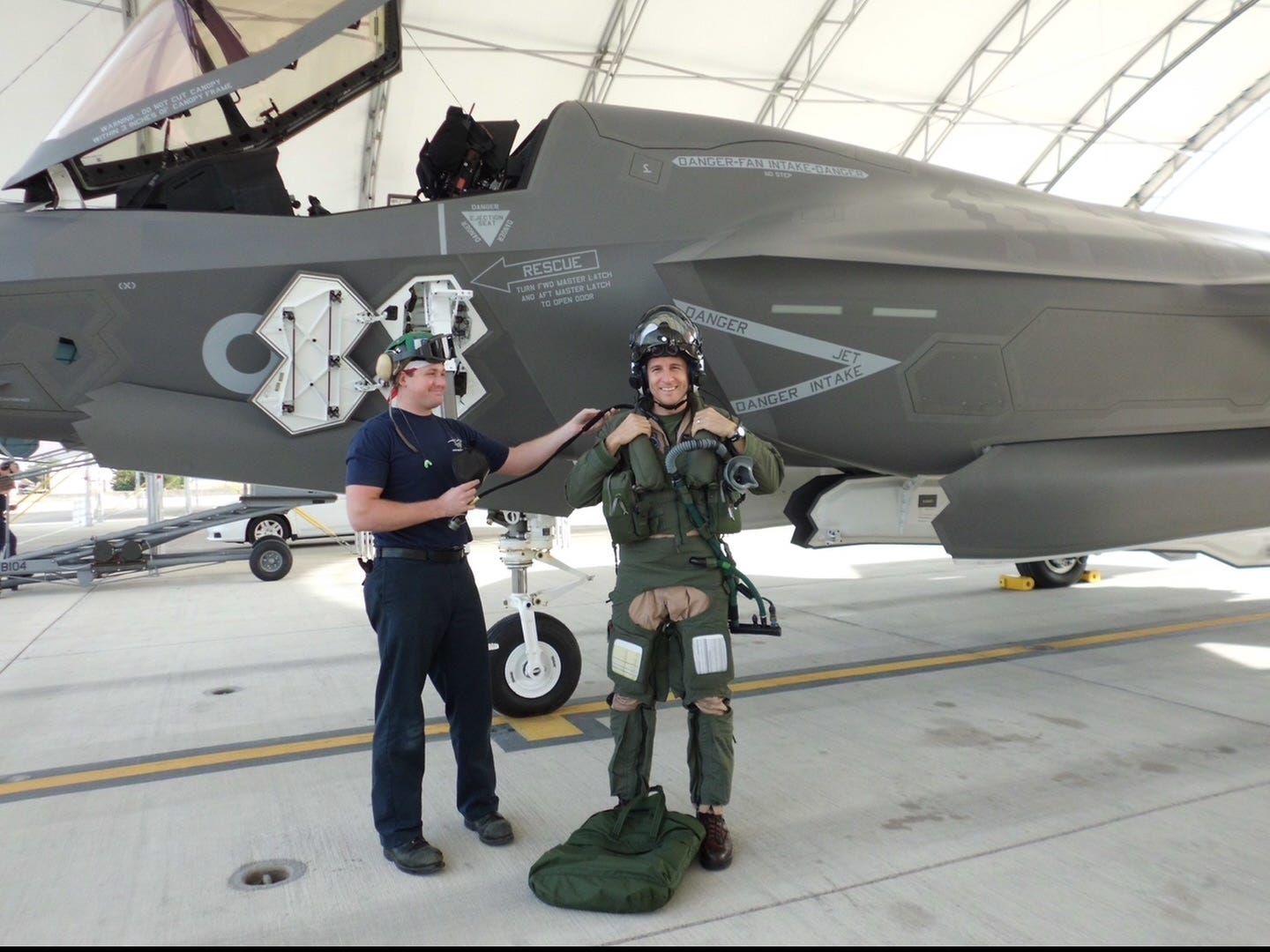
Marine Lieutenant Colonel David Berke isn’t your garden-variety armchair analyst. He isn’t selling models or hawking sponsorships. He’s one of the rare few, a truly exclusive club, who’s been at the stick of all four. And while each jet has its fan club—its cheerleaders in procurement offices and congressional committees—Berke’s insights offer a gritty, hard-nosed look at performance where it actually counts. What he sees isn’t always what’s advertised.
Think about the F-16, the Fighting Falcon, that old workhorse. Many folks might consider it yesterday’s news, a Cold War relic on its way out. But Berke seems to suggest it still holds a certain magic, a particular brand of agile dominance. Then you’ve got the F/A-18 Hornet (or Super Hornet, its big brother), a carrier jet that’s built for rough-and-tumble naval operations. The F-22 Raptor, stealthy — and potent, feels like the crown jewel to many, a truly fifth-gen beast. And finally, the F-35, the Joint Strike Fighter, the all-in-one future that’s been both celebrated and savaged, often simultaneously, by pundits and politicians.
But when you boil down thousands of hours, hundreds of combat sorties, and the pure visceral experience of flying at the edge of the envelope, one truly sticks out, for better or worse. Berke, with his characteristic Marine frankness, suggests [QUOTE_PLACEHOLDER]. That’s quite a statement when you’ve had the chance to pilot aircraft that are considered among the finest ever built. And it’s an assessment that cuts through a lot of the usual defense industry spin, giving us a clearer picture of what works, and what doesn’t, at Mach 1.5.
He isn’t just some former aviator telling tall tales, mind you. Berke, who famously flew with Sen. Ted Cruz to show him a fighter jet’s realities, has been at the forefront of aviation strategy and actual, no-kidding combat operations. He even led America’s first F-35 deployment to combat. So, yeah, he’s seen things. He’s done things. His perspective isn’t theoretical; it’s earned. His pronouncements on these aerial predators, from the nimble F-16 to the stealthy F-35, aren’t just opinions. They’re operational directives disguised as anecdotal observation. Because he emphasizes the fact that [QUOTE_PLACEHOLDER], which implies that despite technological advancements, pilot skill and raw airframe performance can still carry the day, even against the most sophisticated threats.
What makes one stand out? Is it pure speed? Radar evasion? The ability to carry an absurd amount of ordnance? Berke implies it’s a confluence of factors, perhaps one particular characteristic that really just hits differently for a pilot when lives are on the line. But what might be a shocker for those following military hardware procurement is that it’s not always the newest, most expensive gadget that commands the greatest respect from those who operate them. It’s often about reliability, the intuitive interface, and the sheer joy (and capability) of pushing the machine to its absolute physical limits. He makes it pretty clear that [QUOTE_PLACEHOLDER]. But then again, maybe that’s where the old adage about it not being the size of the dog in the fight, but the size of the fight in the dog, comes in, even when talking about multi-million dollar airframes. Or, as Berke puts it bluntly, [QUOTE_PLACEHOLDER].
But how do these seemingly subjective assessments impact strategic policy and, say, power projection in a region as fraught as South Asia? Take Pakistan, for instance, which relies heavily on a mix of F-16s — and domestically produced JF-17s. They’ve built their air defense around American technology. If the F-16, often considered an aging asset by Western standards, retains a certain street credibility among top pilots, that speaks volumes. It’s not just about what a nation buys; it’s about what its pilots can do with it. The notion that an older platform still garners top marks from an ace Marine aviator has profound implications for how air forces—like the Pakistan Air Force (PAF)—assess their own capabilities and strategic value on a regional stage.
The F-35 program itself, with an estimated lifetime cost exceeding $1.7 trillion, stands as the most expensive weapon system in history, according to the U.S. Government Accountability Office (GAO). That’s an astronomical sum, especially for an aircraft whose combat effectiveness is still, in some circles, a subject of heated debate among military analysts and actual pilots like Berke. When a country like Turkey, a NATO ally with a long history of US defense ties, is ejected from the F-35 program — its procurement pivot has consequences far beyond Ankara’s borders. Suddenly, the strategic value of other platforms gets an upgrade.
What This Means
Berke’s assessment isn’t just shop talk among aviators; it’s a serious indicator of perceived combat efficacy. The subtle, human element in warfighting—the intuitive connection between pilot and machine—remains non-negotiable. This isn’t a small point, considering the vast sums poured into ever more complex systems that can sometimes feel like flying computers rather than raw, kinetic weapons. When a pilot with his unparalleled flight time across multiple platforms hints that the ‘newest’ might not always be ‘best’ in critical scenarios, it throws a wrench into standard defense procurement dogma. It’s a signal to military planners worldwide, especially in places like India, who are still evaluating their own next-generation fighter programs, that maybe—just maybe—simpler, more direct machines, combined with elite pilot training, still hold a unique edge.
This pilot’s nuanced view pushes back against the almost mythical hype surrounding fifth-generation fighters. Because at the end of the day, a pilot’s preference isn’t about marketing brochures; it’s about what delivers results under extreme duress. That human factor? It’s where the rubber meets the road. Or, in this case, where the exhaust plume hits the stratosphere. It reminds us that technology, however advanced, must always serve the warfighter, and sometimes the warfighter has different priorities than the designers. Check out how US decisions on other fronts echo across the region at Silent Waves: US Non-Apology Jolts India, Echoes Across Asia. Also, a different kind of critical thinking is happening in the Strait of Hormuz, with profound implications for global trade and defense posturing, as covered in Hormuz Calm, But Trapped Seafarers’ Nightmare Lingers.