


Silent Clues, Slow Grind: Albuquerque’s Cold Case Breaks After Almost Two Years
POLICY WIRE — Albuquerque, United States — Some truths just simmer, don’t they? They lay dormant, gathering dust, sometimes for months, sometimes for years, under the weight of...

POLICY WIRE — Albuquerque, United States — Some truths just simmer, don’t they? They lay dormant, gathering dust, sometimes for months, sometimes for years, under the weight of active cases and the relentless tick-tock of a busy world. Then, quietly, patiently, often through the dogged insistence of science and bureaucracy, they claw their way to the surface. It’s a process that lacks the dramatic flair of primetime procedurals but defines the messy reality of justice.
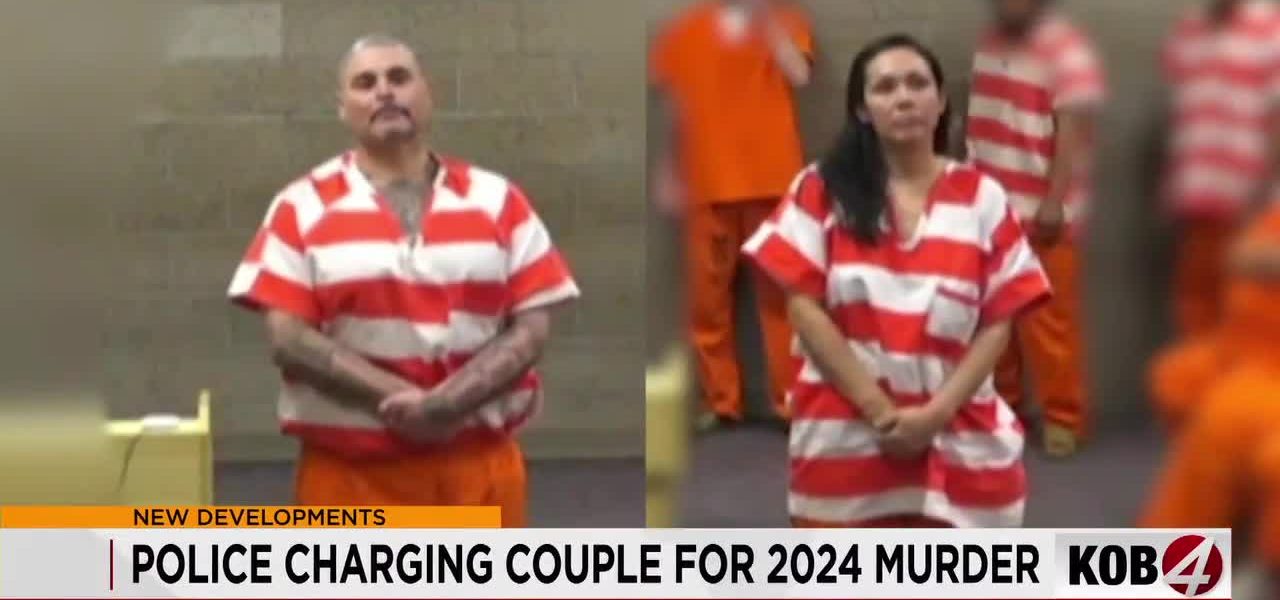
Because that’s precisely what’s unfolded in Albuquerque, where after a painstaking near two-year wait, local police have finally hauled in two individuals tied to a violent death outside a rather ordinary Smith’s grocery store back in 2024. This wasn’t some immediate arrest, mind you. This was the long game. A phone snatched, a life taken—simple facts that festered until meticulous detective work nudged the cold embers back to life. [QUOTE_PLACEHOLDER]
It’s believed Emiliano Vallejos and Rosalyn Garcia are the pair that allegedly “stole a man’s phone and stabbed him to death outside a Smith’s.” That, in blunt terms, is what police are saying went down. Ty James, the victim, he was found dead on “July 12, 2024, on Yale Boulevard near Coal in Albuquerque.” Officers got there, they did their job, and what’s interesting, they “recovered the knife used in the killing” right there, practically on the scene.
But having the weapon, it turns out, is only ever half the battle. They had video too. “Surveillance video from nearby businesses showed two people leaving the area,” authorities have confirmed. Standard fare, really, for crime scenes these days. But matching faces to grainy images—that’s a different beast entirely. So, the case, for a time, just hung there. A ghost in the city’s files.
And then came the science. Specifically, the DNA. Court documents detail how “detectives tested DNA from the knife and matched it to Emiliano Vallejos.” It’s one of those quiet, almost invisible victories forensic science provides, turning a forgotten object into a linchpin. But wait, there’s more. The walls have ears, even in jail. “Jail calls between Vallejos and Rosalyn Garcia also showed Garcia admitted she lied to police about their involvement.” Ah, the unraveling. You can practically hear the subtle sigh of relief from investigators.
It’s this kind of delayed but deliberate justice that often goes unnoticed. The average American civilian often pictures swift, decisive action, a perp walk, a rapid conviction. But a hard truth? Many violent crimes in the United States don’t even reach the arrest stage. The U.S. murder clearance rate—that’s the percentage of cases where an arrest is made or a suspect identified—hovers around 54.4 percent nationally, according to the FBI’s 2022 Uniform Crime Reporting data. Nearly half of all murder cases remain unsolved, a chilling reality that makes every arrest in a ‘cold’ case, however belated, a significant win.
But this isn’t just an American phenomenon, this grind for answers. Across continents, in places like Pakistan, communities wrestle with similar, often amplified, struggles. There, legal systems can be burdened by overwhelming caseloads, forensic limitations, or even public trust issues, making the prospect of timely, forensic-backed justice an even harder mountain to climb. The pursuit of criminal accountability, its nuances and frustrations, isn’t constrained by borders—it’s a deeply human, deeply imperfect endeavor everywhere. Though it’s true, Pakistan’s vibrant media and growing technological infrastructure mean some cases—particularly high-profile ones or those leveraging international cooperation—can indeed see forensic breakthroughs, echoing the patient detective work seen in this New Mexico incident. The challenges, however, often persist, making consistent justice a complex dance of resources, politics, and perseverance. It’s a contrast that perhaps highlights the subtle privileges of systemic rigor, however flawed it may be in practice.
📄 POLICY WIRE WHITEPAPER PUBLISHED: PAKISTAN'S NATIONAL SECURITY POLICY PRIORITIES
👉 READ BY CLICKING HEREAnd let’s be real, while cricket might captivate hearts across the Indian subcontinent—you might be interested in Cricket’s New Prince: Gill’s Blitz and India’s Assertive Soft Power in South Asia for more on that—the bedrock of any society, be it Rawalpindi or Albuquerque, remains its ability to provide some semblance of order and justice. It doesn’t always have to be flashy; sometimes it’s just the steady, relentless work behind the scenes that truly counts.
What This Means
This belated arrest in Albuquerque carries implications far beyond the immediate charges. Economically, it showcases the investment, often substantial, that law enforcement agencies make in forensic science and cold case units. While immediate responses garner headlines, the long-term, expensive work of DNA analysis, digital forensics, and interview corroboration is what often breaks these stagnant cases. That budget, for better or worse, comes from the taxpayer. A city’s ability to clear crimes, especially violent ones, directly influences perceptions of safety and impacts everything from property values to business investment.
Politically, the successful resolution of older cases can offer a morale boost to a police force and, crucially, to the community it serves. When crime statistics trend upward, — and clearance rates lag, public trust erodes. An arrest nearly two years after an incident, even if it appears slow, demonstrates a persistent commitment to justice. For public officials, it’s a quiet testament to the system working, albeit on its own timeline. It also suggests that even minor crimes or initial misdirections—like lying to police—can, and eventually will, be unraveled, a stern warning to potential perpetrators or those contemplating obstruction.
For societies across the globe, including those in the Muslim world, the effectiveness and fairness of the justice system are foundational to stability and governance. The very act of a protracted investigation finally yielding results, based on hard evidence rather than mere suspicion, reinforces the principles of due process and evidentiary standards. It isn’t always clean. It isn’t always quick. But when it works, even slowly, it’s a reaffirmation of the patient, sometimes tedious, process that stands between chaos and a functioning civic order. It’s not a thrilling spectacle, no. But it’s often the strongest message a state can send.