


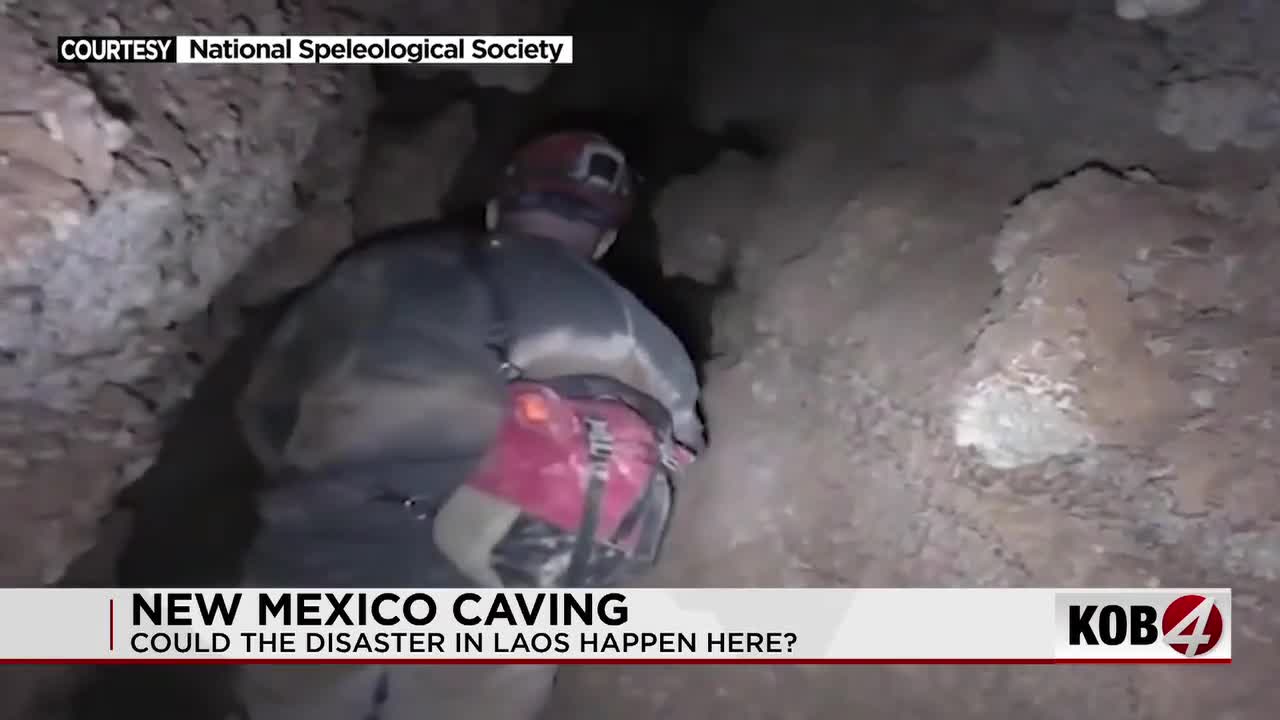
Shadows of the Deep: New Mexico’s Subterranean Risks Stir Rescuer Worries
POLICY WIRE — CARLSBAD, N.M. — It’s a primal human gamble, isn’t it? The dark, cool embrace of the earth promising riches—gold, gypsum, a hidden world. Sometimes, though, that embrace tightens, — and...

POLICY WIRE — CARLSBAD, N.M. — It’s a primal human gamble, isn’t it? The dark, cool embrace of the earth promising riches—gold, gypsum, a hidden world. Sometimes, though, that embrace tightens, — and the adventure sours into a desperate fight. That’s the bitter lesson unfolding halfway across the globe in Laos, where a mining tragedy is throwing a rather uncomfortable spotlight on places you might not expect—like the sun-baked, yet remarkably cavernous, landscapes of New Mexico. Because while Laotian jungles might seem a world away from the American Southwest, a shared geology means shared peril.
Down in Xaisomboun province, for example, seven hopeful prospectors ventured into a cave, seeking gold. Flash floods had other plans. They trapped the group. Some made it out—five, actually—but two are still missing, buried God knows how deep. It’s the kind of grim story that makes emergency responders here chew on their knuckles. And why wouldn’t it? New Mexico’s got its own subterranean secrets. It’s got a ton of them, actually.
Sure, the climates are polar opposites. Laos gets hammered by monsoons; New Mexico mostly bakes. But don’t let the aridity fool you. Both regions boast extensive cave systems. Major rescues aren’t exactly a weekly occurrence in the Land of Enchantment. But hey, they’re definitely not out of the realm of possibility either. Ask anyone who’s spent a career mapping this stuff.
Gretchen Baker, the National Coordinator for the National Cave Rescue Commission (NCRC), isn’t sugar-coating it. “In New Mexico, there are some really long caves – some of the longest in the world,” she stated plainly. Think about that for a second. Weeks. Rescuers might be down there for what feels like an eternity. “So, if there are rescuers needing to go really far back in a cave, that could easily take over a week to get somebody out.” That’s a logistical nightmare right there.
And it’s happened before, just not usually with such frequency. Sarah Truebe, who coordinates for the NCRC’s southwestern region—a territory that includes both New Mexico and Arizona—recalls one particular incident that got serious attention decades ago. But it wasn’t just a simple extraction; it was a protracted ordeal. [QUOTE_PLACEHOLDER] Truebe explained, underscoring the massive resources even a single casualty can command. We’re talking about specialized teams, supplies, weeks of planning.
Yet, last year—a peculiar period by all accounts—something shifted. “In the southwestern region last year, we actually had six incidents, which is six more incidents than we usually have,” Truebe said, noting the jump was an anomaly. Just think about that; typically zero, or maybe one, for a whole year. Six is an eyebrow-raiser. She chalks it up to sheer bad luck—someone twists an ankle, perhaps (Ankle Sprain, Systemic Jitters) or makes a misstep (Rookie’s ‘Miracle’ Play). Those things just happen, no matter how careful folks think they’re.
But the ‘bad luck’ defense won’t cut it when human lives are hanging in the balance, miles underground. That’s why experts continually hammer home a straightforward mantra: Don’t go solo. Never. Baker, for instance, emphasizes basic common sense that could save lives. [QUOTE_PLACEHOLDER] she advised. It’s an old rule for a reason, that’s what it’s.
The echoes of Laos, with its gold miners — and a battle against nature, are felt beyond New Mexico too. They ripple into other parts of the world where geological wealth meets rudimentary safety protocols—think Pakistan’s Balochistan province, for instance. Balochistan, an immense, often barren landscape, harbors its own vast cave networks and significant, sometimes perilous, mining operations. Artisanal miners often descend into poorly ventilated, structurally unsound shafts, far from well-equipped rescue teams. The dangers there are arguably amplified by socioeconomic factors, including scarce government oversight and desperate economic realities. Just like New Mexico’s caves hide secrets, Balochistan’s earth conceals both riches and tragedies, highlighting a common, dangerous thread running through the global subterranean landscape. Whether it’s for sport, science, or sustenance, the inherent risk remains a sobering constant, a stark reminder of humanity’s enduring, sometimes foolish, fascination with what lies beneath.
What This Means
This isn’t just a story about a few brave rescuers and a couple of careless spelunkers; it touches on deeper systemic issues. The Laos incident, — and the NCRC’s recent statistical spike in the U.S. Southwest, paints a concerning picture of strained emergency response capabilities. Governments, both state — and federal, often allocate resources based on historical data. A sudden uptick, even if attributed to ‘bad luck,’ means an existing framework could quickly be overwhelmed. This implies a need for a proactive reassessment of regional emergency preparedness budgets and training programs—especially in areas like New Mexico with significant cave tourism and geological exploration. From an economic standpoint, prolonged, complex rescues are horrifically expensive, drawing resources from other essential services. If New Mexico hopes to promote its unique natural attractions, it better have the logistical muscle to back up those ventures. It’s also a warning sign for other nations, particularly those in the Global South with developing economies reliant on raw resource extraction. Places like Pakistan, where informal mining is widespread and rescue infrastructure often lags significantly behind—well, they should be paying close attention. It’s about human capital, really; how much we invest in saving a life, and how we measure that cost against the lure of what lies underground.