


Maverick Program’s Triumph: Unaligned Harrison Stuns Field for Regional Title
POLICY WIRE — Dayton, United States — In a landscape increasingly defined by alignment, affiliations, and rigid structures, a curious anomaly emerged from Ohio’s high school baseball scene. It...

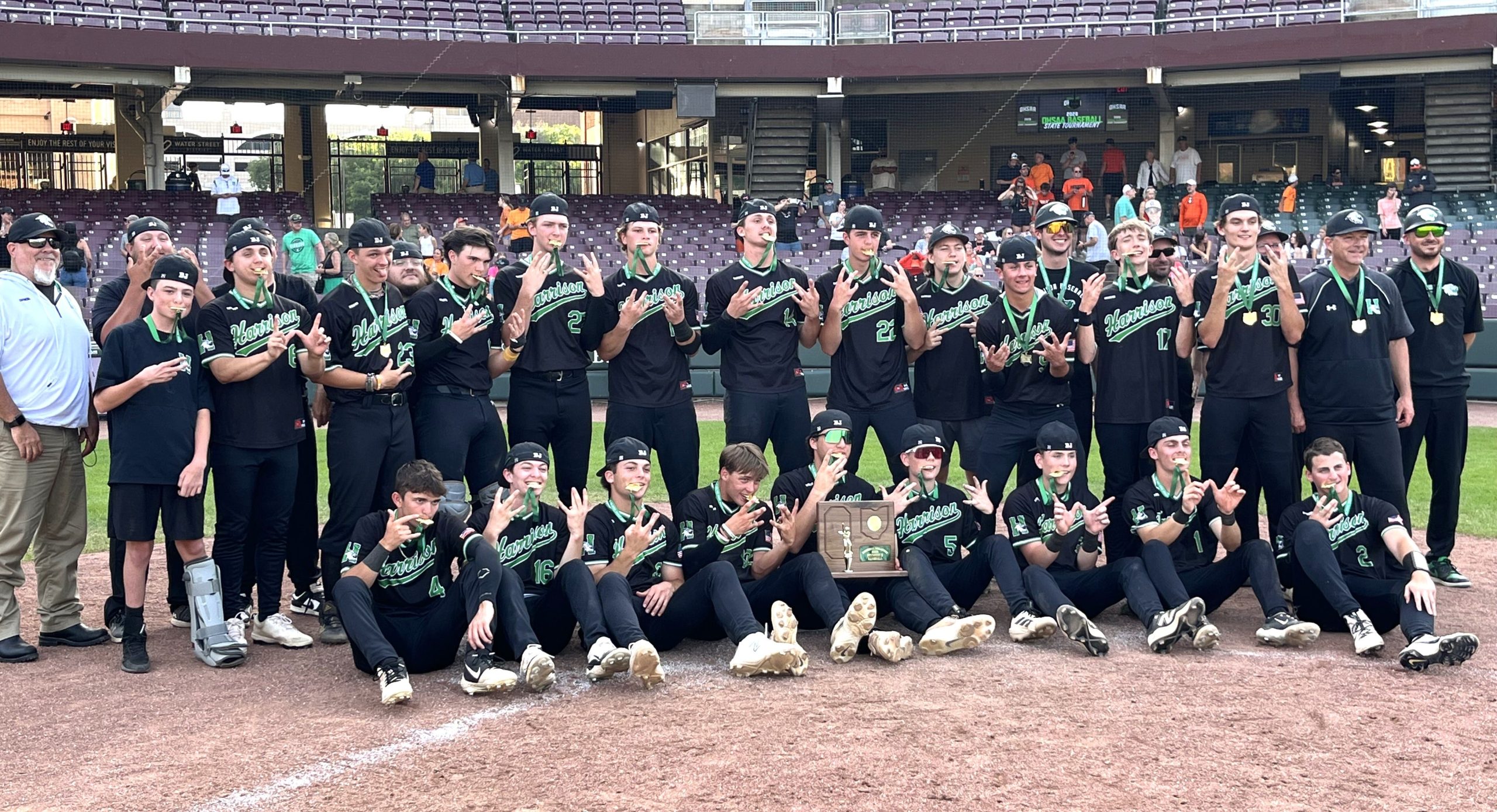
POLICY WIRE — Dayton, United States — In a landscape increasingly defined by alignment, affiliations, and rigid structures, a curious anomaly emerged from Ohio’s high school baseball scene. It wasn’t the preordained champions from an entrenched league, nor was it the usual suspects who consistently dominate the state’s scholastic athletic hierarchy. Instead, it was the Harrison High School Wildcats, a squad without a conference to call its own, that unexpectedly hoisted their first regional championship trophy. Call it a win for the unaligned, for the ones who chart their own path.
They entered the postseason with an unremarkable 10-10 record, a numerical shrug reflecting a season of deliberate, bruising self-assessment rather than easy wins. It was a conscious choice by coach Ben Turner, after the dissolution of their conference, to forgo the comforts of a guaranteed league schedule. He opted, instead, to throw his charges into the crucible of competition against the toughest teams Greater Cincinnati had to offer. Think of it like a burgeoning enterprise foregoing market protections to battle established giants head-on—painful, yes, but instructive.
And boy, did they feel the pain. They played powerful Division I schools, formidable squads from the Greater Catholic League-South, — and suffered losses. Turner confirmed this tactical masochism, stating, [QUOTE_PLACEHOLDER] He wasn’t chasing vanity metrics; he was building something tougher, something forged in adversity. “We knew that without a schedule, we could pick and choose who we wanted to play, and we wanted to see the best we could possibly see all year, prepare us for this. We weren’t worried about winning a conference title. The only way we were hanging a banner was a district title and beyond. So we wanted to be ready for that.”
This strategy, initially yielding a perfectly mediocre season, morphed into a furious four-game win streak through the playoffs. Their culmination came June 4 at Day Air Ballpark, where Harrison dispatched Anderson 6-3 in the Ohio High School Athletic Association Division II, Region 8 championship. That’s a climb. Anderson, for its part, finished a solid 21-8, their best performance in at least 14 seasons, illustrating the quality of competition Harrison bested.
But the Wildcats had to claw for it, demonstrating the kind of scrappy resilience that often defines truly memorable runs. The game itself featured classic underdog theatrics—multiple interference calls went against them early, erasing scoring opportunities and generating a palpable sense of injustice. At one point, a runner on first, senior Mitchell, was waved back after an interference call on Ryan Stigler’s bunt. In the third, Tucker Ward’s single — and stolen base were nullified by yet another interference call. It felt a little like watching a rookie political candidate battle entrenched party machinery; every minor procedural misstep is magnified. Eventually, though, junior Ryan Stigler tied the game at 1-1.
The turning point, predictably, came with an explosive rally. In the fifth inning, after Anderson had taken a 2-1 lead (Brayden Moore’s third game-winning hit in four contests for the Raptors, a statistically significant pattern of late-game heroics), Harrison unleashed a five-run deluge. Walks, timely hits—from David Baldock who beat a relay, to Ward driving in a run, and crucially, sophomore Aaron Davis, who’d been called up from junior varsity and had precisely zero RBIs entering the game, hitting a two-run single. Sometimes, it’s the quiet new faces who deliver the loudest punches. Baldock got the win in relief.
Senior Tucker Ward reflected on their rocky journey: [QUOTE_PLACEHOLDER] But, he adds, the internal belief was always there: “We knew that we had a good group. We had a lot of talent and even more heart, and we buy into each other. We got each other’s backs no matter what.” Head coach Turner, who had seen his first freshman class at Harrison become this senior cohort, mused on the transformation. “It means everything because I feel like I’ve seen these kids at their lowest point,” he said. And the contrast couldn’t be sharper: “So to see the complete opposite of them just so joyous at this moment, it means everything.” They now head to the state semifinals June 12 in Canton. It’s a heck of a story, proving that sometimes, eschewing traditional alliances can pay dividends. That a team can opt out of a familiar structure — and still succeed, isn’t that just a bit unusual?
What This Means
This saga isn’t merely about high school athletics; it offers a compelling micro-narrative of strategic autonomy and resilience that reverberates into geopolitical and economic theaters. Harrison’s decision to operate as an unaligned entity, purposefully testing itself against superior forces, mirrors the foreign policy calculations of many nations—particularly those in dynamic regions like South Asia. Consider a nation like Pakistan, for instance, navigating its complex relationships without always adhering strictly to a single, powerful bloc, often making strategic choices to test its own capabilities against varying regional dynamics to ensure self-sufficiency and build internal strength. This team wasn’t trying to win a conference banner; they were trying to be state-title worthy. This pursuit of fundamental capability over immediate, localized recognition is a nuanced but powerful strategy.
Economically, it’s a parable about disruptors — and the cost of innovation. Harrison’s initial 10-10 record wasn’t failure; it was data, proving grounds for a tougher, more experienced outfit. This trial-by-fire approach, where early setbacks are seen as vital learning rather than insurmountable obstacles, could be instructive for developing markets attempting to compete on a global stage without the cushion of established trading blocs. Because true growth, it seems, often demands a willingness to face the toughest opponents, without a predetermined path.