


Hawaiian Honeymoon Hits Harsh Legal Reef for Washington Tourist
POLICY WIRE — Honolulu, HI — You book the flight, you dream of pristine beaches and swaying palms, you even pack that absurdly large sun hat. But then you’re accused of disturbing one of the planet’s...

POLICY WIRE — Honolulu, HI — You book the flight, you dream of pristine beaches and swaying palms, you even pack that absurdly large sun hat. But then you’re accused of disturbing one of the planet’s most endangered marine mammals, hit with a criminal charge, and told you can’t even step foot on the sand. Just another day in paradise for one Washington state resident whose vacation took a decidedly unwelcome detour through Hawaii’s justice system.
It’s not just a misstep, is it? We’re talking about an encounter involving rocks — and a Hawaiian monk seal, a species hanging on by a thread. The specifics remain, shall we say, a bit opaque given ongoing legal proceedings, but the initial charge alone sends a stark message about what the islands won’t tolerate. A court recently heard the case of David Jensen (a pseudonym, of course, for the defendant), who did indeed pleads not guilty
to charges stemming from the alleged incident. It happened last week, disrupting what one can only imagine was meant to be a serene tropical escape. This isn’t a game, it’s wildlife — specifically, the rare Neomonachus schauinslandi, with fewer than 1,600 left in the wild, according to the National Oceanic and Atmospheric Administration (NOAA).
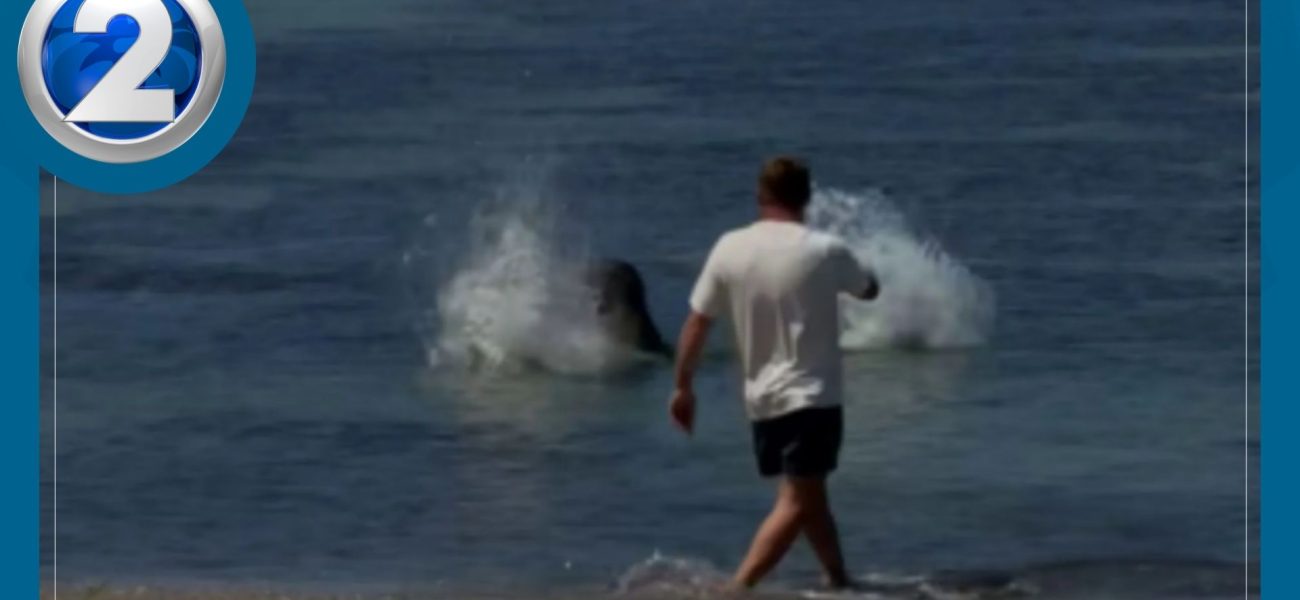
Jensen, from Bellingham, Washington (because sometimes you’ve just gotta pick a place), stood before the court as the allegations were laid out. Apparently, there was an altercation near a basking seal on a secluded stretch of Maui beach. Witnesses described behavior inconsistent with respectful wildlife viewing, sparking swift intervention by local authorities. But the tourist maintains innocence— you know, [QUOTE_PLACEHOLDER] in his plea. Now, this whole drama unfolds against a backdrop of increasing visitor numbers and dwindling resources, where every interaction between human and habitat is under heightened scrutiny.
And then came the immediate consequence: an order effectively barring Jensen from Hawaii beaches.
Just imagine it. You’re in Hawaii, but you can’t touch the sand. It’s an interesting form of punishment, isn’t it? An elegant — or perhaps exquisitely frustrating — legal finesse that allows the accused to remain in the state for trial logistics but keeps them a literal stone’s throw from its main attraction. For conservationists — and locals, it’s a necessary deterrent. For Jensen, it’s a living, breathing paradox. He’s trapped in a place of beauty, forbidden from its very essence. A similar legal oddity occurred, one might remember, when a legal snafu surrounded the unseen barriers in a German morning stroll, but this is an environmental one, deeply rooted in ecosystem preservation.
This case, as peculiar as it seems, actually taps into a broader, uncomfortable truth about the friction points between global tourism and local ecological integrity. Hawaii isn’t unique here. Along the coastlines of Pakistan, for instance, in the Arabian Sea, critically endangered species like the green turtle face constant pressure from human activities — overfishing, pollution, and coastal development. While rocks might not be the primary threat there, the underlying conflict between human enjoyment and environmental preservation is eerily similar. The mechanisms of enforcement, though, they’re wildly different. Here, we see a legal system ready to slap down visitors who don’t toe the line. There, sometimes, a mix of poverty, political will, and vast, often under-resourced coastal stretches means conservation efforts are an uphill slog, despite genuine dedication from local scientists and NGOs. It makes you think about how different places value — and protect — their natural heritage, doesn’t it?
Because ultimately, these aren’t just quaint stories about animals — and tourists; they’re reflections of policy choices. We’re witnessing a Hawaiian judiciary, already burdened, sending a message about protecting species integral to its cultural and natural identity. It’s a tightrope walk for local authorities — welcoming the economic boon of tourism while staunchly defending the fragile environment that makes the islands so attractive in the first place.
It’s a balancing act, you know? And it seems like, in this instance, the scales have tilted firmly towards the monk seals. Whether it sets a true precedent for the millions who visit annually, well, that remains to be seen. But it sure puts a spotlight on responsible travel— or the distinct lack thereof. It makes you wonder how much more stringent such measures might become as climate change and human encroachment continue to press down on vulnerable habitats worldwide. One rock, one seal, one visitor, but its reverberations spread a lot wider than a single Maui beach.
What This Means
This episode, though seemingly minor on the grand geopolitical stage, carries significant weight for environmental policy and the delicate dance of eco-tourism. Politically, Hawaii’s stringent response — a direct charge and an unprecedented beach ban — sends an unambiguous signal to the world’s travelers: environmental transgressions here won’t be treated as mere holiday anecdotes. It’s a deliberate projection of regulatory might aimed at safeguarding natural heritage, establishing a new baseline for visitor conduct. Economically, while some might fear such strictness could deter tourism, the opposite is often true: visitors to destinations like Hawaii frequently seek and respect robust environmental protections, viewing them as integral to the authenticity and allure of the experience itself. This case underscores the policy imperative to balance tourism revenue with sustainable practices, recognizing that the degradation of natural assets ultimately diminishes economic value.
it implicitly calls for international collaboration on conservation ethics. In developing nations, particularly those in South Asia or the Muslim world grappling with similar human-wildlife interface challenges, Hawaii’s firm stance could serve as a model. Imagine the policy dialogue between island nations or coastal states: how to enforce protective measures against visitors, regardless of origin, who may not comprehend or respect local ecological norms. It pushes the discussion beyond mere advisories to enforceable law. It forces a reckoning, doesn’t it, about the real cost of negligence versus the enduring value of a protected ecosystem?