
Shadow Economy: Spain Prepares for Eclipse Tourism Boom, Bracing for Influx Beyond Expectations
POLICY WIRE — Valencia, Spain — You might think Europe’s current obsession hinges on energy prices, parliamentary bickering, or the shifting allegiances of minor political factions. And, sure,...

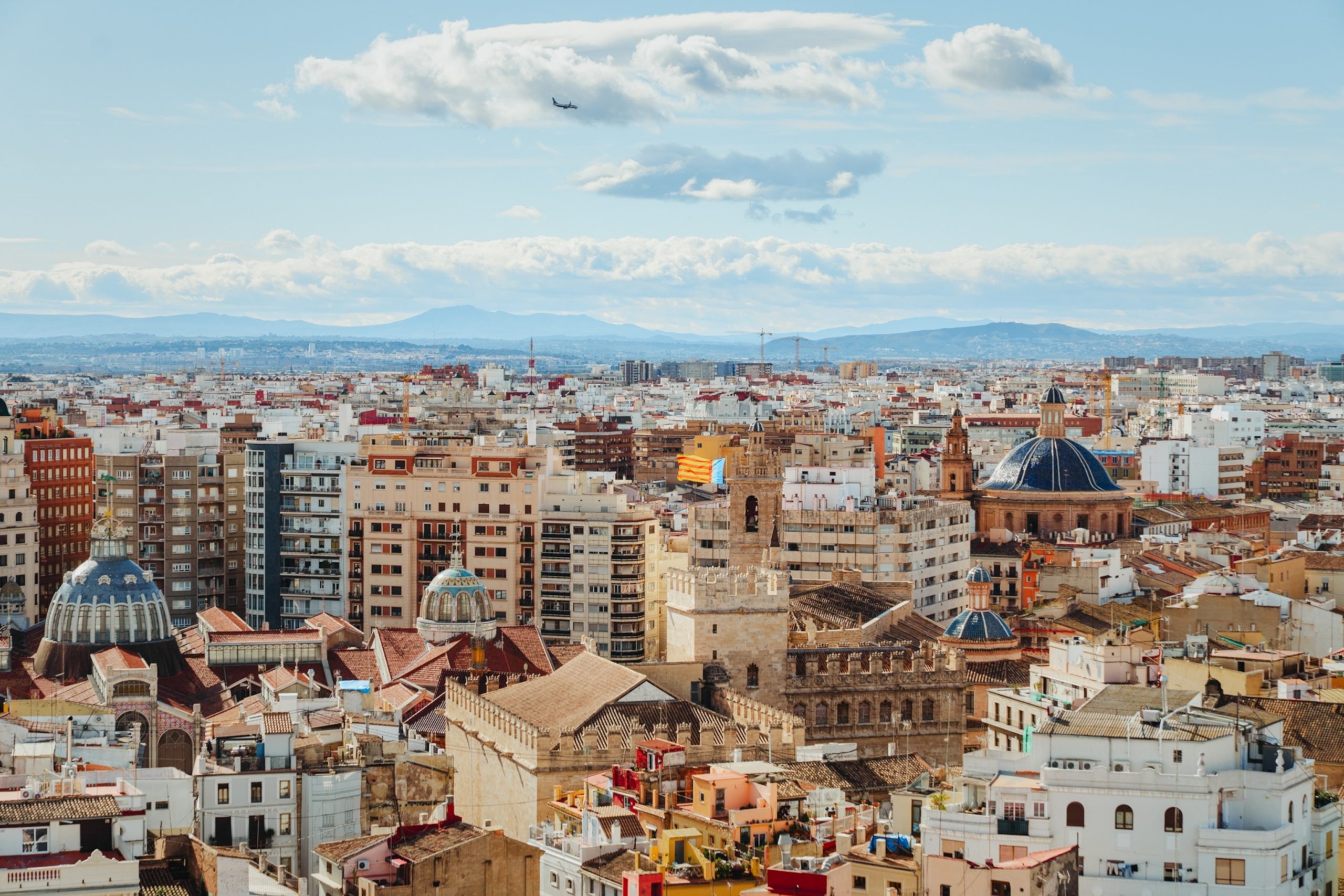
POLICY WIRE — Valencia, Spain — You might think Europe’s current obsession hinges on energy prices, parliamentary bickering, or the shifting allegiances of minor political factions. And, sure, those are all fine parlor games for the chattering classes. But come August 2026, something infinitely older and grander—something utterly indifferent to human endeavor—will temporarily hijack the Spanish psyche, bringing with it a torrent of tourism, cash, and not a little logistical headache: a total solar eclipse. Forget policy briefings; Valencia’s got celestial mechanics on its mind, and it’s making a heck of a ripple in the regional economy.
It’s a peculiar kind of national preparedness, isn’t it? One minute, you’re debating infrastructure grants; the next, you’re calculating hotel room demand based on an alignment of cosmic bodies. This isn’t just about gazing upwards, though plenty will be doing just that. It’s about a short, sharp economic burst set to inject millions into the regional coffers, and a sudden, stark reminder of just how fragile human infrastructure can feel when millions decide, at the same moment, that they absolutely must be somewhere. Right here. Right now.
Planners in Valencia are reportedly already scrambling, with estimates pointing towards an influx potentially eclipsing – pardon the pun – even the busiest summer holiday seasons. Tourism agencies aren’t just selling rooms; they’re marketing a celestial event. But they’re also wrestling with traffic management, public safety, and simply making sure the region doesn’t grind to a standstill. And they haven’t forgotten the glasses. Specialized eclipse viewing glasses, certified for safe observation, are already seeing their prices creep up on online marketplaces—a testament to that unique human trait of last-minute panic buying, coupled with the profound draw of something truly rare.
Spanish Minister of Industry, Trade and Tourism, Héctor Gómez Hernández, speaking off the record during a recent trade conference, seemed to acknowledge the complex dance. “We’re not just selling rooms — and paella here; we’re marketing a moment in history, something truly extraordinary. The logistical tightrope is real—it’s incredibly demanding. But the global spotlight? That, for Spain’s brand, is simply priceless.” His ministry projects a 20% surge in international tourism arrivals across the path of totality for that specific week, pushing typical summer occupancy rates into uncharted territory, especially along the coastline.
Because, really, when was the last time the sun itself dictated your entire public safety strategy? Valencia’s fortunate in that it sits squarely in the path of totality, meaning a good four minutes and eight seconds of mid-afternoon twilight on August 12, 2026. This relatively generous window — compared to, say, the blink-and-you-miss-it phenomenon some locations experience — is expected to prolong the stay for many astro-tourists, further stressing resources but also enhancing economic benefit. And it isn’t just the hotels; local restaurants, transport services, and even artisanal vendors stand to reap windfalls.
But there’s a historical echo in all this celestial hubbub. From the astrolabes of Islamic Andalusia to modern observatories, the pursuit of cosmic knowledge has always been a powerful, unifying force, often cutting across cultural and political divides. In many Muslim-majority countries, eclipses still hold significant spiritual weight, often marked by special prayers (Salat al-Kusuf or Salat al-Khusuf). This rich tradition, which values accurate astronomical calculation as much as spiritual reflection, offers a fascinating counterpoint to Europe’s contemporary, often more commercialized, approach. It’s a reminder that across South Asia and the broader Muslim world, a collective gaze upwards—rooted in science, faith, or both—has been a constant for centuries. Pakistan, for instance, maintains a network of observatories and educational programs, reflecting this long-held scientific curiosity.
“Europe has always looked to the heavens,” quipped Dr. Agnes Dufresne, a French astrophysicist and advisor to the European Space Agency, in a teleconference earlier this month. “This eclipse is a unique blend of ancient human curiosity — and very modern economic opportunity. It reminds us that our shared scientific heritage—from Arab scholars like Ibn al-Haytham to Copernicus and beyond—transcends borders and petty squabbles. We’re all, at some fundamental level, stargazers.”
Consider the raw numbers. According to a 2017 study by the University of Michigan, the previous North American total solar eclipse generated approximately $1.5 billion in economic activity, mainly from tourism and related expenditures. Valencia, a city accustomed to tourists but perhaps not quite this breed, is poised for its own, likely smaller but still significant, boost. One report from Spain’s National Statistics Institute (INE) last year pegged the direct and indirect economic contribution of the nation’s entire tourism sector at a hefty 12.3% of GDP, and that’s *without* a cosmic light show. This event will provide a powerful, if temporary, amplification.
What This Means
The total solar eclipse isn’t merely an astronomical spectacle; it’s a profound, if transient, disruptor of the regional economy and a fascinating lens through which to view societal priorities. For Valencia, it means a substantial financial injection, but also an immense test of its infrastructure and public services. Will the city manage the onslaught of visitors smoothly, thereby solidifying its reputation as a premier destination, or will it succumb to chaos, highlighting deficiencies?
Politically, the success—or failure—of managing this mass event will undoubtedly be a talking point for local and regional governments. A well-executed plan could be a feather in the cap for current administrations, showcasing efficiency — and foresight. Conversely, any significant snags could turn a celestial marvel into a political liability. And it’s not just Spain. This event underscores a broader trend of event-driven tourism increasingly becoming a policy consideration for European nations looking to diversify their economic portfolios, moving beyond traditional beach or cultural holidays. They’re looking for an edge, an extra draw, a spectacle to get folks off the couch — and onto a plane.
And let’s not discount the symbolic impact. In an age often defined by digital divides and geopolitical friction, a universally visible phenomenon like a total eclipse offers a moment of shared human experience. It subtly nudges policymakers — and populations alike to consider forces far beyond their control, yet utterly impactful. It also highlights the continued relevance of shared scientific endeavor, an often-overlooked bond between the European continent and its neighbors, including those in the Muslim world—a different sort of silent diplomacy, if you will. This temporary black-out isn’t just about darkness; it’s about casting a sharp, economic light on Spain’s place on the global tourism map and the sheer unpredictable magic that occasionally falls out of the sky. For Spain, and particularly Valencia, the stakes are high, and the world is watching, ready for that momentary lapse in daylight—and eager to spend.