
Italy’s Quiet Solar Surge: A Silent Energy Revolution Beneath the Boot
POLICY WIRE — Rome, Italy — While Europe often grabs headlines for its bruising political battles—budget disputes, migration debates, and the perennial squabbles over whose industrial subsidies are...

POLICY WIRE — Rome, Italy — While Europe often grabs headlines for its bruising political battles—budget disputes, migration debates, and the perennial squabbles over whose industrial subsidies are truly ‘fair’—a far more quiet, yet arguably more consequential, transformation is unfolding beneath the surface. It’s a pragmatic pivot toward energy independence, a subtle reimagining of how the continent keeps its lights on and factories humming without bowing to external pressures. And Italy, often painted as the artistic heart rather than the industrial muscle, is making some serious moves.
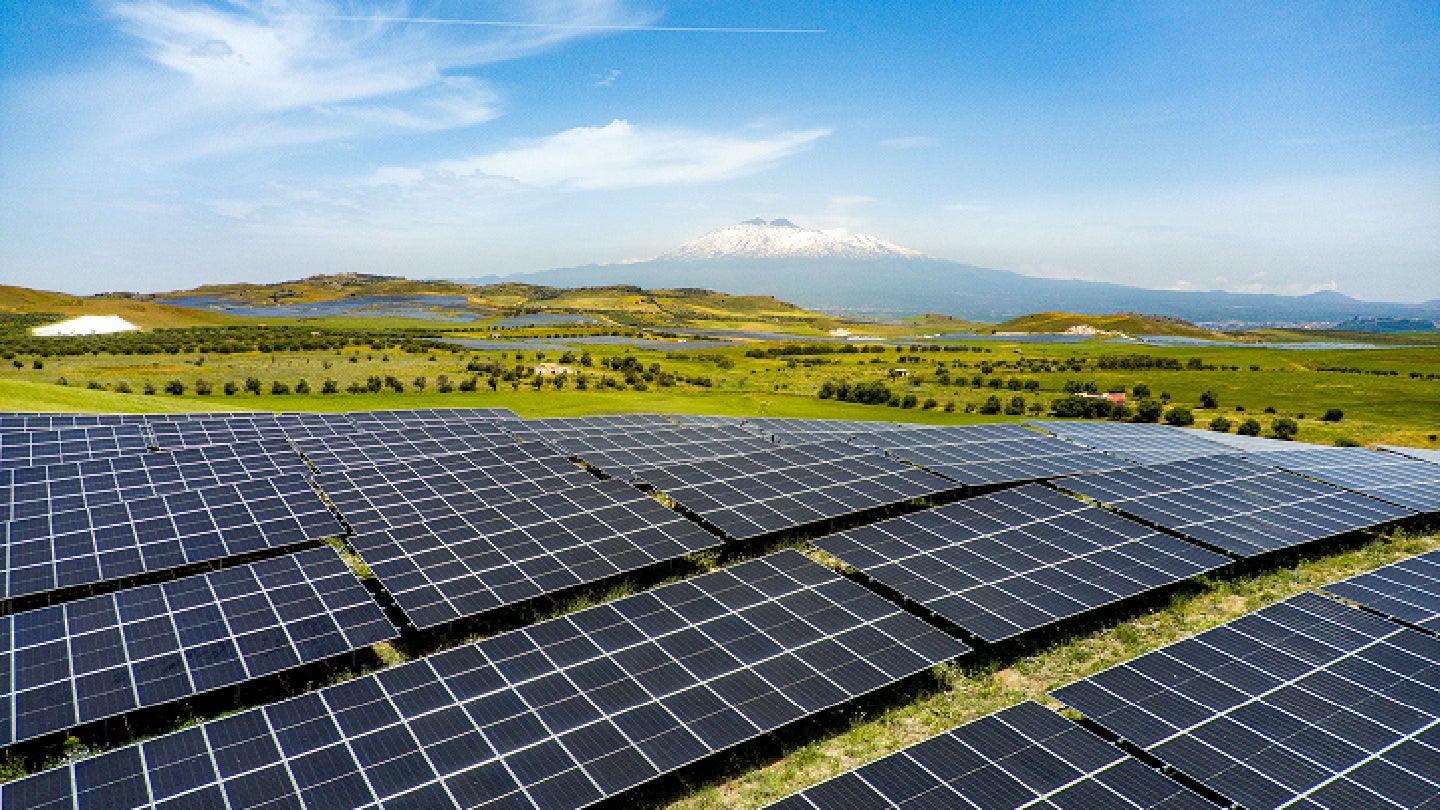
It’s not the splashy news of a continent-wide energy conference, nor is it another declaration from Brussels; it’s just the hum of photovoltaic panels clicking into place, acres of them, catching the Mediterranean sun. Iberdrola, the Spanish energy giant, has quietly plugged in its Fénix solar plant in Montalto di Castro, a 243-megawatt beast of a facility, now pumping juice into the Italian grid. It’s a brute force play, simple in its execution, profound in its implications. That’s a lot of power, isn’t it?
Because let’s face it, energy security isn’t just about environmental virtue signaling anymore; it’s about sheer survival. The continent, stung by past dependencies, has been pushing hard for a greener, more self-reliant power mix. And Italy, which has its own history with fluctuating energy sources—everything from reliance on Russian gas to debates over domestic drilling—has found itself embracing the sun. “We’re not just chasing EU targets; we’re securing our nation’s future, ensuring reliable power even as geopolitical winds shift and prices spike,” commented an official close to Italy’s Ministry of Ecological Transition, who wasn’t authorized to speak on the record but articulated a clear government line. He added, with a wry smile, “It’s nice when pragmatism — and planet-saving align.”
This Fénix project—named, perhaps, for the mythological bird that regenerates from ashes—represents a significant chunk of change: Iberdrola says it’s coughed up over €200 million for the site. That’s a sizable investment, proving renewable energy isn’t just some boutique experiment for eco-enthusiasts, but a robust financial endeavor attracting serious capital. They’ve certainly got their sights set on Italy’s sunny prospects.
For companies like Iberdrola, Italy offers more than just ample sunshine. It provides a strategic gateway into southern Europe’s evolving energy landscape, a testing ground for large-scale renewable projects. Francisco Sánchez, Iberdrola’s CEO for Italy, reportedly put it simply to a closed-door meeting: “Italy represents a strategic frontier for us, not just in generation, but in proving that large-scale green transitions are fiscally sound, despite the market’s quirks. We’re showing it can be done, profitably.” It’s about leveraging Europe’s ambitious 2030 climate targets to create new, tangible assets.
But the real story here isn’t just another power plant. It’s the broader geopolitical current shaping these investments. Consider the European Union’s concerted efforts to shore up its resource independence, from critical minerals to energy supplies. They’re not just buying solar panels; they’re investing in the very notion of strategic autonomy. You can see this reflected in efforts across the continent to solidify their resource chains, even seeking out new partnerships abroad, as discussed in pieces like The Silent Reckoning: Europe’s Industrial Giants Grapple with the Price of Progress.
And what about beyond Europe’s borders? The swiftness and scale of Europe’s green transition, embodied by projects like Fénix, stand in stark contrast to the often-stalled progress in other regions, say, in parts of South Asia or the broader Muslim world. Pakistan, for instance, faces persistent energy deficits and struggles to attract comparable levels of foreign direct investment into large-scale, private renewable projects. Their challenges include infrastructure, regulatory complexities, — and geopolitical instability. While Italy hooks up another gigawatt, places like Karachi grapple with daily load shedding, a reminder of the differing paces of energy modernization globally.
It’s not that these regions aren’t interested in green energy; many are desperate for it. But the sheer ease of doing business, the relatively stable political climate (even Italy has its moments, of course), and a robust grid infrastructure in countries like Italy give investors like Iberdrola a clear run. Eurostat reported that in 2022, 19.3% of Italy’s final energy consumption came from renewable sources, putting it on a clear path toward its 2030 targets. That’s tangible progress, hard numbers that make investors salivate.
What This Means
This 243MW Fénix plant, while just one piece of a vast continental puzzle, symbolizes Europe’s evolving geopolitical posture. It’s a manifestation of the shift from dependence to self-reliance, and critically, a proof-of-concept for how significant capital can be deployed efficiently in the renewable sector. Economically, it signifies sustained job creation and technological transfer, insulating parts of the Italian economy from volatile fossil fuel markets. Politically, every megawatt added from domestic renewable sources lessens the strategic leverage held by gas-rich autocracies. It allows Rome—and by extension, Brussels—greater freedom of action on the global stage. For emerging economies, particularly in South Asia, it serves as both inspiration and a stark warning: streamline your investment climate, shore up your grid, or risk being left further behind in the global energy transition.
It’s an unglamorous narrative, really. No bombs dropping, no empires collapsing. Just the silent, relentless advance of solar panels across sun-baked fields, subtly reshaping international power dynamics. Policy isn’t always forged in diplomatic chambers; sometimes, it’s bolted down in the Tuscan plains, panel by panel.