

Silent Diplomacy? India-Pakistan Peace Hopes Remain a Whispered Speculation
POLICY WIRE — Islamabad, Pakistan — The mango season has come and gone, much like any tangible breakthrough in the relations between India and Pakistan. Yet, somewhere beneath the usual diplomatic...

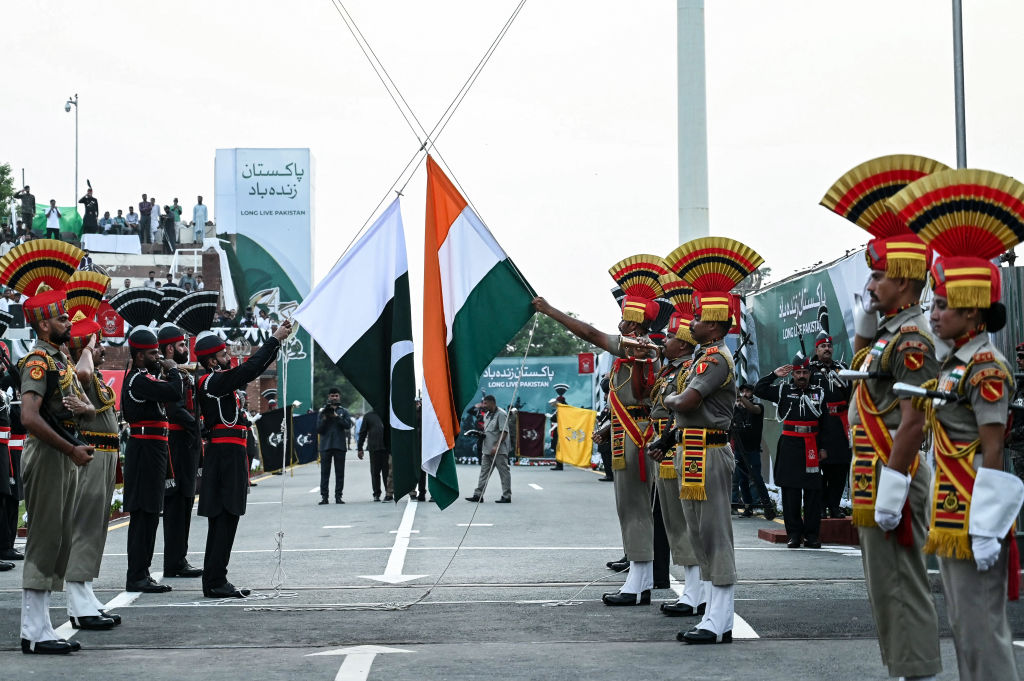
POLICY WIRE — Islamabad, Pakistan — The mango season has come and gone, much like any tangible breakthrough in the relations between India and Pakistan. Yet, somewhere beneath the usual diplomatic frost, a peculiar kind of speculation keeps bubbling up – not quite hope, not entirely fantasy. It’s the kind of thing veteran journalists, jaded by decades of false starts, learn to sniff out. It isn’t a headline-grabbing summit or a sudden cessation of rhetorical fire, but rather a nearly imperceptible easing, a softening at the edges that feels almost accidental.
Because let’s be real, genuine peace? It often feels like the subcontinent’s own Loch Ness Monster: much discussed, rarely sighted. But when whispers circulate about back-channel communications and the slow-grinding gears of pragmatic diplomacy – far from the public glare and the cameras’ unforgiving gaze – even a hardened cynic has to pause. And sometimes, those whispers hint at an exhausting recognition in both capitals that the old ways aren’t cutting it anymore. The cost, economic — and otherwise, has become simply too heavy for either side to ignore.
It’s not just a matter of two nuclear-armed neighbours doing the polite diplomatic dance. Pakistan, in particular, finds itself navigating an economic maelstrom, one that arguably necessitates a quieter, more stable eastern border. You don’t have to be a Nobel laureate in economics to understand that perpetual standoff drains resources, resources sorely needed elsewhere – for schools, for healthcare, for just about everything that keeps a nation functioning without recourse to emergency bailouts from Riyadh or Beijing. Consider this: according to a recent analysis by the Stockholm International Peace Research Institute (SIPRI), high-level diplomatic channels between Islamabad and New Delhi have remained largely dormant since 2016, marking one of the longest periods of sustained non-engagement in their contentious history. That’s an eternity in statecraft, folks.
The prevailing public rhetoric, of course, paints a different picture. Always has. Spokespersons on both sides deliver lines about ‘sovereignty’ and ‘non-negotiable principles’ with well-practiced solemnity. “Look, we’re always open to meaningful dialogue, provided the right conditions are met,” offered Taranjeet Singh, a spokesperson for India’s Ministry of External Affairs, to Policy Wire, his tone suggesting a patience worn thin but still present. “But let’s not pretend history isn’t watching, or that certain fundamental issues don’t remain. These conversations don’t happen in a vacuum.” His words weren’t exactly a peace overture, were they? More like a statement of perennial caution.
But that’s the thing. Behind closed doors, governments usually act in their perceived self-interest. For Islamabad, facing down a precarious financial cliff, stability – even if it’s a frosty, functional stability – with its larger neighbor becomes awfully attractive. It means resources can, theoretically, be diverted. It means a flicker of investor confidence, maybe. It’s not about forgiveness, you understand. It’s about arithmetic. And you’ve got to admire the gritty pragmatism, however forced. Because let’s face it, no one wants to admit they’re talking unless they absolutely have to.
Across the divide, in Pakistan, the sentiment echoes a similar weary practicality. “Peace isn’t merely an aspiration for us; it’s an economic imperative. And a regional security must,” Ambassador Fauzia Khan, a former diplomat now a prominent foreign policy analyst in Pakistan, told us. “But genuine engagement requires an even hand, a recognition of historical grievances. You can’t just wish those away. Diplomacy needs to address the root causes, not just patch over symptoms.” Her candor hints at the familiar impasse – the thorny question of Kashmir – but also at a fundamental acknowledgement: they’re talking because they’ve to, not because they particularly want to throw bouquets.
And so, we’re left watching for the tiny, often ambiguous signals. A rare exchange of pleasantries at an international forum. An agreement on a non-contentious issue like humanitarian aid. Even just the continued operation of their respective High Commissions, however understaffed or limited their interactions. It isn’t a peace dividend in the making; it’s more like two exhausted boxers still circling the ring, both knowing another round would be ruinous, but neither quite ready to drop their guard. Or acknowledge it publicly. Perhaps the true marker of success isn’t dazzling announcements, but simply the absence of further catastrophic escalation. You can often glean insight into how these tensions play out elsewhere in the Muslim world, affecting global perception – and regional stability. This isn’t a game; lives — and livelihoods are quite literally at stake. For more on how geopolitical currents shift, consider reading about Ankara’s Pre-Summit Purge: Turkey Indicts 103, Stirring NATO Anxieties.
What This Means
The implications of this glacial pace toward any sort of normalcy are stark. Economically, both nations, especially Pakistan, could unlock significant regional trade potential and attract foreign investment if stability were to genuinely take root. India, for its part, would shed a persistent regional distraction, allowing greater focus on its strategic geopolitical ambitions – its ‘Look East’ policy, for instance. But without trust, these are just hypothetical dividends. Politically, a degree of stability lessens the domestic pressure on both governments to adopt hardline stances, potentially opening avenues for internal reforms that are currently sidelined by security imperatives. It would also reduce the potential for external meddling, from nations eager to exploit the India-Pakistan dynamic. Militarily, it translates into fewer resources siphoned off for border surveillance and deterrence – resources that could fund developmental projects. But don’t mistake limited detente for genuine camaraderie. It’s a reluctant, necessary dance, fraught with historical baggage and the ever-present threat of a single misstep plunging the subcontinent back into open hostility. Because, and this is the ugly truth, both domestic electorates are still too easily swayed by nationalist fervor to allow for grand gestures. Pragmatism rules, but it’s a fearful, tentative kind of pragmatism. No one wants to be seen as soft.