


Dust Devil Debacle: New Mexico’s Tiniest Tornado Puts Spotlight on Global Climate Realities
POLICY WIRE — Albuquerque, United States — It didn’t tear through entire towns or level multi-story buildings, barely registered as more than a blip on Doppler radar screens for the average...

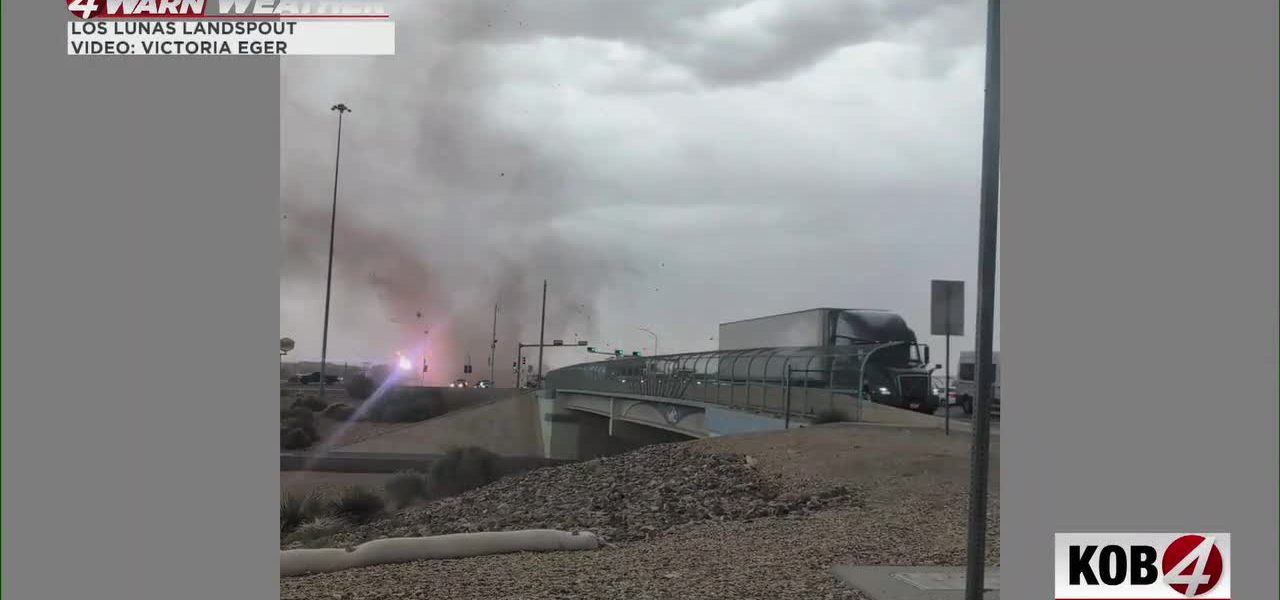
POLICY WIRE — Albuquerque, United States — It didn’t tear through entire towns or level multi-story buildings, barely registered as more than a blip on Doppler radar screens for the average observer. Yet, in the arid stretches of New Mexico, a brief, unassuming atmospheric hiccup—a mere puff of wind, one might say—has now found its bureaucratic resting place in the meteorological archives. It wasn’t the kind of spectacle that draws immediate global headlines, no; more like a curious aside in the unfolding drama of a rapidly shifting climate.
On a sleepy Thursday afternoon, residents in Los Lunas experienced a weather event now officially cataloged by the National Weather Service in Albuquerque. This wasn’t some swirling, monster funnel from a Hollywood blockbuster. Oh no. This was a landspout, a weaker cousin to the supercell-spawned tornadoes we often hear about—but a tornado all the same, officially. The experts at NWS, alongside Valencia County emergency managers, went through the motions. They surveyed the damage, pored over video footage, — and sifted through incident reports. What they ultimately determined was that the phenomenon caused [QUOTE_PLACEHOLDER] minimal EF-0 damage at its peak (65 mph). But really, most of the winds were estimated to be 50-60 mph.
For seven fleeting minutes, between 3:34 and 3:41 p.m., this atmospheric anomaly traversed a path just 1.2 miles long and stretched a scant 60 yards wide. A small thing, by any measure. It wasn’t about to rewrite any history books or feature prominently in meteorological textbooks. And yet, this seemingly minor disturbance carries a disproportionately weighty designation: a tornado, albeit an anemic one, in a state not typically known for such violent atmospheric theatrics.
It’s interesting, isn’t it, how even a whimper of a weather event can trigger such a formal, measured response? Here, agencies have the resources—the trained personnel, the technical gear, the established protocols—to dispatch teams and meticulously log every statistic. That’s a stark contrast to many corners of the globe. Because, in countries like Pakistan, for instance, a minor localized storm can spiral into an immediate, profound humanitarian crisis simply due to fragile infrastructure and often overwhelmed emergency services.
And let’s be frank: the label [QUOTE_PLACEHOLDER] feels almost like a consolation prize for local journalists scrambling for weather-related stories during what was, for most, just a slightly breezy afternoon. But this isn’t just about sensationalizing a minor dust-up. It’s about how even the weakest manifestation of extreme weather gets meticulously documented here, while elsewhere, events far more devastating go unquantified, their true human and economic tolls often tragically underreported.
Consider the broader context. The U.S. National Centers for Environmental Information reported over $17.8 billion in weather and climate disaster costs during the first nine months of 2023 alone. Now, compare that staggering figure—a mosaic of storms, floods, and droughts—to a mere 60-yard-wide landspout in Los Lunas. It tells you something about the scale of modern environmental challenges, doesn’t it? Our ability to even measure these minuscule events in wealthy nations sometimes distracts from the sheer brutality of nature’s hammer blows in less fortunate places.
📄 POLICY WIRE WHITEPAPER PUBLISHED: PAKISTAN'S NATIONAL SECURITY POLICY PRIORITIES
👉 READ BY CLICKING HEREIt brings into sharp relief the dichotomy of climate impact. While New Mexico might get an EF-0 landspout causing minimal damage, coastal regions of Bangladesh—a country of 170 million people—face an almost annual ritual of cyclone-induced destruction. Or picture the arid agricultural lands of Pakistan’s Sindh province, where unexpected, intense downpours can wipe out livelihoods, and local authorities often lack the capacity to survey, report, or even effectively respond to every incident. Their weather isn’t just a news item; it’s a matter of life, death, — and economic annihilation.
What This Means
The Los Lunas landspout, despite its modest impact, serves as a localized reminder of a global shift in atmospheric patterns, challenging historical assumptions about where certain weather phenomena occur. Politically, while this specific incident won’t alter federal budgets, it quietly reinforces the growing pressure on local and state governments to maintain—and expand—their meteorological monitoring and disaster preparedness infrastructure. When even seemingly benign weather events carry official tornado designations, it can influence public perception of safety and demand for responsive governance.
Economically, for a place like Los Lunas, the implications are negligible in raw monetary terms; the ‘damage’ likely won’t even register as an insurance blip. But viewed through a macro lens, these localized, low-intensity weather events, even in regions considered safe, add cumulative pressure to overall climate-related expenditures. They underscore the escalating need for more sophisticated climate modeling, localized prediction tools, and robust early warning systems across diverse geographies.
This particular episode in New Mexico, though slight, offers a useful counterpoint. It highlights not just the increasing ubiquity of climate variability, but also the glaring disparities in how nations cope. For countries in South Asia, where the majority of populations often depend on agriculture and live in structurally vulnerable homes, even an event this size could become politically charged, testing governmental capacity and international aid dependencies. So, while New Mexico dusts itself off from its minimal landspout, the wider world faces atmospheric threats of an entirely different, existential magnitude. It’s all relative, you see.