
Security, Displacement, and the Limits of Political Jirgas
The most recent Jirga to take place in Khyber under the auspices of Chief Minister Sohail Afridi has sparked a very old pattern of disturbing events in the security discourse of Pakistan: the...

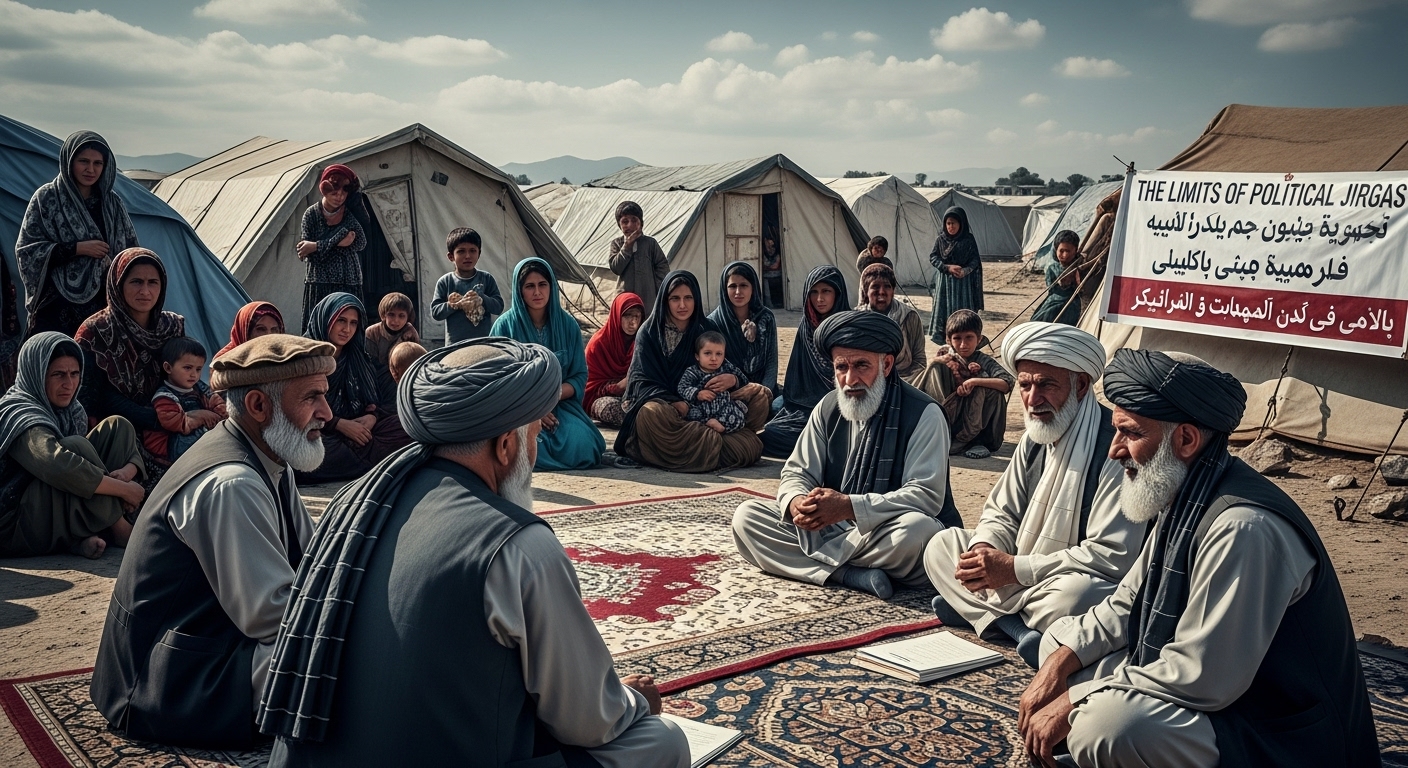
The most recent Jirga to take place in Khyber under the auspices of Chief Minister Sohail Afridi has sparked a very old pattern of disturbing events in the security discourse of Pakistan: the politicization of displacement and counterterror operations. Although the complaints of people in Tirah are understandable and need to be taken seriously, the terminology that was used during the Jirga is likely to simplify a complicated security situation and transform a humanitarian crisis into a political story.
It is not in contention that displacement is a source of unimaginable suffering. Homes, livelihoods and social cohesion are lost by the families. The state is morally and constitutionally obliged to provide a timely compensation, rehabilitation and a dignified reimbursement. Nonetheless, to describe displacement as Tirah as an act of coercion which cannot be explained by security imperatives is to ignore the context within which these decisions are made.
Tirah has always been a land of conflicts, being used many times by the militant networks as a result of its location and the closeness to the porous borders. In cases where the writ of state is directly defied and where the civilians are caught in the crossfire between armed groups and the security forces, evacuation during action is not a punitive action but a preventive action. These are not exclusive practices in Pakistan and indicative of collective punishment but they are used worldwide to minimize the number of civilian casualties in combatant territories.
Worst still is the effort, during the Jirga to correlate renewed militancy to political happenings at the federal level. This framing makes the issue of terrorism more of a partisan talking point than a recognized and real fact as a continuing, shifting danger based on regional unrest, cross-border relationships, and decades of conflict. The concept of national security cannot be discussed in a manner that is responsible and centered on political loyalty without undermining the confidence of people in state institutions.
The claims made about the behavior of security operations that include intelligence failures and civilian casualties must not be swept aside without being heard out but it must not be tried in the court of mobs demonstrating. These assertions require institutional scrutiny, demonstrative responsibility and judicial review. The open questioning of the motive of security forces is dangerous and may demotivate publics and unwillingly reinforce the extremist accounts.
It is also crucial to note that the governance of the merged tribal districts is the common task. The provincial and the federal governments should not be in competition but rather coordination. The financial obligations, rehabilitation packages and development plans must be clear, owned by all instead of playing politics in front of the aggrieved communities.
Traditionally, Jirgas have been constructive in the process of resolving conflicts and consensus building. What makes them lose their moral authority is that they are used as forums of confrontational rhetoric instead of reconciliation and solutions. The people of Tirah should enjoy justice and security as well as a future without displacement rather than stories that only reinforce suspicion between the citizens and the state.
The marches to Islamabad will not bring peace and so will the accusations that are thrown across the political lines. It will be by means of frank communication, plausible responsibility and shared dedication to both security and human dignity.
Author