


Monumental Myths: When White House Claims Don’t Hold Water
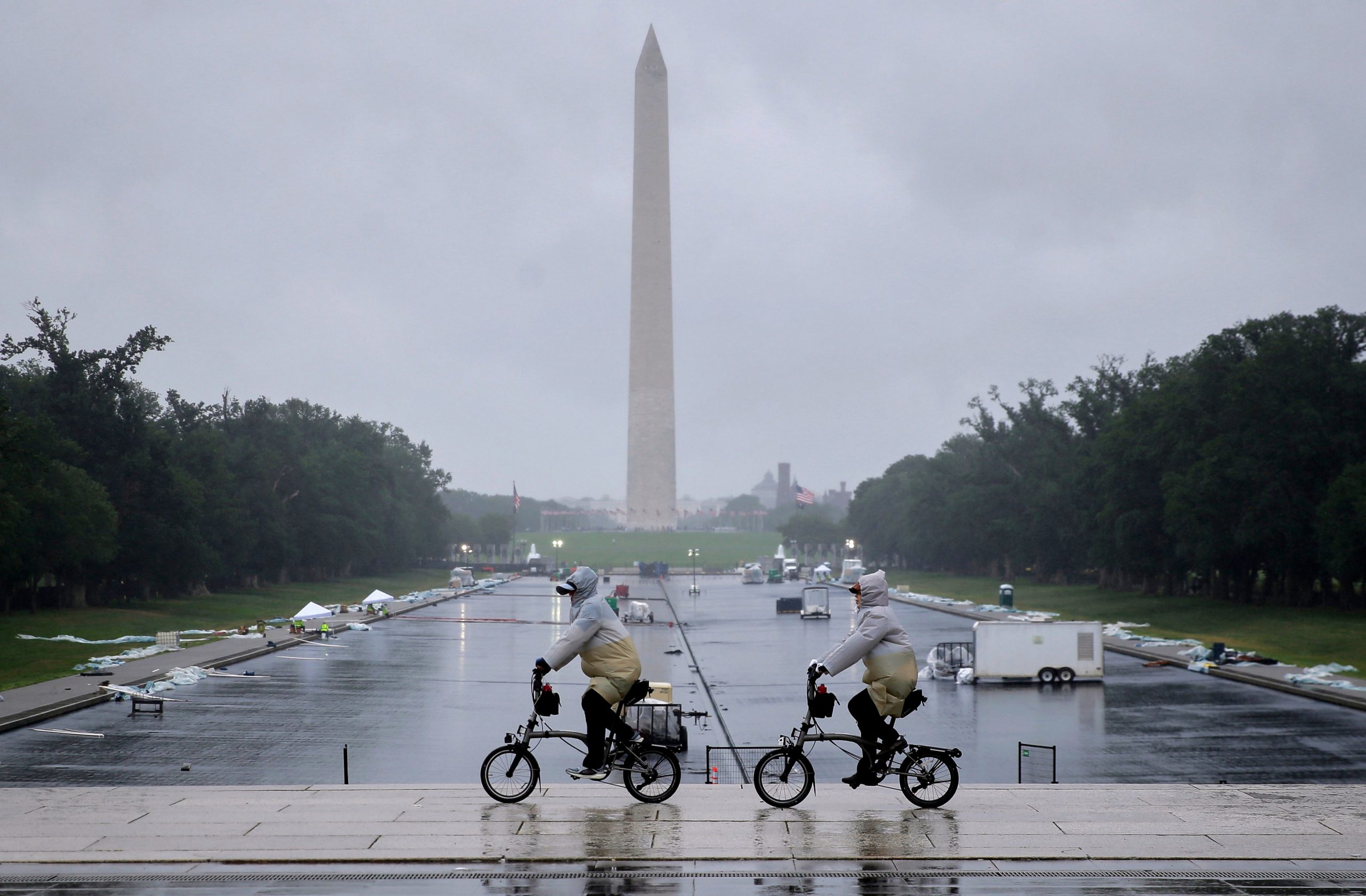
POLICY WIRE — Washington, D.C. — The Lincoln Memorial Reflecting Pool, that vast, shimmering sheet of water reflecting epochs of American history, carries its own unique mystique. It’s...

POLICY WIRE — Washington, D.C. — The Lincoln Memorial Reflecting Pool, that vast, shimmering sheet of water reflecting epochs of American history, carries its own unique mystique. It’s witnessed Martin Luther King Jr.’s dream, Forrest Gump’s joyful reunion, and countless moments of quiet contemplation for presidents and tourists alike. But it also, apparently, serves as a canvas for remarkably inflated financial figures, according to some. We’re talking big numbers, numbers that make heads spin. And it appears some of those numbers just don’t add up.
It’s an age-old trick in politics, isn’t it? Take something recognizable, something emotionally resonant, and attach an eye-watering cost to it, attributing it to a political opponent. It’s effective. It grabs attention. But more often than not, a quick check of the receipts reveals a far less dramatic truth. Just last week, chatter resurfaced from a certain former chief executive. He’d claimed a prior administration—or two, actually—had blown through what he termed [QUOTE_PLACEHOLDER] for a recent restoration of that iconic D.C. waterway. We heard it. Folks on the internet, they heard it. And fact-checkers, bless their weary souls, immediately went to work. It’s never really easy being a fact-checker these days, what with the sheer volume of… shall we say, imaginative financial declarations floating around.
And so, to the point. Despite the rather enthusiastic declaration, both former President Obama and then-Vice President Biden didn’t, in fact, spend ‘hundreds of millions’ on the Reflecting Pool. Not even close. The actual significant refurbishment of the National Mall Reflecting Pool was a meticulous project completed in 2012, squarely within the Obama administration’s first term. This overhaul—a genuinely necessary bit of engineering to address leakage, inefficient water usage, and general decay—clocked in at approximately $34 million. That figure comes from the National Park Service’s publicly available records and project completion reports, quite clearly detailed for anyone willing to glance at the facts. But let’s be honest: $34 million, while no small chunk of change for most of us, isn’t quite the scandal-inducing ‘hundreds of millions’ that sets tongues wagging across cable news chyrons. There’s a difference between 34 — and 300, a pretty stark one at that. Don’t you think? It’s not a subtle rounding error; it’s a completely different league of expenditure.
Because that difference in magnitude—that yawning chasm between fact and assertion—isn’t just a benign slip of the tongue. It speaks volumes about the ecosystem of political discourse we now inhabit, where exaggerations aren’t just common, they’re often expected. It’s part of a playbook, a well-worn strategy for political advantage. You’d think, after so many years, people wouldn’t fall for it, but they do. It’s like watching a magic trick unfold: the misdirection is everything, and the audience, sometimes willingly, looks away from the obvious. One starts to wonder about the point of these outlandish numbers. What do they achieve, besides sowing seeds of doubt — and distrust?
It also reminds you of the public skepticism that often greets grand government projects in other parts of the world, like the ambitious infrastructure development goals sometimes touted across South Asia. In countries such as Pakistan, for instance, infrastructure spending and public works are always under intense scrutiny. Claims of inflated costs or diverted funds—whether real or perceived—can spark widespread public outrage and fuel narratives of corruption. The scale is different, of course, but the underlying dynamic, the public’s readiness to believe in financial malfeasance when hinted at by influential figures, that’s remarkably similar. They’re just narratives tailored for different political audiences. Here, it’s about painted profligacy; there, it’s about suspected graft. The outcomes, however, can ripple similarly through public sentiment — and trust in institutions.
The Reflecting Pool project, designed to be environmentally friendly with a new water recirculation system fed from the Tidal Basin, was praised by conservationists and urban planners. It saves water, it prevents contamination, it looks darn good. But such details rarely capture the headlines as effectively as a breathless declaration of ‘hundreds of millions’. It’s always about the perceived waste, never the tangible benefit, isn’t it? This particular fib about the reflecting pool—this small, seemingly insignificant misstatement—reflects a much larger pattern in modern politics. It’s not about correcting an error, it’s about correcting a narrative, a narrative constructed sometimes out of whole cloth.
One wonders what a country might achieve if the same creative energy used for conjuring fictitious budgets was applied to solving actual problems. We’re in an era where misinformation spreads faster than truth, a challenge that many democracies grapple with, from Washington’s political theatrics to sensationalized narratives dominating headlines in New Delhi. But don’t you worry. Someone’s always ready to jump up — and clarify, often after the damage is already done, mind you. The news cycle’s too fast, the outrage too brief. We move on to the next fantastical claim.
What This Means
The persistent recirculation of demonstrably false financial claims, such as those concerning the Reflecting Pool, carries significant political and economic implications. Politically, it erodes public trust in official sources — and information. When figures in power—or seeking it—can so easily disseminate inaccurate expenditure numbers without immediate, widespread, and lasting consequence, it blurs the lines between fact and partisan assertion. This normalization of factual distortion allows political operatives to paint opponents as fiscally irresponsible, regardless of actual project costs or necessity. For the economy, while the direct impact of this specific claim is minimal, the broader trend is concerning. A public constantly fed inaccurate data might develop a distorted view of government spending and national debt, making it harder to engage in rational discussions about genuine fiscal challenges or investments. It fuels an environment where critical infrastructure projects, which genuinely cost tens of millions, or even billions, can be dismissed out of hand based on manufactured outrage over ‘waste’ rather than legitimate analysis of their benefit or cost-effectiveness. In this landscape, genuine accountability struggles against a tide of convenient fictions, impacting everything from national budgets to geopolitical stability. It means we’re constantly fighting phantoms instead of wrestling with reality.