


San Francisco’s Frayed Alliance: Gaza Shadow Looms Over Trans March as Jewish Lawmaker Ejected
POLICY WIRE — San Francisco, California — The rainbow-colored streets of San Francisco, typically a canvas for vibrant unity, offered a starkly different scene last weekend. It wasn’t the usual...

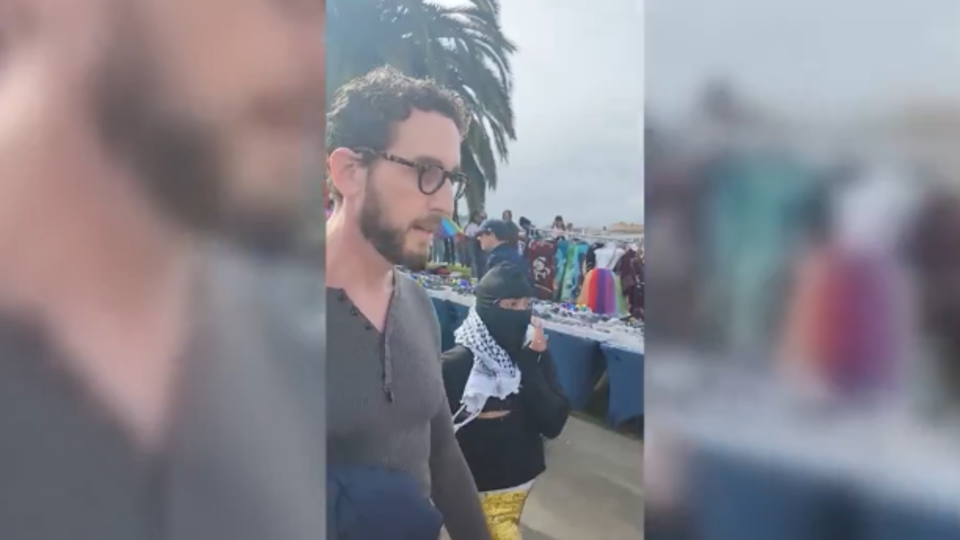
POLICY WIRE — San Francisco, California — The rainbow-colored streets of San Francisco, typically a canvas for vibrant unity, offered a starkly different scene last weekend. It wasn’t the usual cacophony of celebratory shouts that made headlines, but a discordant note, a clash of ideologies that abruptly ejected a prominent ally from what should have been hallowed ground for coalition building. For veteran State Senator Scott Wiener—an openly gay Jewish lawmaker who’s practically written the book on trans rights legislation in California—the Trans March became less a march for equality and more an impromptu, unwelcome exit strategy.
Wiener, a fixture at such events, found himself besieged by chants of “Free Palestine” and calls for a ceasefire in Gaza. It wasn’t a policy debate on the Senate floor. No. This was an ambush of moral certitude, a moment where complex global geopolitics elbowed its way into a local procession meant to champion gender identity. Witnesses described the scene: a respected legislator, accustomed to both fierce policy battles and public adulation from progressive circles, suddenly facing a barrage of accusatory rhetoric that deemed his presence—because he’s Jewish, because of Israel—unacceptable. They don’t pull punches out here.
And what’s worse, the organizing committee, instead of de-escalating, seemed to capitulate. Organizers allegedly confronted Wiener directly, asking him to leave the event, claiming his presence, given his identity, posed a “security risk” for other attendees. Security risk? That’s quite a stretch for a politician whose career has been built on extending protections, not threatening them. “It’s disheartening,” Wiener told Policy Wire, his voice a tightrope walk between anger — and profound disappointment. “I’ve dedicated my life to fighting for human rights, for the LGBTQ+ community, for a more inclusive society. To be told my Jewish identity—or the perceived political positions associated with it—makes me unwelcome at a trans rights event? It’s a dangerous path for any movement.” But then, when has justice ever been simple?
But organizers — and activists present saw things differently. To them, the issue isn’t about Wiener’s identity; it’s about the broader fight for liberation, with Palestine at its forefront. “Our struggle for trans rights is intrinsically linked to all liberation movements, and that includes Palestinian freedom,” stated Zahra Khan, an activist and organizer for a pro-Palestinian contingent present at the march, speaking exclusively to Policy Wire. “We can’t ignore ongoing injustices, no matter how uncomfortable it makes certain politicians. The calls for ‘Free Palestine’ reflect a global outcry for human rights, not just a local grievance. And anyone who champions human rights must speak up.”
This incident isn’t isolated; it’s part of a growing trend, a fractured political landscape where traditional alliances are cracking under the pressure of the Gaza conflict. The conflict in the Middle East has become a new, uncompromising filter through which progressive bona fides are often judged, frequently without nuance. The geopolitical fault lines are deepening globally, and apparently, they now run straight through the heart of San Francisco’s activist movements. Even countries thousands of miles away, like Pakistan, whose populace consistently registers strong solidarity with Palestinians, reflect a global shift in how Western political leadership’s stance on Israel is viewed. It’s not just a regional skirmish; it’s a global ideological litmus test.
According to a March 2024 Gallup poll, U.S. public sympathy for Palestinians in the Israeli-Palestinian conflict has risen to a record 31%, a seven-point increase from the previous year, suggesting a measurable shift in public sentiment that permeates even unexpected activist spaces. And that kind of demographic shift—especially among younger, progressive voters—is bound to make waves, or, in this case, generate a rather public scene at a peaceful protest.
What This Means
This wasn’t just a spat at a march; it’s a canary in the coal mine for progressive politics. The San Francisco incident exposes how the perceived allegiances in distant conflicts are overriding previously solid domestic solidarities, especially within the Democratic party’s most active and vocal base. The ‘intersectional’ ideal, where all struggles for justice are linked, has ironically become a tool for division, forcing individuals to choose sides in ways that negate their own identities and efforts. For Jewish progressives, it’s becoming an increasingly isolating — and untenable position. You’re either fully ‘in’ on the latest perceived ideological purity test, or you’re ‘out’—regardless of your years of advocacy.
This dynamic poses a significant challenge for political leaders who rely on broad coalitions to effect change. When an entire segment of a movement (in this case, Jewish allies) feels excluded or is actively pushed away, the very fabric of that movement weakens. It raises serious questions about who gets to define the boundaries of progressive activism and whether certain causes are being weaponized to police identities rather than foster unity against shared oppression. it distracts from the core goals of events like the Trans March. How can you focus on gender affirmation when the entire event is derailed by a foreign policy debate? The incident underscores a perilous path forward: where the loudest, most uncompromising voices risk fracturing movements into ineffective, bickering factions, effectively serving the interests of those who oppose all such struggles.