
The Capitol’s Quiver: When the Commander-in-Chief Views Congress as a Mere Appendage
POLICY WIRE — Washington D.C. — For a nation forged in revolution against an overreaching monarch, America’s founding document built a tripartite system of checks and balances—a blueprint for shared...

POLICY WIRE — Washington D.C. — For a nation forged in revolution against an overreaching monarch, America’s founding document built a tripartite system of checks and balances—a blueprint for shared authority. Yet, decades and doctrines later, it seems some occupants of the Oval Office have harbored decidedly less pluralistic views. Take, for instance, former President Donald Trump, a man whose approach to governing often suggested the legislative branch was, at best, an advisory body, at worst, an impediment.
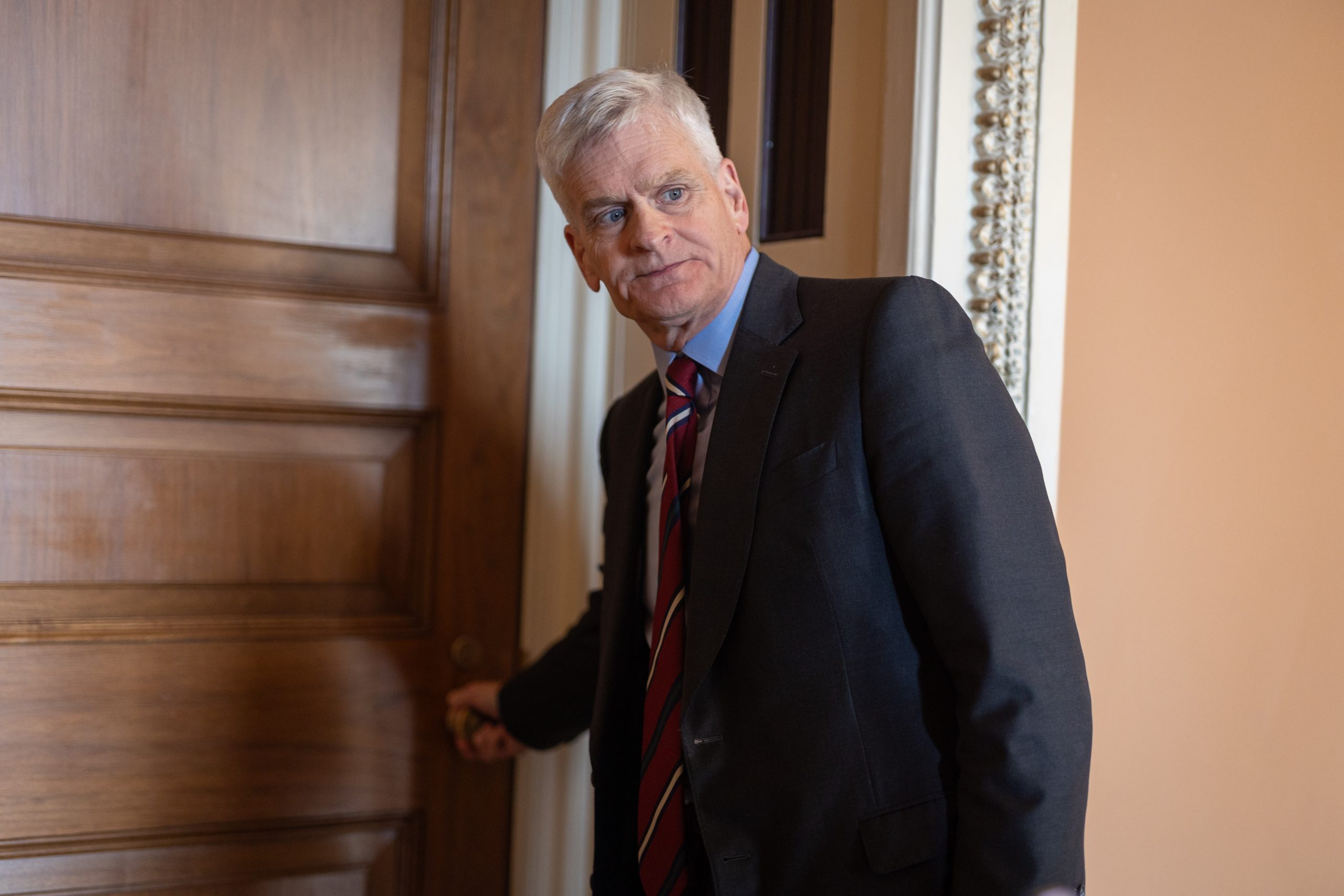
It’s a notion that hasn’t escaped the watchful eye of Capitol Hill’s more traditional custodians. Senator Bill Cassidy (R-LA), no stranger to the often-thorny relationship between the executive and legislative arms, summed it up pretty starkly for the establishment press. “Sometimes,” Cassidy mused, his voice carrying the weary air of someone who’s seen this play out before, “he acts as if Congress is merely an appendage. An afterthought. A rubber stamp for whatever strikes his fancy.”
And, if we’re honest, can anyone truly dispute the observation? Trump’s presidency was defined by his frequent attempts to bypass legislative roadblocks, leveraging executive orders, aggressive legal challenges, and sheer presidential willpower. It wasn’t just the rhetorical jabs at legislative leadership; it was the active, strategic erosion of congressional prerogatives that really started to grate. For Cassidy, a medical doctor before politics swallowed him whole, it’s not just an academic distinction. “This isn’t about partisanship,” he told us. “It’s about maintaining the structural integrity of our government. If one branch decides it can largely operate independent of the others, we’re venturing into uncharted and frankly, dangerous territory.”
Because, well, that’s what constitutions are for, aren’t they? They’re meant to prevent the very concentration of power America’s founders sought so desperately to avoid. The founders, in their wisdom, knew human nature, knew that power, unchecked, has a tendency to accumulate. Their answer wasn’t perfection, but diffusion.
This sentiment echoes beyond Republican circles, proving that some concerns, however rarely, manage to bridge Washington’s chasm of partisan divide. House Minority Leader Hakeem Jeffries (D-NY), a man usually positioned on the other side of the political spectrum, also weighed in on the historical weight of Congress. “The American people elect representatives to legislate, to deliberate, and to provide oversight,” Jeffries recently stated in a policy discussion at the Brookings Institution. “Not to cheerlead or abdicate their constitutional duties. The strength of our democracy hinges on each branch performing its role—robustly and without intimidation.” His words—calm, measured, and devoid of sensationalism—carry a gravity born from the institutional memory of power struggles.
The numbers don’t paint a pretty picture for legislative strength either. A recent Pew Research Center study showed that only 8% of Americans have a great deal or quite a lot of confidence in Congress, compared to 38% for the presidency. That’s a staggering disparity, implying a public perception that Congress isn’t just an appendage, but perhaps a malfunctioning one. That gap fuels executive overreach, you know it does.
But this isn’t just an American melodrama; it’s a global phenomenon. In nascent democracies, or those with fragile institutional frameworks, the perception of an impotent legislature is a particularly nasty precedent. Consider Pakistan, a country that has, for much of its post-independence history, wrestled with an oscillating balance of power, often favoring its powerful military establishment or strong, charismatic leaders over parliamentary oversight. When the world’s oldest continuous democracy, America, appears to tolerate an executive viewing its legislature as a mere formality—it sends a decidedly shaky signal. It almost legitimizes similar aspirations elsewhere, — and that’s not good.
What This Means
The ramifications of a presidency that perceives Congress as secondary are profound. Politically, it fosters an environment of legislative drift, where pressing national issues might languish if not unilaterally addressed by the White House, circumventing democratic consensus-building. It entrenches polarization, as opposing parties view each other not as partners in governance, but as obstacles to be overcome—or, ideally, ignored. The checks and balances—designed as an intricate dance of power—turn into a wrestling match, and the American people usually lose that one. Economically, this institutional tension can introduce significant uncertainty. Policy instability, whether on trade, regulation, or fiscal spending, often arises when the executive acts without broad legislative buy-in, making long-term planning a fool’s errand for businesses and international partners. A weakened Congress often means less consistent, less transparent policymaking, impacting investor confidence and potentially hamstringing the nation’s ability to respond effectively to crises—domestically or, you know, abroad, like the complex dance of power played out in places like Minsk. It ultimately chips away at the public trust, rendering institutions less credible and leaving the nation susceptible to demagoguery. When the people lose faith in Congress, they’re more likely to look for strongmen.