

Between Control and Surrender – Exclusive Interview with Elizabeth Waterman
Abstract In this Policy Wire exclusive, we sat down with Elizabeth to discuss Propulsion, a visually poetic photography series that brings together the worlds of pole dancers and jellyfish through...

Abstract
In this Policy Wire exclusive, we sat down with Elizabeth to discuss Propulsion, a visually poetic photography series that brings together the worlds of pole dancers and jellyfish through movement, gesture, rhythm, and transformation. The project began unexpectedly during a 2022 visit to an aquarium, where Elizabeth became captivated by the fluid motion of jellyfish. When placed beside her photographs of pole dancers, the images revealed striking visual and emotional parallels.
Throughout the conversation, Elizabeth reflects on the role of analog film, the complexity of photographing women and performance, the relationship between eroticism and fine art, and the emotional ambiguity she hopes viewers experience through the work. Following its premiere at Photo London, Propulsion is now moving toward a major monograph with Skira Editore, scheduled for release in Spring 2027 and internationally distributed by Thames & Hudson.
Policy Wire Exclusive Interview
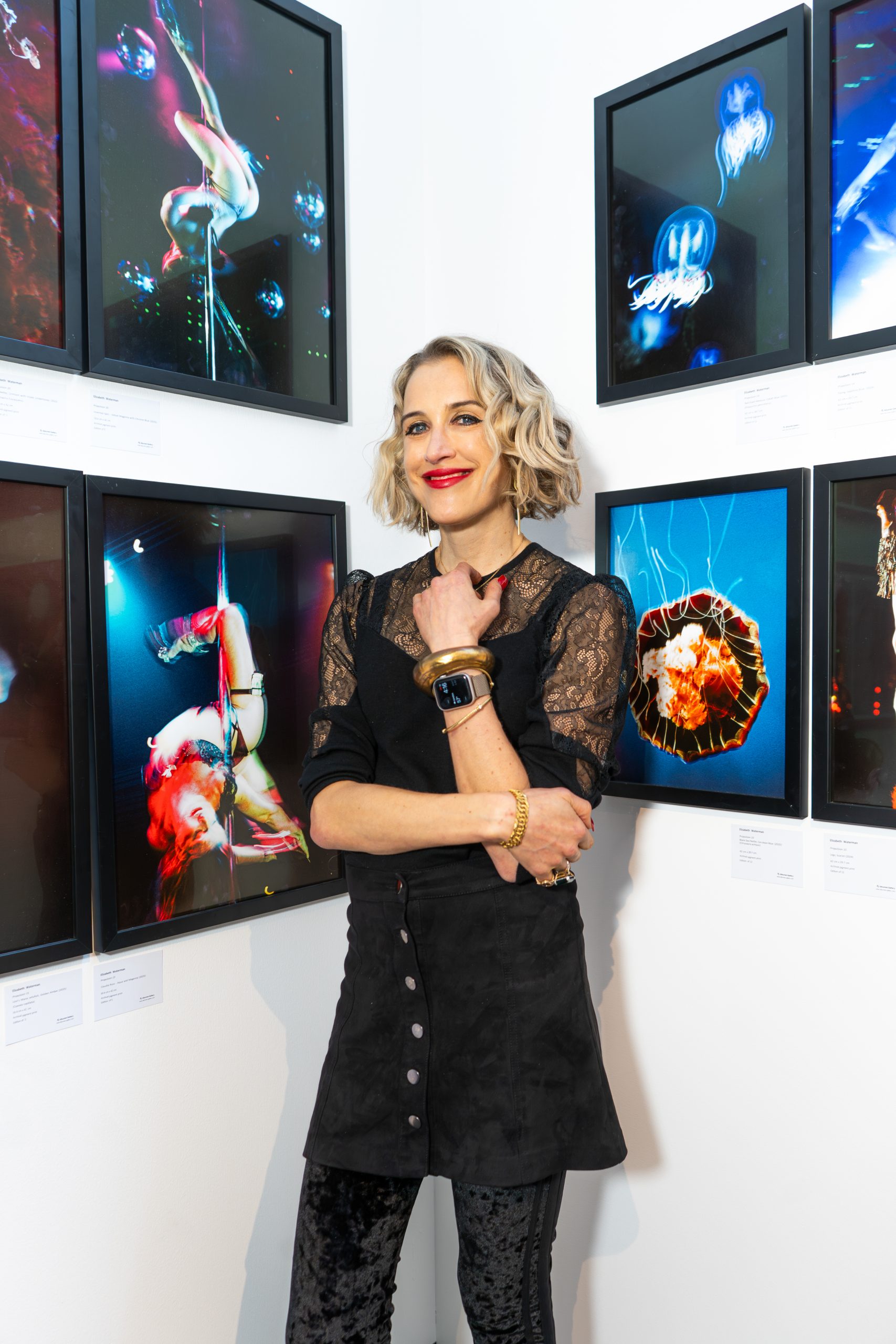
We sat with Elizabeth and asked her some questions about Propulsion, her artistic process, and the deeper ideas behind the project. Here is our conversation.
01. What first inspired Propulsion?
Propulsion began unexpectedly during a visit to an aquarium in 2022. I became completely mesmerized by the movement of jellyfish — the way they seemed to float between control and surrender, rhythm and stillness.
Later, when I placed those images beside photographs I had taken of pole dancers, I immediately recognized visual parallels between the two worlds. There was this shared choreography of motion, tension, fluidity, and transformation that felt deeply connected.
02. Why did you choose to pair pole dancers with jellyfish?
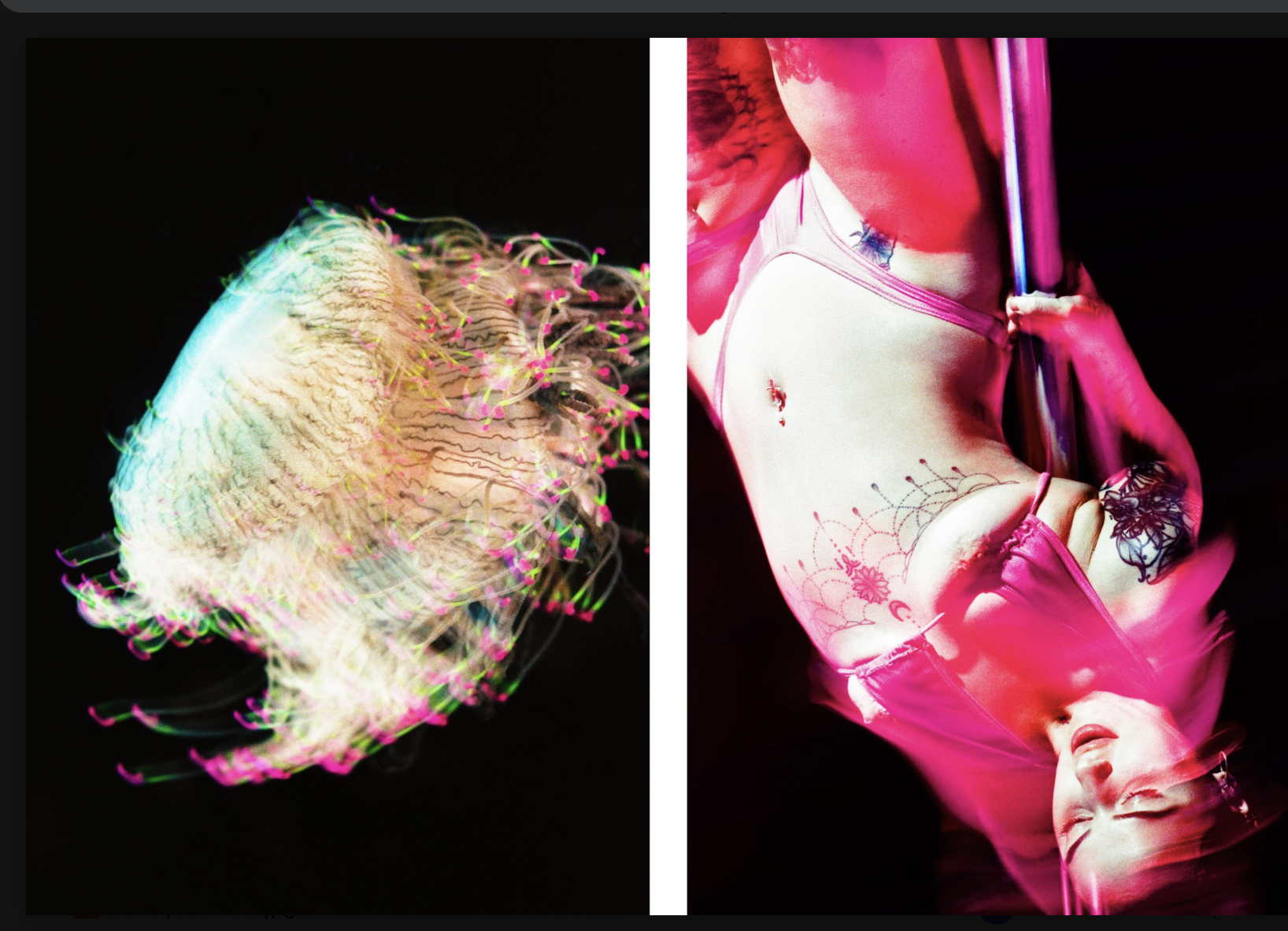
I wasn’t interested in creating a literal comparison. The pairing emerged intuitively through shape, gesture, and movement.
A dancer’s arm could mirror the tendrils of a jellyfish; the curve of a torso could echo the dome of a bell. Once the images were placed side by side, they began communicating with one another in unexpected ways. The meaning exists in the dialogue between the photographs.
03. Your work often centers women and performance. What draws you to these themes?
I’ve spent over a decade photographing exotic dancers across the United States, and I’ve always been interested in the emotional complexity, discipline, and theatricality within those spaces.
Pole dancers are elite performers. Their work requires extraordinary athleticism, endurance, precision, and psychological control, yet they are often misunderstood or reduced to stereotypes. I want to create images that acknowledge their power, artistry, and humanity.
04. Why was analog film important to this series?
Analog film became central to the philosophy of the project. Shooting on 35mm film forces you to slow down and surrender to uncertainty.
There’s no instant feedback, no perfectionism through endless digital correction. That process mirrors the vulnerability and precision embodied by both the dancers and the jellyfish. Chance becomes part of the artwork.
05. What do you hope viewers experience when they encounter Propulsion?
I hope viewers allow themselves to sit inside ambiguity. The work is intentionally emotional and sensory rather than overly explanatory.
I want people to notice how movement itself can become a universal language — how bodies, light, rhythm, and transformation connect forms of life that initially appear completely unrelated.
06. The project premiered at Photo London. What did that moment mean to you?
It was incredibly meaningful. Photo London brings together an international audience that is deeply engaged with contemporary photography, so debuting Propulsion there felt like the right environment for the work’s first public presentation.
It was exciting to see viewers respond emotionally to the images and engage with the series beyond its surface aesthetics.
07. You announced an upcoming monograph with Skira Editore. Can you share more?
Yes — the monograph is currently in production and will be released in Spring 2027 through Skira Editore and distributed internationally by Thames & Hudson.
The book will feature 48 previously unseen diptychs from Propulsion and represents the most ambitious publication of my career so far. I’m very excited for audiences to experience the work in book form because the sequencing and pacing create an entirely different emotional experience.
08. What role does femininity play in your artistic practice?
Femininity in my work is not passive — it’s performative, physical, psychological, and often contradictory.
I’m interested in women occupying space with complexity and agency. My work explores intimacy and labor alongside beauty and spectacle. I want to create images that resist simplification.
09. How do you view the relationship between eroticism and fine art photography?
Eroticism has always existed within art history, but certain forms of erotic labor are still marginalized culturally.
I’m interested in challenging those boundaries and asking who gets granted legitimacy within fine art spaces. By photographing dancers through a fine art lens, I hope to expand conversations around performance, embodiment, labor, and representation.
10. What’s next for you after Propulsion?
Right now, my focus is on completing the monograph and continuing to evolve the visual language introduced in Propulsion.
I’m interested in pushing further into themes of movement, transformation, and human performance while continuing to work with analog processes.
Closing Note
With Propulsion, Elizabeth creates a visual conversation between two seemingly distant worlds: the aquatic motion of jellyfish and the disciplined physicality of pole dancers. Through analog film, diptych composition, and a deep sensitivity to gesture, the project asks viewers to reconsider how movement, femininity, eroticism, labor, and fine art can coexist within a single visual language.
As the forthcoming Skira Editore monograph prepares for its Spring 2027 release, Propulsion marks an important moment in Elizabeth’s practice — one that expands the boundaries of performance photography while inviting audiences into a space of ambiguity, transformation, and emotional resonance.
Official website: https://elizabethwaterman.com/
Author