


Dharamsala Showdown: IPL Spectacle Continues, Records Fall as Money Talks
POLICY WIRE — DHARAMSALA, INDIA — Nestled within the quiet, picturesque Himalayan foothills, far removed from the clamor of India’s teeming metros, an almost absurdly wealthy cricket carnival...

POLICY WIRE — DHARAMSALA, INDIA — Nestled within the quiet, picturesque Himalayan foothills, far removed from the clamor of India’s teeming metros, an almost absurdly wealthy cricket carnival unfurled its latest act this past Tuesday. It wasn’t the breathtaking mountain vistas that snagged headlines, though. It was the precise arc of a cricket ball, a flailing bat, and another athlete solidifying his name in the annals of a sporting league that’s less a competition, more a national obsession.
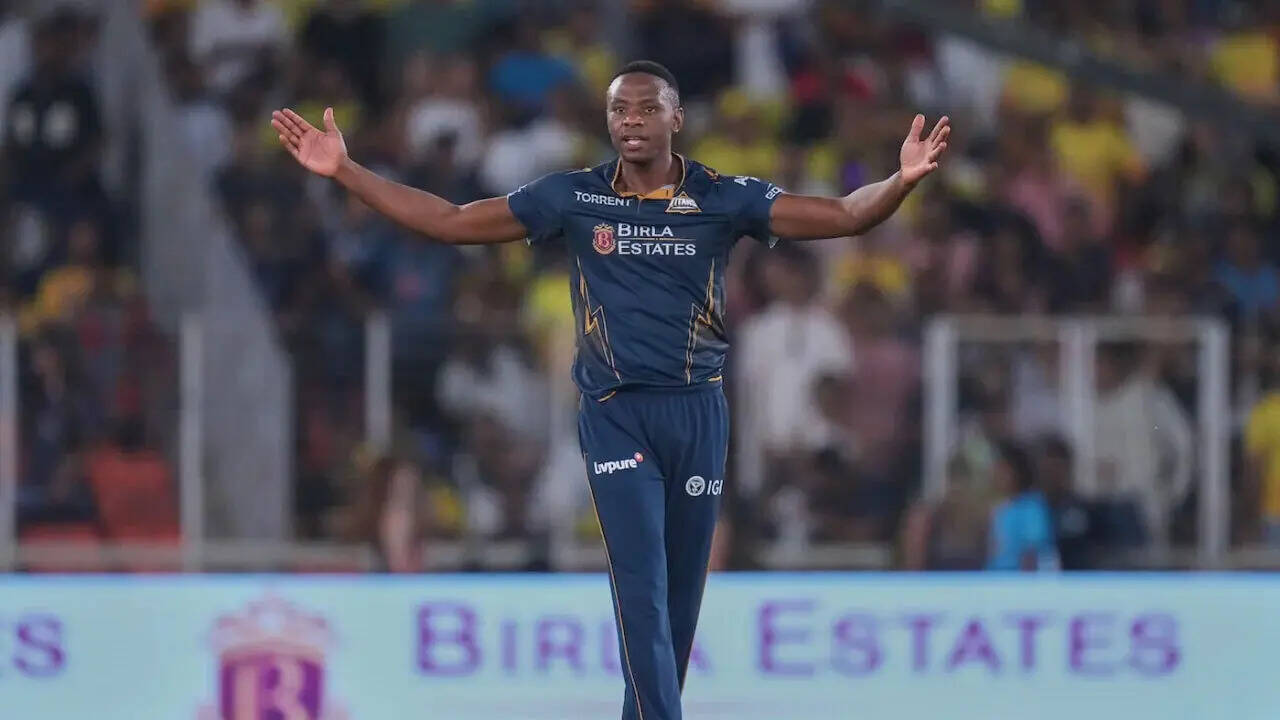
Down on the field, beneath the majestic peaks at the Himachal Pradesh Cricket Association Stadium, South African speedster Kagiso Rabada managed to, as the official commentary noted, [QUOTE_PLACEHOLDER] during a critical Qualifier 1 clash between Gujarat Titans and Royal Challengers Bengaluru. Rabada didn’t just play well; he set a new benchmark for aggression in the early overs. But more on that in a moment. Because it’s not just about one player or one game, is it? It’s about the immense financial apparatus humming beneath, a system that transforms individual prowess into a commodity and fleeting glory into hard currency. These are the stakes.
It’s a peculiar thing, seeing a modern, high-octane commercial league staged in such a tranquil setting. And frankly, the choice of Dharamsala to host a marquee match like Qualifier 1 underscores the IPL’s ambition, reaching into every corner, making every locale part of its vast commercial empire. Here, where monastic calm once reigned, the roar of the crowd now competes with whispers of regional economic impact—something almost nobody discusses.
Anyway, Rabada’s moment came when he sent down a [QUOTE_PLACEHOLDER] to Venkatesh Iyer. Iyer, keen to show some fight, [QUOTE_PLACEHOLDER] Cue the drama: [QUOTE_PLACEHOLDER] A moment of athletic excellence, neatly packaged. With that wicket, Rabada became the [QUOTE_PLACEHOLDER] This particular feat isn’t just a record; it’s a testament to the concentrated pressure he’s brought in those opening six overs. He overtook Mohammed Shami, who had accumulated [QUOTE_PLACEHOLDER]. A neat, almost poetic passing of the torch, from one elite quick to another. Shami, of course, has been a central figure in Indian cricket for a long time—a widely popular fast bowler who commands a loyal following across South Asia, particularly in Muslim communities, demonstrating cricket’s widespread appeal that transcends simple athletic spectacle, weaving into the fabric of regional identity.
According to the official IPL statistics, Rabada’s current season tally reached 18 Powerplay wickets in 2026, surpassing Shami’s 17 in 2023. These numbers confirm a demonstrable shift in early-game bowling strategy. Mitchell Johnson (2013) and Trent Boult (2020) each peaked at 16 wickets in the same phase, indicating a sustained intensity at the beginning of innings—a direct consequence, arguably, of modern T20 dynamics demanding immediate impact.
This match itself wasn’t just about individual records; it was about the path to the championship. Gujarat Titans had, perhaps counter-intuitively, [QUOTE_PLACEHOLDER] They made one switch, bringing [QUOTE_PLACEHOLDER] while RCB likewise altered their lineup with [QUOTE_PLACEHOLDER] These strategic tweaks are the Chess moves, though fewer column inches are generally devoted to the coaches pulling strings than to the stars who perform the grand gestures. And the incentive? [QUOTE_PLACEHOLDER] with the loser getting a reprieve via Qualifier 2. It’s a tournament design that maximizes engagement, keeps fan bases alive longer, and yes, extracts more commercial value.
The regular season ended tight: [QUOTE_PLACEHOLDER] both clocking in [QUOTE_PLACEHOLDER] Their head-to-head was deadlocked [QUOTE_PLACEHOLDER] RCB had one of their [QUOTE_PLACEHOLDER] who earlier [QUOTE_PLACEHOLDER] But the champions, RCB, did avenge that later on. It’s almost a soap opera, isn’t it?
These are the kinds of storylines that keep millions glued to their screens, not just in India, but across the diaspora. Think of Pakistan, Bangladesh, the Gulf states—cricket, specifically the IPL, has morphed into a significant cultural export, an soft power projection tool of considerable magnitude. But for all the high-stakes sports drama, both [QUOTE_PLACEHOLDER] RCB aims to defend their recently acquired crown, while GT hopes to reclaim the trophy from their impressive 2022 debut. A narrative neatly wrapped.
What This Means
Beyond the thundering cheers — and corporate sponsorships, the IPL operates as a critical economic engine. Each season, especially these high-stakes playoff rounds in secondary markets like Dharamsala, pumps capital into local economies—however indirectly—from tourism to temporary employment. For India, it’s not just a sport; it’s a colossal projection of financial might and organizational capability onto the global stage. It speaks to a modern India comfortable in its commercial skin. These specific player milestones, Rabada’s new record for instance, become digestible nuggets, perfect for media consumption, distractions even. They maintain the spectacle’s momentum, drawing eyes and, crucially, advertiser dollars. It’s a subtle form of cultural dominance, presenting a united, aspirational India, while elsewhere in South Asia, narratives of instability and conflict often take precedence. This is the soothing balm, the high-octane distraction that keeps everyone, from fans to politicians, temporarily focused on collective achievement and individual brilliance rather than less palatable realities.