


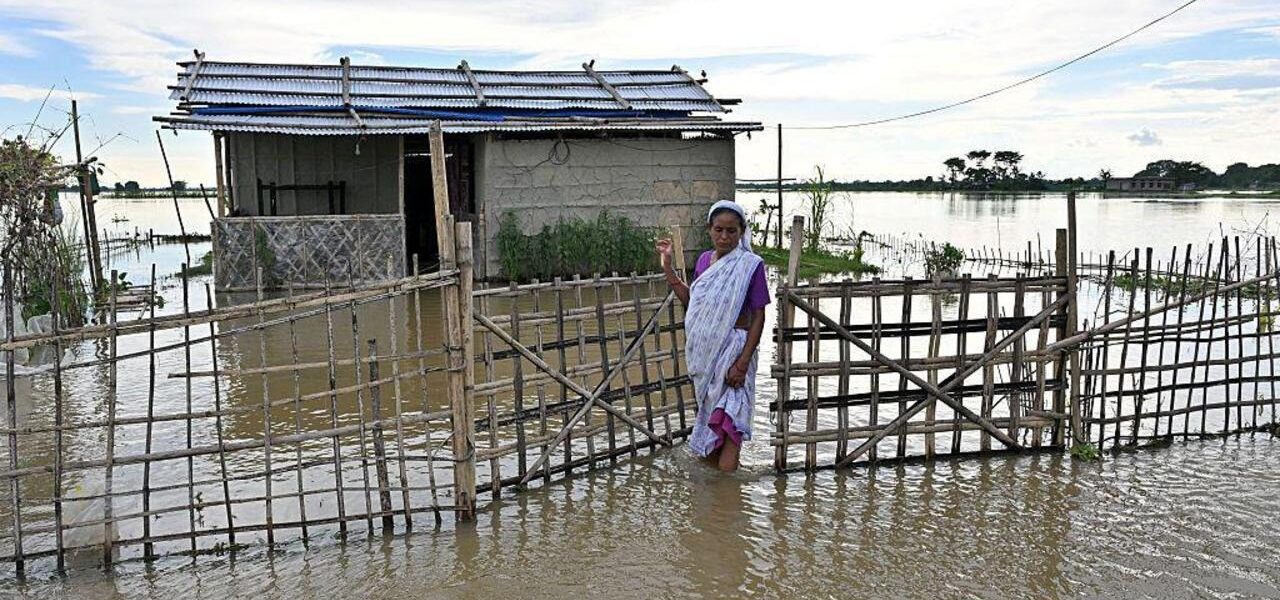
Elderly Survivor’s Daring Escape from Assam Floods on Banana Raft
POLICY WIRE — Guwahati, India — A 97-year-old woman’s dramatic rescue on a makeshift banana raft underscores the increasing severity of Assam’s floods, which are now reaching areas...

POLICY WIRE — Guwahati, India — A 97-year-old woman’s dramatic rescue on a makeshift banana raft underscores the increasing severity of Assam’s floods, which are now reaching areas previously considered safe from such natural disasters.
The elderly woman, identified as Shanti Devi, was among thousands affected by the torrential rains and subsequent flooding that have ravaged the region. Devi was found clinging to a banana raft, having floated for hours before being spotted by rescue teams.
“I did not think I would make it,” Devi said, her voice trembling with the memory of her ordeal. “The water was so high, and I had no other choice but to hold on.”
Authorities report that the floods have displaced over 500,000 people and claimed at least 42 lives. Entire villages have been submerged, and critical infrastructure, including roads and bridges, has been severely damaged.
Rescue operations are ongoing, with teams from the National Disaster Response Force (NDRF) and local volunteers working tirelessly to reach stranded individuals. Helicopters and boats are being utilized to evacuate those in the most perilous situations.
The Assam government has set up relief camps across the state, providing food, medical care, and temporary shelter to those affected. However, the scale of the disaster has strained resources, and many are calling for additional support from the central government and international aid organizations.
Climate experts warn that such extreme weather events are likely to become more frequent and severe due to climate change. The region’s topography, coupled with heavy monsoon rains, makes it particularly vulnerable to flooding.
“This is a stark reminder of the need for better preparedness and more robust infrastructure to withstand such natural calamities,” said Dr. Anirban Chakraborty, a climate scientist at the Indian Institute of Technology, Guwahati.
As the floodwaters begin to recede, the focus will shift to rehabilitation and rebuilding. Authorities are urging residents to remain vigilant, as the risk of waterborne diseases and secondary flooding remains high.
The story of Shanti Devi’s survival serves as a poignant illustration of human resilience in the face of nature’s fury. It also highlights the urgent need for comprehensive disaster management strategies to protect vulnerable populations.
Reporting by Policy-Wire (PW)
📖 GET YOUR FREE COPY NOW OF POLICY WIRE DIGITAL MAGAZINE JULY 2026 EDITION