
Rethinking the Role of the Baloch Yakjehti Committee
Over the recent years, the rhetoric of human rights has become stronger. It becomes the news, it attracts focus around the world, and it tends to determine who is an oppressor and who a victim is....

Over the recent years, the rhetoric of human rights has become stronger. It becomes the news, it attracts focus around the world, and it tends to determine who is an oppressor and who a victim is. Due to this reason, it is the responsibility of any such group that advocates justice and rights is wholly responsible. Misuse of the human rights label does not just stir political debates. It also harms real people, weakens genuine struggles for justice, and blurs the line between peaceful protest and violence.
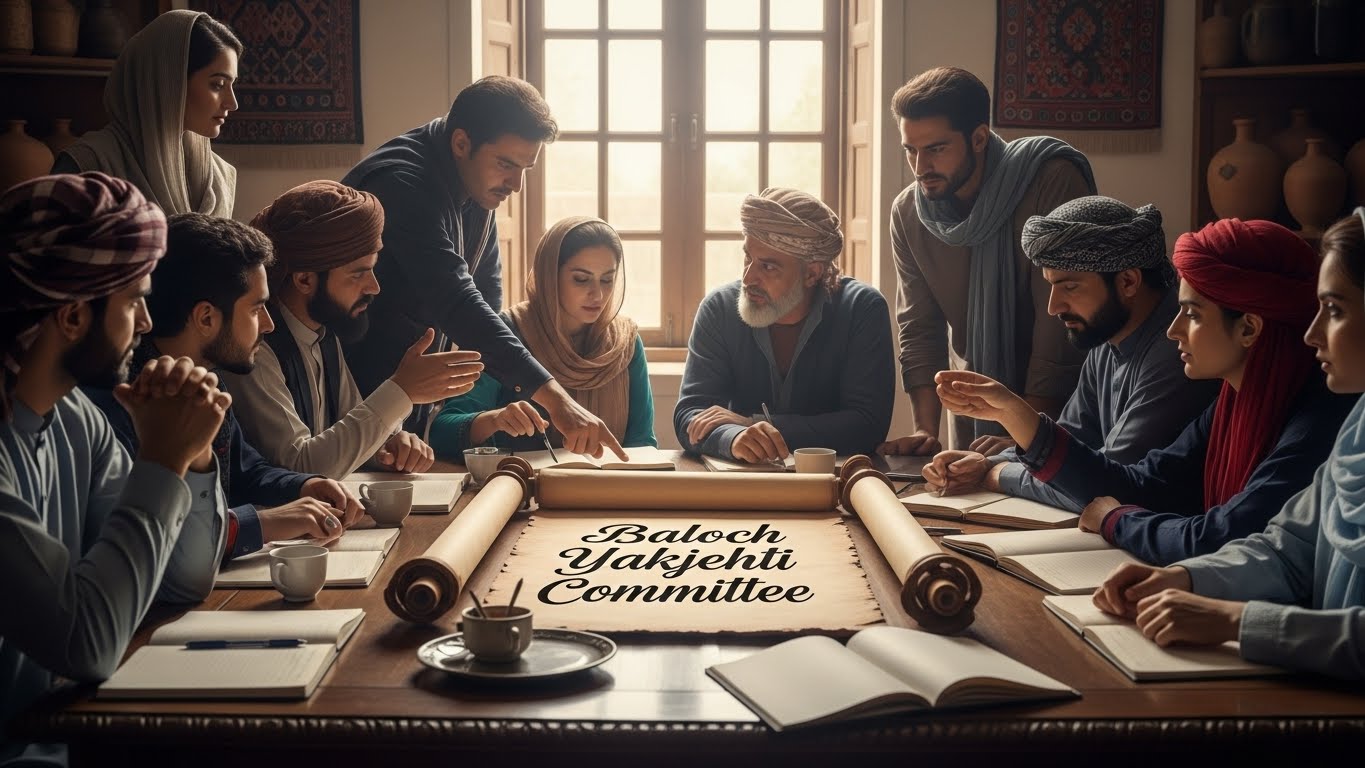
This is now a fundamental issue in the discussion of the Baloch Yakjehti Committee also referred to as BYC. Falsely presented by its supporters as a peaceful rights group, BYC has increasingly come under scrutiny by law enforcement and security agencies in Pakistan due to its terrorist associated activities. The concern is not about dissent itself. Peaceful protest is a right. The concern is about whether this platform has crossed from advocacy into facilitation, from protest into protection for violent actors.
State institutions argue that BYC operates as a soft face for armed separatist groups active in Balochistan. According to official briefings, this is not a sudden claim made for convenience. It derives upon inquiries, detentions, and registered trends that trace back to 2025. One may agree or disagree with the state but these claims should be taken seriously instead of being dismissed immediately.
A disturbing trend being pointed out by authorities is the rapid manipulation of violent cases. When the attacks are made and those who commit them are killed, the story becomes different almost instantly. The persons are termed as missing persons or innocent victims before identities have been established or affiliations made. This emotional framing spreads fast, especially online, and shuts down discussion. Anyone asking questions is accused of siding with oppression. Facts struggle to survive in such an atmosphere.
The March 2025 Jaffer Express attack was a turning point. In its aftermath, security officials warned that propaganda networks were working alongside armed groups. What followed raised eyebrows. Attempts were reportedly made to take bodies of killed attackers from hospitals, creating confusion and delaying legal procedures. Media reports at the time described this as interference with identification and due process. These were not rumors whispered in corners. They were public events, widely reported.
Later press conferences added more weight to these concerns. In May 2025, the military’s media wing openly stated that BYC leadership was suspected of acting as a proxy and support structure for terrorist networks. The key word here is “structure.” This was not described as emotional activism gone too far. It was described as organized, planned, and deliberate.
In early 2026, another layer surfaced when arrests were made. One of the most prominent examples is Sajid Ahmed, an educated teacher and a social scientist. Police testimonies assured that he assisted terrorist networks and was in frequent communication with BYC leadership. His case challenges the idea that extremism grows only in isolation or poverty. Sometimes, it grows in lecture halls, social spaces, and activist circles where moral cover is available.
Even more disturbing is the role of young people. Officials have described how minors were first brought into BYC protests, road blockades, and rallies. From there, some were gradually pulled into violent roles. This method mirrors patterns seen in other conflict zones, where grief, anger, and identity are carefully shaped into tools. Family loss and personal pain become entry points, not reasons for healing.
What makes this situation especially dangerous is the use of human rights language as a shield. Human rights should protect civilians, not hide those who harm them. When every security operation is dismissed as repression, and every terrorist is presented as a victim, accountability disappears. The result is not justice. It is confusion, anger, and endless cycles of violence.
There is also an international side to this story. BYC’s outreach in Europe has raised questions about funding, coordination, and messaging. Officials and analysts argue that this level of access does not happen by chance. It reflects planning, support, and alignment with broader geopolitical interests. Again, one may debate the state’s interpretation, but ignoring the pattern entirely is irresponsible.
None of this means that grievances in Balochistan are imaginary. They are real. Poverty, underdevelopment, and political exclusion exist and must be addressed. But when genuine issues are mixed with violent agendas, the cause itself is weakened. Communities suffer twice. Once from neglect, and again from conflict carried out in their name.
The government’s announcement of rehabilitation centers in Quetta and Turbat suggests recognition that force alone cannot solve this problem. Counseling, family engagement, and social reintegration are necessary steps. Yet these efforts will fail if the propaganda ecosystem remains untouched. Ideas can be as powerful as weapons. Sometimes more so.
The real danger is not criticism of the state. The danger is when activism becomes immune to questioning. No group, no matter how emotional its cause, should be above scrutiny. When silence is enforced through moral pressure, truth becomes the first casualty.
At its core, this debate is about honesty. If BYC is a rights organization, it must clearly distance itself from violence, recruitment, and manipulation. If it cannot, then society has a right to ask hard questions. Supporting human rights should never mean providing cover for bloodshed.
Finally, Balochistan does not require more vocalistic slogans. It requires sincerity, responsibility and authentic communication. Something that draws it further into conflict, even though it may be the most softly spoken, will only negatively add to the current issue.
Author