

Report: Trump’s Lebanon ‘Upbraid’ Shakes Mideast, US Alliances
POLICY WIRE — Washington D.C., USA — It wasn’t the sound of diplomatic protocol, but rather a terse, expletive-laced exchange that reportedly pierced the quietude of US-Israel relations during...

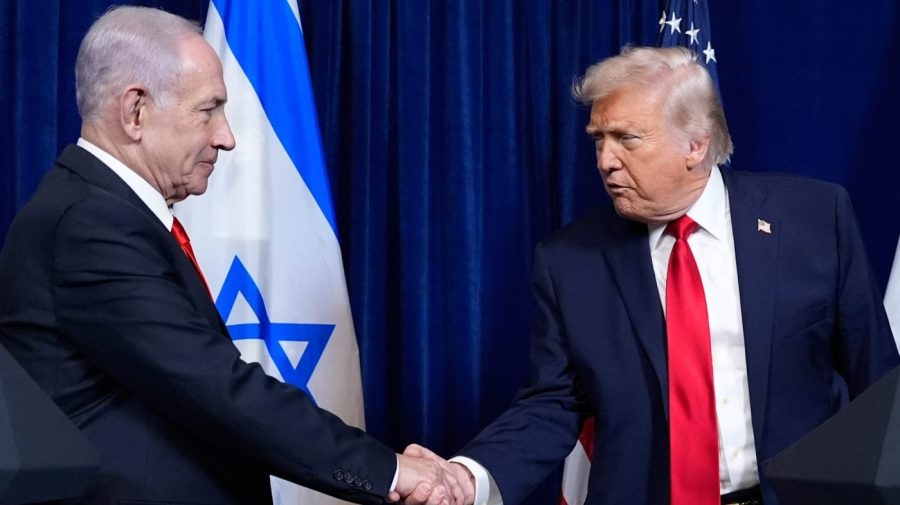
POLICY WIRE — Washington D.C., USA — It wasn’t the sound of diplomatic protocol, but rather a terse, expletive-laced exchange that reportedly pierced the quietude of US-Israel relations during a particularly tense period. Forget the official communiques and the polished statements; a recent report lifts the curtain on an alleged interaction between then-President Donald Trump and Israeli Prime Minister Benjamin Netanyahu that was anything but subtle. This wasn’t some minor disagreement. No, it was a moment, sources say, where the niceties evaporated entirely, replaced by raw frustration regarding Israel’s perceived posture toward Lebanon.
The details, now seeping into the public consciousness, paint a picture of a US president sharply admonishing a key ally. It wasn’t a strategic dialogue; it was an upbraiding. The reported subject was Lebanon, a perpetually volatile northern frontier for Israel, and a nation whose fragile stability holds disproportionate weight across the wider Middle East. An exasperated Trump, according to the report, challenged Netanyahu directly on Israeli actions, questioning the wisdom of approaches that could — or did — heighten regional tensions. Think about it: a commander-in-chief in the White House, typically expected to be shoulder-to-shoulder with Jerusalem on security matters, allegedly resorting to such blunt language, hinting at a profound divergence of views.
This reported confrontation didn’t happen in a vacuum. It underscores the ever-present friction beneath the surface of seemingly ironclad alliances. Because, let’s be honest, few relationships are truly frictionless, even when framed by shared security interests and billions in aid. And what happens between Washington and Jerusalem, particularly concerning Israel’s neighbors, rarely stays confined to those two capitals. It sends ripples. Those ripples often crash against shores from Beirut to Baghdad, — and even Karachi.
For nations like Pakistan, for instance, developments in the Levant are never abstract. They feed into broader geopolitical narratives, influencing everything from domestic political discourse to foreign policy positioning. The perception of Israeli overreach, or even perceived American complicity, can galvanize public sentiment in ways that Western capitals often fail to grasp. Stability in the Middle East—or the lack thereof—directly affects Pakistan’s economic interests, too, particularly concerning energy markets and its millions of expatriate workers remitting funds from Gulf states.
It’s not just the words exchanged, but what they symbolize: a momentary crack, a glimpse behind the facade of unwavering solidarity. If even at the highest levels, such raw questioning occurs, what does that say about the true alignment of strategic objectives? This sort of internal friction only compounds the already difficult dance of diplomatic engagement in the region. One might consider the complexities at play in other conflict zones, such as Ukraine, where alliances face intense internal and external pressures, echoing similar dynamics documented in Policy Wire’s Kyiv’s Perpetual Dawn analysis.
The source of this report suggests that the language was unmistakably clear: [QUOTE_PLACEHOLDER]. It suggests that Washington, under Trump, wasn’t merely observing Israeli maneuvers in Lebanon, but actively, and perhaps angrily, second-guessing them. The exact context involved alleged Israeli actions that, from the American perspective, were perhaps seen as too aggressive, too escalatory, or simply poorly judged, risking a broader conflict.
📄 POLICY WIRE WHITEPAPER PUBLISHED: PAKISTAN'S NATIONAL SECURITY POLICY PRIORITIES
👉 READ BY CLICKING HEREAnd consider the statistics. In the complex geopolitical calculus of the Middle East, such incidents don’t just register as political gossip. They’ve tangible effects. For instance, according to data compiled by the UN Office for the Coordination of Humanitarian Affairs (OCHA), civilian displacement from border regions in Lebanon surged by over 800% in the immediate aftermath of heightened Israeli-Lebanese tensions reported in late 2023 and early 2024, representing tens of thousands forced from their homes. These aren’t just numbers; they’re lives uprooted, stability shattered.
It’s clear that any major upset, any sharp exchange between such heavyweight players, holds immediate implications for the region’s fragile balance. The current administration has its own tightrope walk with both Israel and the myriad of actors in the broader Muslim world, a walk made all the more difficult when historical precedents of US presidents, even seemingly staunch allies, expressing such profound frustration come to light.
What This Means
This reported episode, whether seen as an aberration or a candid revelation, speaks volumes. Politically, it signals a deeper strain in US-Israel relations than often publicly admitted. Even during an era generally perceived as one of strong alignment, the executive branches could butt heads with jarring intensity. For future administrations, it serves as a chilling reminder that no alliance is immune to sharp disagreement, especially when national security interests and strategic philosophies diverge even slightly. Economically, prolonged instability stemming from perceived or real escalations on the Lebanon front carries serious consequences. The oil markets, perpetually skittish regarding the Middle East, react to any hint of conflict expansion. Trade routes, investment, — and tourism all suffer. any sign of American inconsistency or internal division can embolden adversarial states like Iran, complicating diplomatic efforts across the region and beyond. We’ve seen similar patterns play out regarding nuclear deals and sanctions, creating a perilous tightrope for policymakers, a subject often discussed in detail like in Policy Wire’s coverage of ‘Truce Talk Trauma’. It suggests that even the most trusted relationships demand constant, honest recalibration, and sometimes, that recalibration isn’t pretty.