


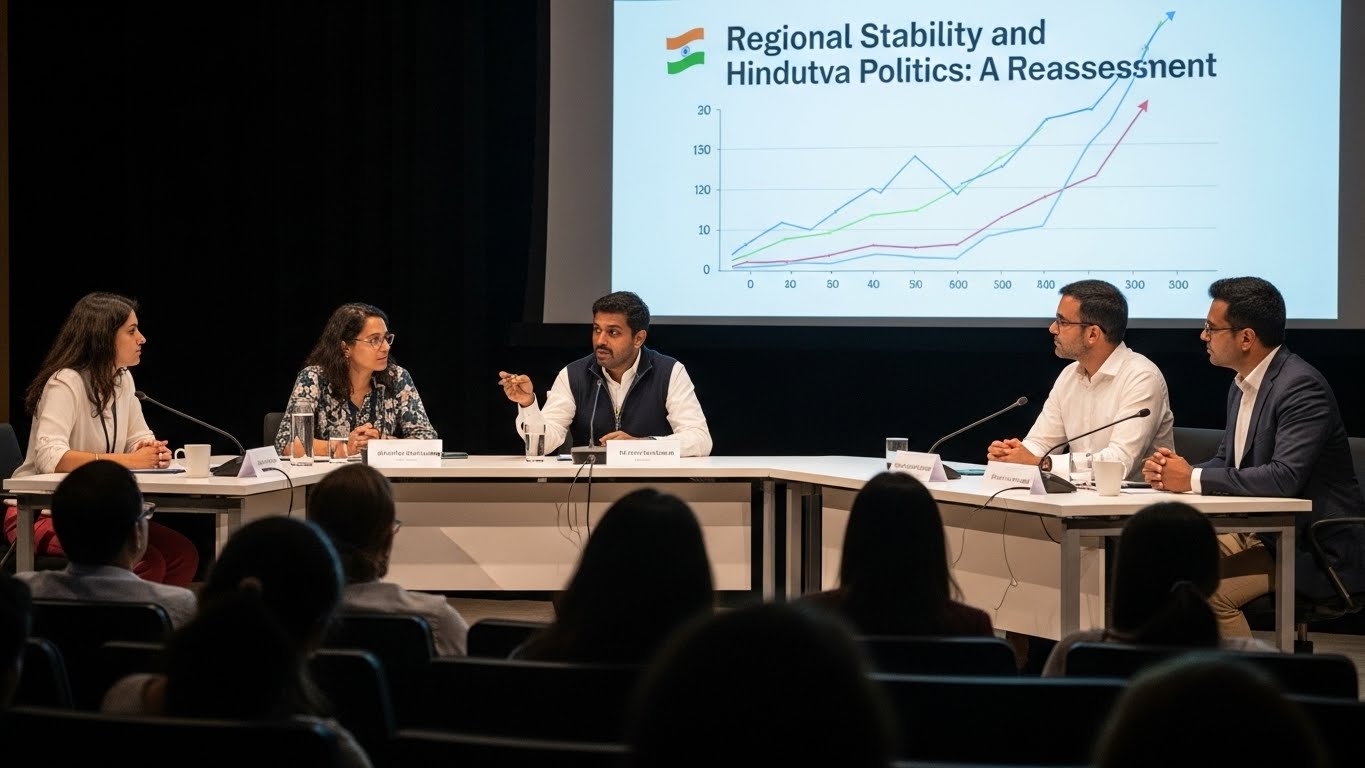
Re-centering the Debate on Regional Stability and Hindutva Politics
Tensions flared again this week after Indian External Affairs Minister Subrahmanyam Jaishankar claimed that Pakistan’s military establishment fuels “ideological hostility” toward India. His remarks,...

Tensions flared again this week after Indian External Affairs Minister Subrahmanyam Jaishankar claimed that Pakistan’s military establishment fuels “ideological hostility” toward India. His remarks, delivered at a public forum in New Delhi, follow a familiar pattern: Indian officials using harsh rhetoric against Pakistan to mask internal failures and justify the increasingly aggressive posture of the Modi-led establishment. Islamabad responded with clarity and conviction, asserting its own commitment to responsibility while exposing India’s habit of politicizing foreign policy for domestic consumption.
Jaishankar’s Remarks and India’s Political Messaging
Jaishankar’s statement seemed tailored to please India’s domestic audience rather than address reality. As India battles economic pressure, communal tensions, and growing global criticism over its internal human rights record, attacking Pakistan has become a convenient political tool. His claim that Pakistan’s armed forces sustain animosity ignores decades of Indian provocations, from coercive diplomacy and subversive activities in Balochistan to escalating military actions along the Line of Control. By portraying Pakistan’s institutions as the source of hostility, India attempts to rewrite the narrative, positioning itself as the victim while hiding its increasingly assertive, ideologically driven policy choices.
Islamabad’s Response: Firm, Clear, and Grounded in Responsibility
Pakistan’s Foreign Office spokesperson, Tahir Andrabi, rejected the accusations as “highly inflammatory, baseless and irresponsible,” underscoring that Pakistan’s institutions, including its military, are constitutional guardians of national sovereignty. Islamabad emphasized that Pakistan has consistently demonstrated restraint in the face of Indian hostility. The May 2025 war stands as a strong example: despite India’s escalation, Pakistan responded with professionalism and discipline, preventing a dangerous confrontation from spiralling into a broader regional crisis. This contrast, Pakistan’s responsibility versus India’s provocations, forms the foundation of Islamabad’s rebuttal.
India’s Propaganda Strategy: Deflecting From Domestic Turmoil
A central component of Pakistan’s message is that India’s accusations serve as deliberate political theatre. The Modi government faces mounting criticism over democratic backsliding, suppression of minorities, and rising economic inequality. Instead of addressing these challenges, New Delhi turns to aggressive external rhetoric to create the illusion of national unity. Pakistan argues that such statements are less about diplomacy and more about managing headlines at home. By keeping Pakistan at the center of domestic conversations, India diverts public attention from issues that demand accountability. This tactic not only misleads the Indian public but also poisons the regional environment.
Hindutva’s Influence: A Radical Ideology Shaping State Behaviour
Islamabad’s response directly addresses a reality that many global observers have highlighted: India’s foreign policy is now deeply influenced by the Hindutva ideology that dominates its political leadership. This ideology promotes exclusion, revisionism, and majoritarian supremacy, and its effects are visible across India’s political and social landscape. The rise in mob lynchings, demolitions of minority homes, attacks on places of worship, and arbitrary arrests under discriminatory laws reflects a country grappling with extremism at its highest levels of governance. Pakistan argues that this ideological shift has also seeped into India’s external relations, giving rise to a foreign policy that is confrontational, self-righteous, and dismissive of regional stability.
The Dangers of Escalatory Rhetoric from New Delhi
Pakistan warns that India’s sharp and often reckless statements from senior officials pose serious risks. South Asia remains one of the world’s most sensitive security theatres, where nuclear-armed neighbours must operate with caution. Yet India repeatedly chooses the path of public confrontation, making sweeping claims that harden public opinion and reduce diplomatic space. Pakistan argues that responsible leadership demands restraint, especially in public speeches, but India’s political environment appears more interested in applause at rallies than in long-term peace. By normalizing hostility toward Pakistan, Indian leaders endanger not just diplomatic relations but also broader regional security.
A Call for India to Address Its Internal Radicalisation
One of the strongest messages emerging from Islamabad is that India must confront the extremism growing within its borders before pointing fingers at Pakistan. The radicalization driven by Hindutva ideology is increasingly shaping India’s political worldview, creating an environment of intolerance and polarization. Pakistan argues that unless India acknowledges and addresses these internal fissures, genuine peace will remain out of reach. For Islamabad, the greatest threat to regional stability is not Pakistan’s institutions but India’s deepening ideological rigidities, which produce both domestic unrest and aggressive foreign policy choices.
Conclusion
Pakistan’s response to Jaishankar’s comments draws a sharp distinction between two regional approaches: Islamabad’s emphasis on responsibility, professionalism, and peace, versus New Delhi’s increasing reliance on ideological rhetoric and political deflection. By exposing India’s domestic motives and highlighting the dangers of its foreign policy, Pakistan calls for a more honest assessment of the issues that threaten South Asian stability. Until India confronts the aggressive ideology shaping its politics and foreign policy, Pakistan believes that New Delhi’s accusations will remain a smokescreen used to hide its own failures. Islamabad, meanwhile, reiterates its commitment to sovereignty, stability, and responsible statecraft, values that stand in stark contrast to India’s escalating rhetoric and ideological drift.
Author