


Baku Blueprint: MENA’s Housing Problem Isn’t Just About Roofs, It’s About Futures
POLICY WIRE — Baku, Azerbaijan — They don’t build houses much like they used to, because, well, the old ways simply aren’t cutting it anymore. Not when you’ve got young populations...

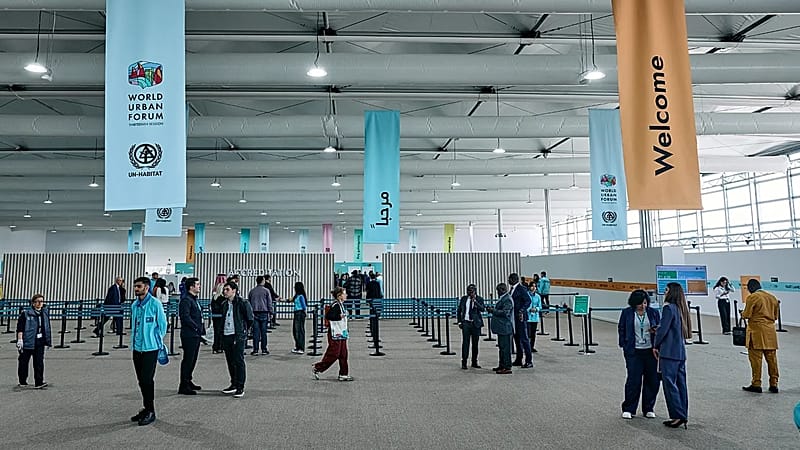
POLICY WIRE — Baku, Azerbaijan — They don’t build houses much like they used to, because, well, the old ways simply aren’t cutting it anymore. Not when you’ve got young populations clamoring for a piece of the good life—or, frankly, just a stable roof over their heads. The recent talkfest in Baku, purportedly about ‘housing,’ wasn’t some dry technical symposium on concrete — and rebar. Far from it. It was, rather unexpectedly, a loud, sometimes anxious, confab on social cohesion, economic opportunity, and perhaps, keeping a lid on the simmering discontent that often percolates in neglected urban sprawl.
It’s all about the ‘beyond bricks — and mortar’ sermon these days, isn’t it? A mantra repeated so often by regional powerbrokers in the Middle East and North Africa (MENA) that it’s starting to sound less like a novel insight and more like a desperate plea. The grand visions floated around Baku suggested that constructing physical dwellings alone isn’t going to fix anything when you lack the schools, the jobs, the transit, or even the dependable electricity to make them habitable in a meaningful sense. And frankly, the entire proposition feels like an acknowledgment that decades of helter-skelter development haven’t exactly yielded utopias. They’ve given us gleaming skylines next to sprawling, underserved informal settlements. And that juxtaposition, it turns out, can be a potent cocktail of trouble.
The urban tide, they said, isn’t receding. In fact, it’s coming in harder than ever. According to UN-Habitat projections, urban populations in the MENA region are set to double by 2050. That’s a staggering wave, isn’t it? Meaning tens of millions more needing somewhere to live, work, — and thrive. Not just exist. This isn’t just about developers cutting deals on mega-projects, but about crafting environments where burgeoning youth—a demographic that could either be a dynamic asset or a powder keg—can find purpose.
“We can’t simply erect towers — and declare victory,” remarked H.E. Aisha Abdullah, the forthright Minister of Urban Planning from Oman, her voice cutting through the typical diplomatic pleasantries. “Our communities need integrated services, green spaces, digital infrastructure—they need a future, not just an address. It’s about dignity, not just density.” She didn’t mince words. Because when people lack basic amenities and a sense of belonging, political stability itself can start to look rather shaky.
But building this integrated future? That’s easier said than done. It requires gargantuan investment, long-term planning (a concept sometimes in short supply), and a public sector that can actually execute. Think about Karachi, for instance, a megacity in Pakistan grappling with almost unimaginable challenges: explosive growth, decrepit infrastructure, and an urgent need for affordable housing options that provide something more than four walls. The parallels with many MENA cities are stark. The strain on public services and the risk of social fragmentation echo across the region, where neglecting the human element of housing development has historically stoked discontent. It can even, one might argue, lay the groundwork for instability, a ‘ghost in the machine’ threatening everything else. (The Ghost in the Machine: Why Islamabad’s ‘Inside Rush’ Could Rewrite South Asian Stability).
And let’s not pretend this is purely an altruistic endeavor. There’s cold, hard economics at play here too. Healthy housing markets, coupled with vibrant urban ecosystems, drive employment — and attract foreign direct investment. “This isn’t charity; it’s an economic imperative,” chimed in Dr. Tariq Hassan, Chief Economist at the Arab Monetary Fund, speaking candidly during a breakout session. “When you create desirable, resilient communities, you unlock human capital, and that’s a direct pipeline to GDP growth. Failing to do so? That’s just deferred spending, eventually. And with interest.”
Their collective plea from Baku then wasn’t merely for more houses, but for smarter ones, for inclusive ones, for resilient ones. It’s a message that feels especially sharp given the region’s geopolitical churn. Nobody wants their stability predicated on how many high-rises they’ve managed to slap up in a decade. They want it built on the quiet, often overlooked foundations of everyday well-being, community spirit, and genuine prospects.
What This Means
The Baku dialogue, despite its inherent bureaucratese, signals a subtle but important pivot in regional development thinking. Politically, leaders are acknowledging that the basic provision of shelter is no longer sufficient to pacify or prosper their electorates. Urban populations, especially a vocal, tech-savvy youth, demand quality of life alongside mere existence. Neglecting these broader aspects of housing—from public transport to cultural centers—can breed social alienation, providing fertile ground for both domestic unrest and external destabilizing influences. Economically, this new approach implies a significant shift in investment priorities. It’s not just about government housing schemes, but about stimulating a diversified private sector that can deliver holistic urban solutions. This means regulatory reforms, fostering innovation in construction and urban services, and, yes, a massive infusion of capital—local and international. Failure to execute on these broader mandates isn’t just about missed targets; it’s about a potential long-term drag on productivity, brain drain, and chronic unemployment, particularly among younger cohorts. But, of course, the perennial challenge remains: translating these visionary pronouncements from gilded conference halls into concrete, equitable outcomes on the dusty streets where people actually live and struggle. That’s the real trick.